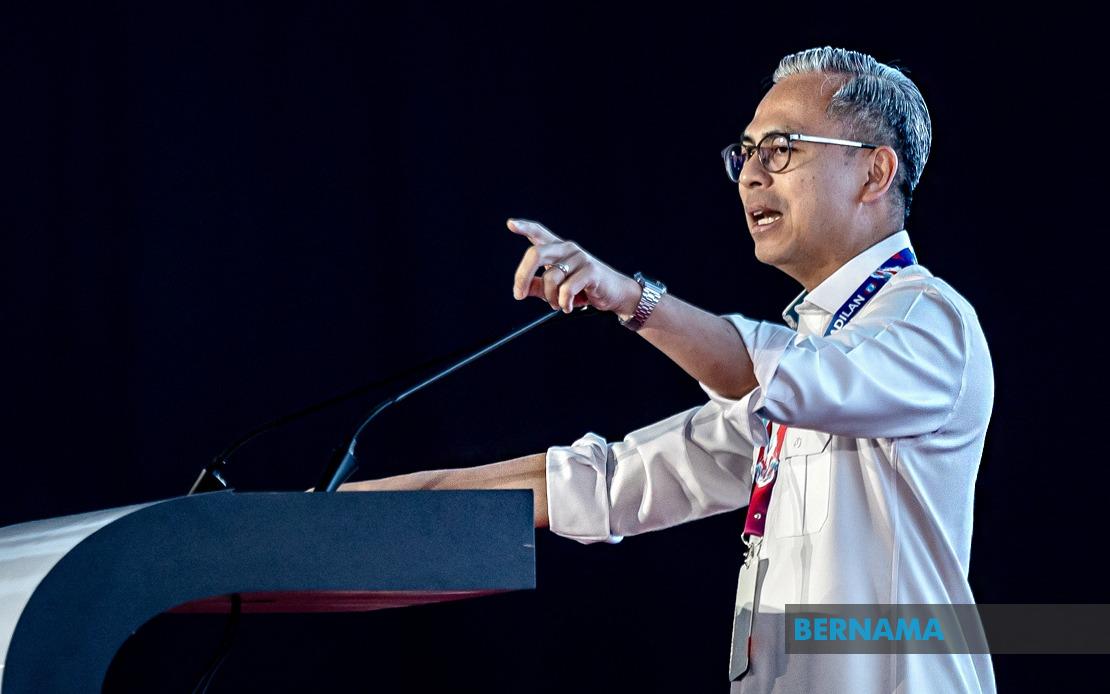
The public is paying closer attention to the proper specifications of the Jalur Gemilang, Communications Minister Datuk Seri Fahmi Fadzil observed during a visit to Melaka, signalling a broader cultural shift towards greater reverence for Malaysia's national emblem. The increased consciousness reflects mounting recognition of the flag's symbolic importance, particularly as the country approaches its National Month observances when patriotic displays become ubiquitous across towns and cities.
Fahmi attributed this heightened awareness to a growing sense of collective responsibility among Malaysians who are now actively verifying the flag's details when they encounter it in public spaces. This informal policing has manifested in everyday interactions where citizens voluntarily counsel one another about proper flag specifications, creating a grassroots mechanism for maintaining standards without top-down enforcement. Such peer-to-peer accountability represents an organic form of civic engagement that extends beyond government campaigns or official directives.
The minister noted that complaints regarding improper flag displays have not increased, contrary to what might be expected if public scrutiny had intensified. Instead, the elevated awareness appears to have coincided with greater compliance, suggesting that education and visibility of the issue have prompted voluntary correction rather than generating conflict. This positive trajectory indicates that community engagement around national symbols can strengthen rather than fracture social cohesion when approached through dialogue and mutual respect.
While acknowledging an incident involving an allegedly incomplete Jalur Gemilang in Batu Buruk, Terengganu, Fahmi deferred to investigating authorities, declining to inflame what could have become a divisive matter. His measured approach demonstrates the delicate balance required when addressing concerns about national symbols, particularly in a diverse society where interpretations of patriotism and respect can vary significantly across communities and regions.
A notable innovation that Fahmi highlighted is the increasing adoption of magnetic Jalur Gemilang stickers by vehicle owners, replacing traditional physical flags. This practical shift addresses a genuine concern about vehicle maintenance and damage, offering a compromise that preserves the symbolic display while protecting owners' property. The trend underscores how pragmatic solutions can emerge from communities when they seek to balance patriotic expression with practical considerations, rather than viewing the two as mutually exclusive.
The government has framed this development positively as a convenience for motorists, indicating official willingness to accommodate evolving practices around flag display. Such flexibility in interpreting the spirit rather than rigid form of patriotic expression may help maintain broad-based support for national symbols, particularly among younger, urban populations who approach tradition differently than previous generations. The acceptance of magnetic stickers demonstrates that revering national identity need not require adherence to a single prescribed method.
Preparations for the forthcoming National Day and Malaysia Day celebrations are proceeding according to schedule, with coordination mechanisms in place across multiple government agencies. The Ministry of Education is preparing its customary human graphic performance, while logistics in the capital are being finalized to accommodate the large-scale public gatherings expected during these observances. These celebrations, which occur annually in August and September, represent crucial moments for national unity and reflection on shared identity.
Two flagship events are scheduled for Merdeka Eve, with the Ministry of National Unity organizing festivities at Merdeka Stadium featuring remarks from Prime Minister Datuk Seri Anwar Ibrahim, while Kuala Lumpur City Hall will simultaneously host celebrations at Dataran Merdeka. The dual events reflect attempts to democratize access to National Day celebrations, enabling broader participation across different areas of the capital rather than concentrating activities in a single venue. Coordination between these twin celebrations will be crucial to ensuring smooth operations and preventing logistical conflicts.
Beyond ceremonial aspects, Fahmi's visit to stroke patients in Melaka demonstrated the government's commitment to integrating social welfare into its broader agenda. His assessment of assistance requirements for elderly residents, including nutritional support and rehabilitative services, revealed how official engagements during patriotic seasons can simultaneously address vulnerable populations' needs. The Information Department's role in identifying families requiring intervention highlights institutional mechanisms for translating policy intentions into tangible community support.
The proposed expansion of rehabilitation options to include alternative treatments such as acupuncture signals a shift towards more holistic approaches to elderly care in Malaysia. By supplementing conventional medical interventions with traditional therapeutic methods, the government acknowledges diverse health philosophies within the Malaysian population and seeks to broaden access to care modalities that resonate across cultural communities. Such pluralistic approaches to welfare align with the MADANI framework's stated commitment to inclusive governance.
Fahmi's role as both Communications Minister and government spokesperson positioning him at the intersection of national messaging and administrative implementation reflects the integrated nature of contemporary governance. His ability to address issues ranging from flag specifications to elderly care demonstrates how different portfolio areas increasingly intersect in projecting government priorities and demonstrating responsiveness to citizens' varied concerns. This multifaceted approach aims to construct narratives of government effectiveness that extend beyond ceremonial patriotism.
The emphasis on increased public consciousness regarding flag specifications, while seemingly minor, carries implications for how Malaysia constructs and maintains national identity during an era when symbols increasingly compete for attention in crowded media and social landscapes. That citizens are voluntarily educating one another about the Jalur Gemilang's details suggests sustained emotional investment in national symbols, albeit expressed through contemporary social mechanisms rather than traditional hierarchical channels. Whether this enthusiasm translates into deeper civic engagement beyond symbolic expression remains to be observed as the National Month celebrations unfold.

