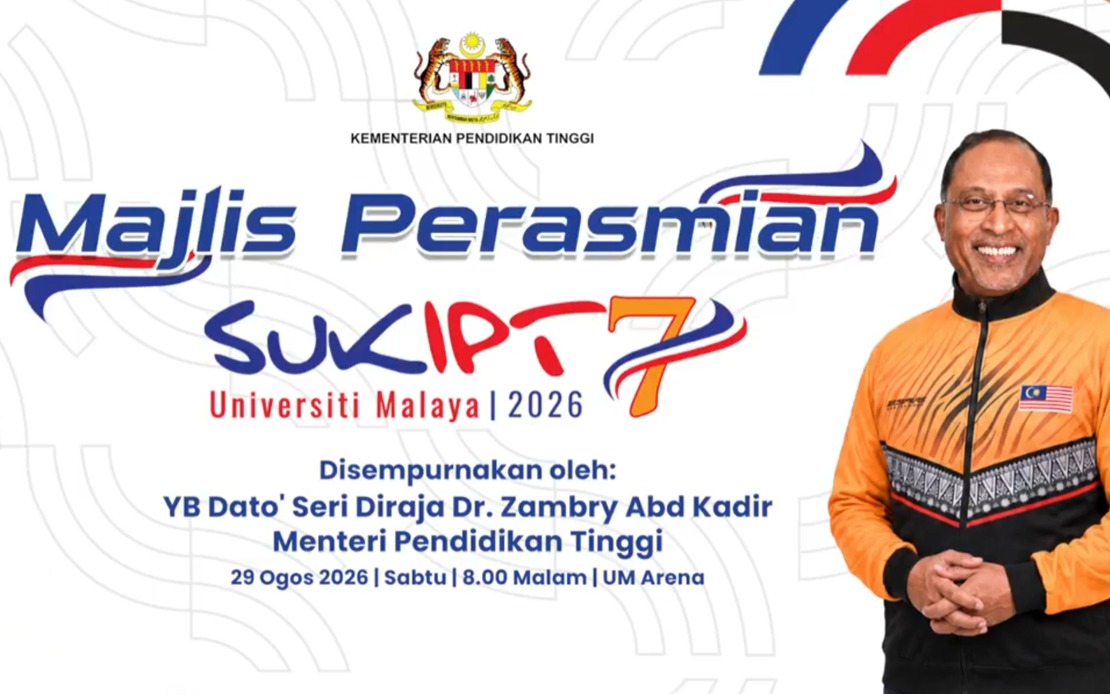
Datuk Seri Dr Zambry Abdul Kadir, Malaysia's Higher Education Minister, has underscored the critical role that university sports programmes play in cultivating elite athletes who can deliver national success on the international arena. Speaking at the opening ceremony of the Higher Education Institution Games (SUKIPT) 2026 at Universiti Malaya Arena in Kuala Lumpur, Zambry pointed to a growing body of evidence demonstrating that Malaysia's higher education institutions are not merely academic centres but serious incubators of competitive sporting talent capable of standing alongside global competitors.
The minister's remarks come at a time when university athletes are increasingly making headlines at prestigious international competitions. Most notably, several IPT representatives contributed significantly to Malaysia's medal haul at the Glasgow 2026 Commonwealth Games, with their achievements spanning weightlifting, judo, and lawn bowls. These successes validate a strategic shift in how Malaysian institutions are approaching athlete development, merging rigorous academic programmes with structured athletic training regimes. For a nation that has historically struggled to maintain consistent elite performance across multiple sports disciplines, the emergence of university-based talent pipelines represents a potentially transformative development in national sports infrastructure.
Among the standout performers highlighted by Zambry were Muhammad Erry Hidayat from Universiti Putra Malaysia, who captured gold in the men's 79-kilogramme weightlifting category at the Commonwealth Games, and Muhammad Aniq Kasdan from Universiti Teknologi MARA, who secured gold in the men's 60kg weightlifting division. These achievements demonstrate that Malaysian universities are producing internationally competitive athletes in technical, discipline-intensive sports that require sustained investment in coaching expertise and training facilities. The weightlifting medals are particularly significant given the global competitiveness of the sport and the technical precision demanded at the highest levels.
Equally noteworthy was the breakthrough performance of Amir Daniel Abdul Majid from Universiti Sains Malaysia, who claimed gold in judo at the Commonwealth Games and etched his name into Malaysian sporting history as the nation's first Commonwealth Games gold medallist in the sport. This achievement carries symbolic importance beyond the medal count, signifying that Malaysian judokas have finally reached the elite international tier in a discipline where the sport has deep traditional roots in several Commonwealth nations. Complementing these performances was Amirul Daniel Abdul Rahim from Universiti Malaya, who contributed a bronze medal in lawn bowls, demonstrating breadth across multiple sporting domains.
The impact of these university athletes extends beyond international competitions into the domestic sporting calendar, where IPT competitors are setting new benchmarks and redefining performance expectations. Notable record-breakers include Omar Osman from Politeknik Sultan Ibrahim in the 400 metres, as well as Muhammad Fadwah from UiTM and Danish Iftikhar Muhammad Rosli from Universiti Pendidikan Sultan Idrs, who jointly shattered Malaysia Games standards in both the 200-metre sprint and the 4x100-metre relay events. These record-breaking performances suggest that the talent pipeline is not only producing competitive international athletes but also establishing higher baseline standards for domestic competition, a crucial precondition for sustainable excellence.
The SUKIPT 2026 championship itself has grown into a substantial event that reflects the scale of university sports infrastructure now in place across Malaysia. Running from August 28 through September 6 at Universiti Malaya, the games encompass 64 separate contingents drawing from 20 public universities, 42 private higher education institutions, one polytechnic, and one community college. The scope of the competition—spanning 30 different sports with 8,244 athletes and officials participating—underscores the breadth of athletic talent now concentrated within Malaysia's higher education sector and the increasingly professional manner in which universities are approaching sports as an institutional priority.
The seventh edition of SUKIPT has been organised with explicit attention to incentivising excellence and recognising record-breaking performances. The games offer a total of 227 gold medals for competition, while simultaneously providing financial rewards that extend beyond traditional medal bonuses. Cash incentives of RM3,000 are allocated for both Sportsman and Sportswoman of the Games titles, RM7,000 for Best Male and Female Team honours, and notably, RM20,000 for any athlete who breaks a national record during the competition. This tiered incentive structure reveals a deliberate policy framework designed to motivate not merely winning performances but specifically those achievements that raise the absolute ceiling of Malaysian sporting performance.
The strategic importance of nurturing university-based talent pipelines lies partly in their structural efficiency and cost-effectiveness compared to alternative athlete development models. By integrating elite training programmes within existing educational institutions, Malaysia can leverage academic infrastructure, coaching expertise, and support services that might otherwise require separate investment. Furthermore, university athletes benefit from the disciplinary framework of academic life, exposure to international educational standards, and the academic credentials that provide viable career alternatives should athletic ambitions face setbacks—a reality that makes university sports participation a rational life choice rather than an all-or-nothing gamble for young Malaysians.
Zambry's framing of university sports as a path to national excellence reflects broader Southeast Asian patterns in athletic development. Regional competitors including Thailand, Vietnam, and Indonesia have similarly invested in university sports systems as a cornerstone of national talent identification and development strategies. For Malaysia, which operates within a competitive regional environment where sports success carries both economic and soft-power implications, the cultivation of university-based athletic excellence represents a pragmatic response to resource constraints while simultaneously elevating the international profile of Malaysian higher education institutions. Athletes who achieve success on the world stage become ambassadors for their universities, potentially attracting international student recruitment and enhancing institutional reputation.
Looking forward, the sustainability of this talent pipeline will depend on several critical factors beyond the current generation of record-breaking performances. Maintaining adequate funding for coaching staff, sports science support, training facilities, and international competition opportunities remains essential. Additionally, universities must navigate the inherent tension between academic standards and athletic recruitment, ensuring that athlete admission and progression policies preserve institutional integrity while facilitating genuine talent development. The establishment of clear pathways from university competition to professional or national team opportunities would further strengthen the incentive structure for serious university athletes.

