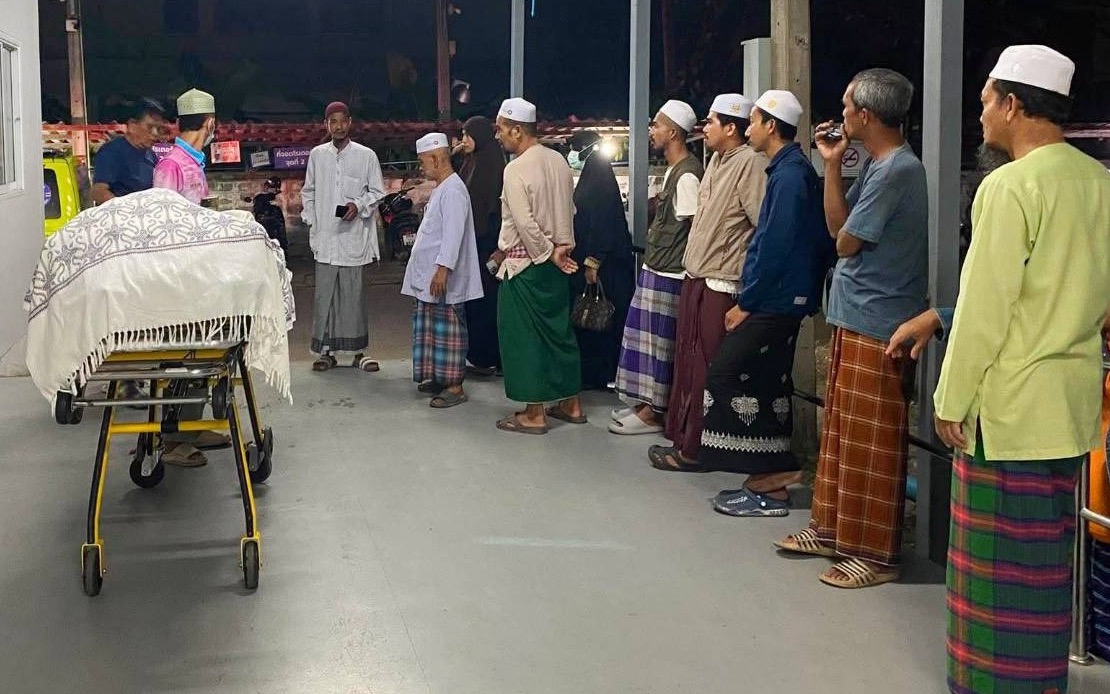
A Malaysian student died and his friend sustained life-threatening injuries when their motorcycle struck an electricity pole in the Bannang Sareng neighbourhood of Yala's Mueang district on Saturday afternoon. The fatal accident has prompted diplomatic involvement from Malaysia's consular office in the region and raised fresh concerns about the safety of Malaysian students studying at Islamic boarding institutions across the Thai-Malaysian border.
According to Mueang Yala Police Chief Col Chatchai Sakdee, investigations suggest the driver lost control of the two-wheeled vehicle before colliding with the utility pole. The pillion rider, a 20-year-old from Perlis, sustained catastrophic head injuries and was pronounced dead at the scene. The 22-year-old operator from Kuala Kedah in Kedah state survived the initial impact but was severely traumatised by the force of the collision.
The injured motorcyclist has been admitted to Yala Central Hospital's Intensive Care Unit, where he remains unconscious under medical supervision. His condition underscores the severity of the impact. Medical staff have not yet provided an update on his prognosis or timeline for recovery. The severity of both victims' injuries suggests the motorcycle was travelling at considerable speed when it collided with the pole.
Both young men were enrolled as Islamic Quranic memorisation students at Pondok Padang Pusu, a boarding school located in Yarang District, Pattani province. They were en route to the institution when the accident occurred on Saturday afternoon. Such Islamic boarding schools, known locally as pondoks, have become increasingly popular among Malaysian Muslim families seeking Islamic education for their children, with thousands of students crossing the border annually to attend these institutions.
The Malaysian Consulate in Songkhla has confirmed the identities and nationalities of both victims and is managing the official response to the tragedy. However, the diplomatic mission indicated it is currently awaiting contact from relatives of the deceased to facilitate the complex process of repatriation and related documentation. This bureaucratic phase can extend the suffering of grieving families and delay funeral arrangements according to Islamic custom.
The incident highlights the inherent risks faced by Malaysian students commuting to and from educational institutions in southern Thailand. Cross-border travel between Malaysia and Thailand, particularly in the Perlis-Kedah regions adjacent to Satun and Yala provinces, involves long-distance motorcycle journeys on roads that vary significantly in quality and safety standards. Many students rely on motorcycles as their primary mode of transportation, as they are affordable and flexible for young people navigating unfamiliar territory.
Road safety in Thailand's southern provinces remains a persistent challenge, with accident rates among foreign nationals drawing periodic attention from diplomatic channels. Factors contributing to crashes include inconsistent road conditions, varying traffic law enforcement, unfamiliar driving conventions, and the prevalence of two-wheeled transport among economically vulnerable populations. Malaysian nationals, particularly younger students unfamiliar with Thai traffic patterns, represent a vulnerable subgroup in these statistics.
The death of the Perlis student is likely to intensify discussion among Malaysian families about the adequacy of safety measures and support systems for students enrolled at cross-border pondoks. Parents often face difficult decisions about balancing their children's religious education with potential safety risks. Educational institutions and consular offices may face pressure to establish clearer safety protocols, including mandatory safety briefings, helmet requirements enforcement, and emergency contact procedures.
This tragedy underscores the broader challenge of protecting Malaysian citizens abroad, particularly young people engaged in educational pursuits in neighbouring countries. While cross-border Islamic education remains important to many Malaysian families, ensuring adequate safeguards and emergency response mechanisms remains an ongoing concern for both governments. The incident will likely prompt renewed dialogue between Malaysian and Thai authorities regarding student safety, road conditions, and coordinated emergency response procedures in border regions.

