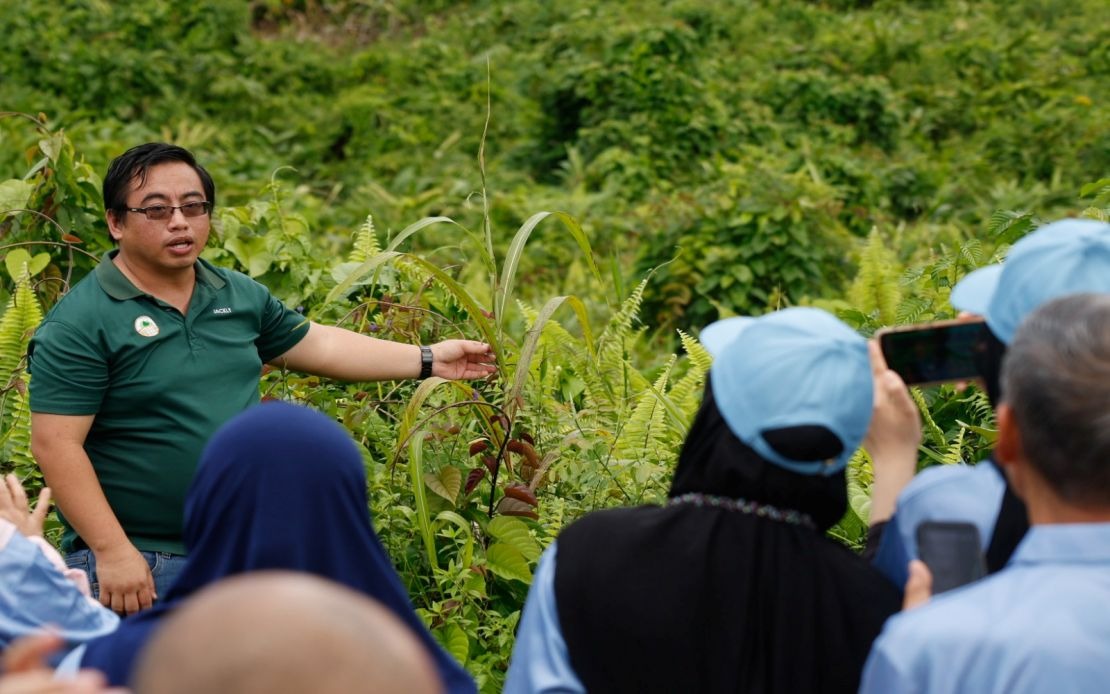
A forest landscape in Sabah that was once reduced to degradation by catastrophic fires and decades of intensive logging is undergoing a remarkable ecological recovery. The Orangutan Habitat Forest Restoration Project, centred in the Lower Kawag region of the Ulu Segama-Malua Forest Reserve, represents an ambitious effort by the Malaysian Palm Oil Green Conservation Foundation (MPOGCF) working alongside the Sabah Forestry Department to breathe life back into approximately 2,500 hectares of damaged forest.
The scale of the original devastation was substantial. According to Sabah Forestry Department Forest Conservation Officer Jackly Ambrose, roughly 90 per cent of the Lower Kawag forest's 6,000-hectare expanse fell into degraded condition following successive major fire episodes during the El Niño years of 1983, 1997 and 1998. These natural disasters compounded the accumulated damage from conventional logging methods that had operated intensively between 1980 and 2007, when forest management practices were far less sophisticated than today's standards. The combination of fire and industrial logging created a landscape that required systematic, long-term intervention to recover its ecological function.
The restoration initiative commenced in 2019 and operates under a structured ten-year programme extending to 2029, supported by RM10 million in MPOGCF funding. The work unfolds in phases of increasing scale, beginning with a pilot phase that covered 25 hectares in 2019. The second phase expanded the effort to 200 hectares and is now approaching 90 per cent completion. The current third phase, which began this year and will continue through 2029, represents the most ambitious stage yet, targeting 332 hectares with a goal of planting 132,800 tree saplings. Collectively, the project has successfully restored 225 hectares of forest to date, with ongoing expansion continuing throughout the decade.
The restoration methodology follows ecological best practice by establishing forest cover in stages. Initial planting focuses on native pioneer tree species including Laran, Binuang and Talisai, which rapidly establish canopy cover and prepare the soil conditions for subsequent phases. Once this pioneer layer matures, the project introduces hardwood species from the valuable Dipterocarpaceae family, such as Kapur and Seraya, which will form the long-term commercial and ecological backbone of the restored forest. This graduated approach recognises that degraded tropical landscapes cannot be instantly returned to pristine condition but must progress through successional stages toward mature forest composition.
Monitoring data provides encouraging evidence of restoration success. Field assessments of the second phase, tracking tree growth since 2022 plantings, demonstrate healthy growth rates and establishment. The project has earned international recognition through Preferred by Nature (PbN) certification, which validates the restoration work against the Ecosystem Restoration Verification Standard Version 3.1 and confirms alignment with global best practices for degraded forest landscape rehabilitation.
Beyond timber and canopy restoration, the project delivers critical ecosystem services. The reforestation directly enhances orangutan habitat quality within Lower Kawag, where joint monitoring conducted with the Kinabatangan Orang-utan Conservation Programme (HUTAN) detected orangutan densities ranging from one to 3.5 individuals per square kilometre following restoration commencement. The expanded forest cover also establishes wildlife corridors for larger megafauna including elephants, reducing the incidence of human-wildlife conflict that affects nearby plantation communities. This corridor function extends beyond orangutans; surveys have identified over 20 mammal species utilising the restoration areas, including 12 threatened species such as banteng and sun bears alongside more than 180 bird species, encompassing rare and endemic taxa including pittas, Bornean ground cuckoos and multiple hornbill species.
A particularly innovative aspect of the restoration programme lies in its community engagement model. Rather than relying solely on external suppliers, the project mobilised 114 participants from the Kampung Tampenau Nursery Community, drawing residents from Tambunan, Penampang and Ranau to establish a distributed nursery network supplying saplings for planting operations. This approach simultaneously addresses restoration needs and creates income-generating opportunities for rural households, particularly benefiting women in participating communities.
Participants including 39-year-old Fololita Palandis have transitioned from traditional income sources such as handicraft and woven bag sales to sapling production, selling seedlings at between RM5 and RM7 per polybag depending on species and order size. Each trained community member can produce up to 200 saplings daily, with the second phase alone receiving 80,000 saplings from community nurseries. Beyond income generation, participants receive training in forest species identification and modern nursery propagation techniques, building local capacity in forest restoration methodology.
For Malaysian readers, this Sabah initiative illustrates how market-oriented conservation can align commercial interests, ecological restoration and rural development. The MPOGCF's investment demonstrates that industries like palm oil can support landscape rehabilitation as part of broader sustainability commitments. The project also showcases Sabah's biodiversity value and the feasibility of restoring degraded tropical forests to functioning ecosystems, with clear benefits for threatened species like orangutans and elephants that increasingly conflict with agricultural expansion.
The implications extend regionally. As Southeast Asian nations grapple with deforestation and habitat loss, the Lower Kawag model provides a replicable framework combining international best-practice certification, structured phasing, scientific monitoring and community participation. The demonstration that degraded forest can recover meaningful ecological function within a decade—while generating community income and creating employment—offers a template potentially applicable across the region's degraded landscapes.
Looking ahead, the completion of the third phase through 2029 will have restored substantial areas of the Lower Kawag forest, establishing wildlife corridors and orangutan habitat while documenting long-term restoration outcomes. Whether this initiative expands to other Sabah forest reserves or influences similar projects in Peninsular Malaysia remains to be seen, but the quantifiable success metrics—225 hectares restored, 12 threatened species recorded, stable orangutan populations—suggest a conservation model worthy of regional attention and potential replication.

