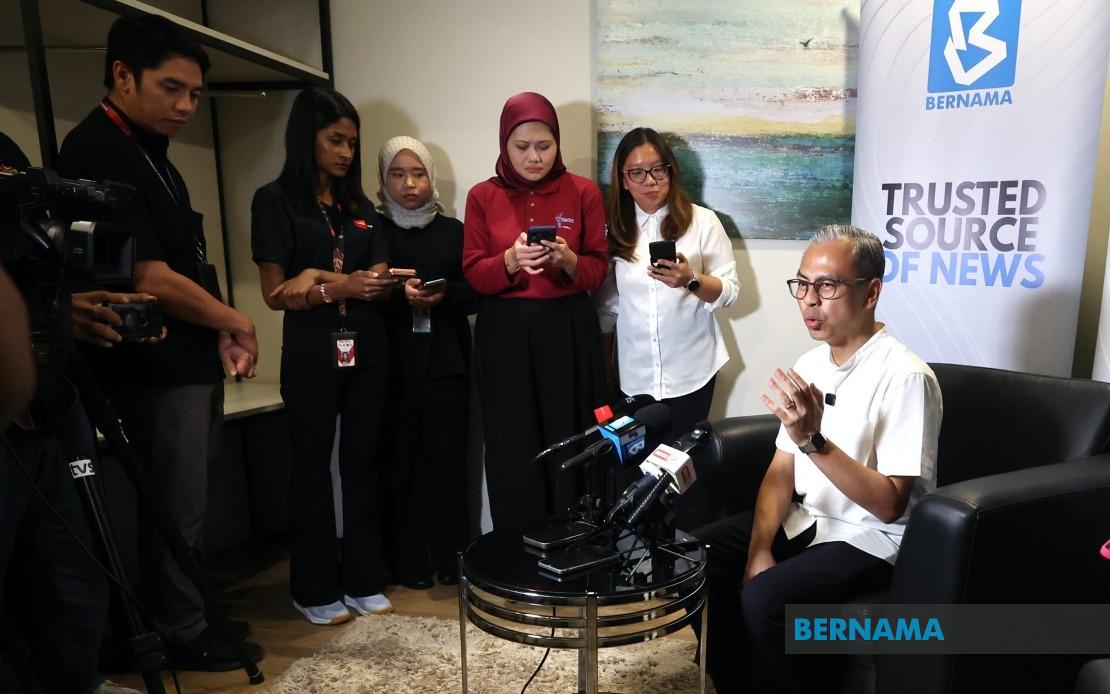
The Malaysian government is signalling its commitment to bolstering the Malaysian Media Council (MMC) as a cornerstone institution for maintaining ethical standards across the country's evolving media landscape. Communications Minister Datuk Fahmi Fadzil made this clear during a visit to the Bernama operations centre in Johor Bahru, stressing that the nascent regulatory body requires sustained governmental assistance during its formative years to function effectively as an independent arbiter of media conduct.
The establishment of the MMC represents a deliberate policy shift toward industry self-regulation rather than direct government intervention in media matters. Fahmi articulated that the ministry intends to facilitate the council's operational momentum while simultaneously recruiting a broader coalition of media stakeholders into its membership. This expansion strategy aims to create a unified framework through which the industry can address contentious issues internally, thereby insulating journalists and news organisations from ad hoc government action based on individual complaints.
A significant institutional development underpinning this approach emerged from Prime Minister Datuk Seri Anwar Ibrahim, who announced that complaints against journalists from recognised media organisations would henceforth be channelled through the MMC rather than triggering automatic investigative or prosecutorial action. This procedural change introduces procedural safeguards designed to ensure media practitioners face scrutiny only after independent review, reducing the risk of politically motivated harassment or weaponised accountability mechanisms that have historically plagued press freedom in the region.
Fahmi's remarks reveal an important tension in Malaysia's contemporary media governance: while traditional news organisations generally adhere to established journalistic ethics and codes of conduct, the proliferation of social media platforms has created regulatory gaps. These digital channels operate according to international guidelines often misaligned with Malaysian social contexts, sensitivities, and legal frameworks. The minister highlighted a recent case from Banting where a stabbing incident involving a teenager resulted in unverified victim details and sensitive police investigation information circulating widely on social platforms without regard for local laws protecting privacy or prejudicing fair trial proceedings.
The inclusion of social media platforms within the MMC's purview represents an ambitious attempt to address challenges posed by the digital information ecosystem. Fahmi acknowledged that while major platforms maintain content policies, these policies frequently lack localisation for Malaysian circumstances, creating compliance gaps between global corporate standards and national legal requirements. If these platforms were to participate in the council's self-regulatory mechanisms, issues arising from context-insensitive content distribution could receive culturally informed adjudication rather than defaulting to either platform algorithms or reactive government regulation.
This regulatory approach aligns with Malaysia's broader positioning within international media freedom frameworks. Fahmi explicitly referenced the Media Freedom Index, suggesting that strengthening industry self-regulation through inclusive institutional mechanisms could improve the country's standing among international observers who scrutinise press freedom metrics. For a nation that has faced periodic criticism regarding media independence and plurality, demonstrating institutional commitment to transparent, non-governmental oversight of journalistic conduct carries diplomatic and reputational implications within ASEAN and globally.
The scope of governmental support for the MMC remains fluid but consequential. While Fahmi committed to providing "appropriate support in the early years," the precise mechanisms, duration, and resource commitments remain unspecified. This ambiguity reflects tension between genuine institutional autonomy and the political imperatives driving the council's establishment. For the MMC to function credibly as an independent arbiter, participating organisations must perceive the body as free from governmental manipulation, yet securing voluntary participation from profit-motivated social media platforms may require incentives or regulatory leverage that could compromise perceived independence.
The invitation extended to social media platforms introduces a novel compliance challenge for digital services operating across Malaysia. These companies have previously resisted localised regulatory requirements, preferring standardised global policies that minimise operational complexity. Integrating platforms within a Malaysian self-regulatory council implies acceptance of local content standards, engagement with community concerns, and potential accountability for algorithm-driven content distribution patterns. Whether major platforms like Meta, ByteDance, or Google will voluntarily join such a body remains uncertain, particularly if participation entails meaningful constraints on their business models or algorithmic autonomy.
From a Southeast Asian perspective, Malaysia's experimentation with industry-led media governance warrants attention. The region contains several democracies struggling to balance legitimate government interests in content regulation with international human rights standards protecting press freedom. If the MMC successfully incorporates diverse media stakeholders—including digital platforms—into transparent, procedurally fair self-regulatory processes, the model could influence regulatory approaches across ASEAN. Conversely, if the council becomes a venue through which governments indirectly exercise editorial influence while claiming institutional independence, it could establish a problematic precedent for regulatory capture disguised as self-governance.
The immediate test of the MMC's viability will be whether prominent media organisations and technology platforms commit genuine membership and resource allocation rather than performative participation. Additionally, the body must demonstrate that its adjudications produce meaningful outcomes that meaningfully constrain organisational conduct, distinguishing the council from purely advisory bodies lacking enforcement capacity. For Malaysian journalists and digital publishers, the council's success or failure will determine whether self-regulation genuinely protects professional autonomy or merely creates additional bureaucratic layers through which indirect censorship can operate.
Looking forward, the MMC concept requires clarification regarding membership criteria, dispute resolution procedures, enforcement mechanisms, and most critically, how the body maintains independence from both governmental pressure and corporate lobbying. Fahmi's emphasis on encouraging participation suggests recognition that legitimacy depends upon voluntary rather than coerced membership, yet the government's role in selecting council leadership and providing institutional support creates potential conflicts of interest. As Malaysia navigates post-pandemic information ecosystem challenges, the Malaysian Media Council's institutional design will reveal much about the government's genuine commitment to pluralistic, accountable media governance versus instrumentalising self-regulation to advance state objectives through ostensibly independent mechanisms.

