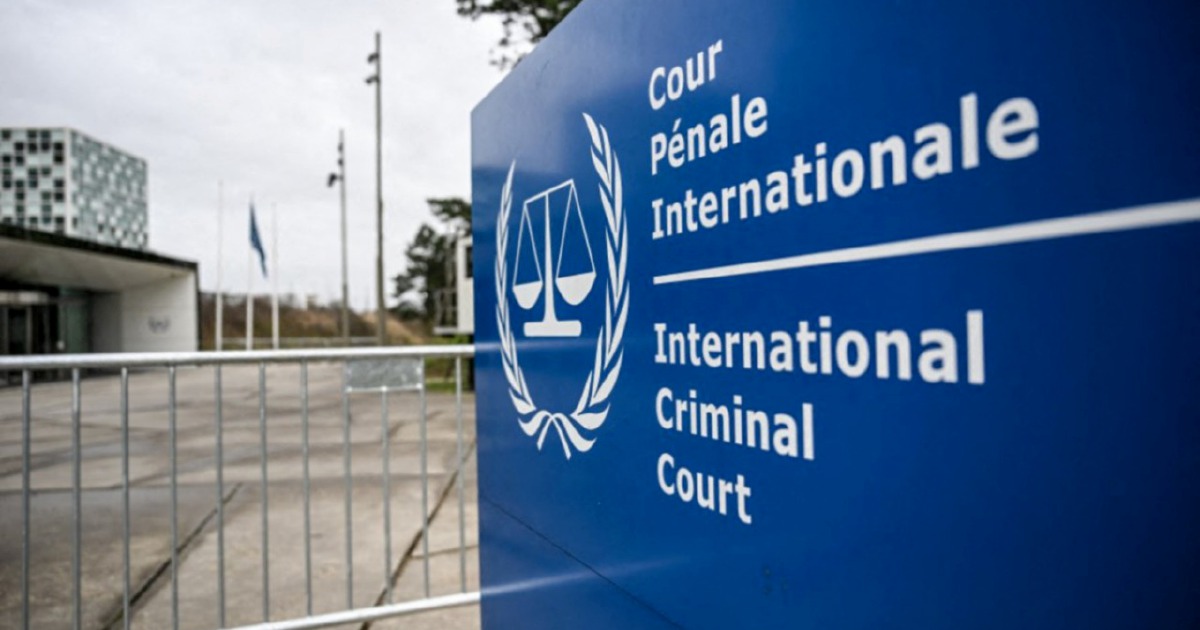
A Malaysian lawyer who lodged allegations of sexual misconduct against International Criminal Court chief prosecutor Karim Khan has stepped into the public eye for the first time to address mounting speculation about her motivations and alleged foreign connections. Speaking to CNN, the woman rejected characterisations of her role in the case that have swirled since her initial complaint, emphasising that her years of anonymity created a vacuum into which various parties inserted their own interpretations and agendas.
The emergence of the accuser's voice marks a significant turning point in a scandal that has shaken the ICC's leadership. Since her anonymous complaint first surfaced, the case has become entangled in broader geopolitical tensions, particularly regarding the court's investigations into alleged war crimes in Gaza and other sensitive jurisdictions. Multiple commentators and observers have sought to frame the allegations within these larger contexts, sometimes suggesting external actors orchestrated the complaint for strategic advantage.
The lawyer's decision to speak publicly appears driven by frustration at how her identity and credibility have been debated and second-guessed by analysts, political figures, and media outlets worldwide. By remaining unnamed, she inadvertently became a blank canvas onto which others projected their own narratives—some framing her as a credible whistleblower, others suggesting she was weaponised by opponents of Karim Khan's prosecutorial direction. This phenomenon illustrates the perils facing complainants in high-profile cases, particularly those involving international institutions and geopolitical actors with competing interests.
Karim Khan, the Palestinian-British prosecutor, has been central to ICC investigations that carry profound implications for world politics. His office has pursued investigations affecting major powers and their allies, making him a polarising figure. Some observers saw his removal as beneficial to their interests, lending credibility to suggestions that someone might orchestrate allegations against him. Such speculation, however, conflates plausible motive with actual involvement—a logical fallacy that nonetheless proves seductive to those already predisposed toward particular geopolitical interpretations.
For Malaysian and Southeast Asian readers, this case carries particular relevance given the region's complex relationship with international justice mechanisms. Southeast Asian nations have been wary of ICC interventions, with several countries maintaining distance from the institution's oversight. Malaysia itself has not ratified the Rome Statute establishing the ICC, maintaining sovereignty concerns that many regional governments share. The unfolding scandal raises questions about institutional credibility at the international level—whether the ICC can convincingly investigate its own leadership and whether political polarisation has so thoroughly compromised perceptions of the institution that factual determinations become secondary to narrative warfare.
The accuser's public statement directly addressed allegations that her complaint originated from Israeli pressure or coordination. Such claims had circulated widely, partly because Karim Khan's office had initiated investigations into alleged war crimes in Palestine, drawing fierce criticism from Israeli officials and supporters. The timing of the sexual misconduct allegations in mid-2023, several months into these investigations, invited speculation among conspiracy theorists and political analysts that external parties had weaponised complaints to remove an inconvenient prosecutor.
The lawyer's refutation of these claims matters significantly for the case's integrity. If the allegations were genuinely independent and uncoordinated with foreign intelligence services, they deserve evaluation on their own merits rather than dismissal as geopolitical machinations. Conversely, credible evidence of manipulation would fundamentally undermine the accuser's standing. The stakes extend beyond Karim Khan's tenure to encompass faith in the ICC's ability to function as an impartial arbiter of international law.
By going public, the accuser enters a high-stakes environment where her identity and account will face intense scrutiny from all sides. Those sceptical of her allegations can now subject her statements to detailed analysis, potentially undermining her credibility. Those sympathetic to her claims will rally to her defence. The conversation is unlikely to become more measured; if anything, personalising the case invites precisely the character assassination and narrative manipulation she criticised while anonymous.
The incident illuminates broader challenges facing international institutions in an age of polarised geopolitics and competing information ecosystems. Institutional legitimacy increasingly depends not merely on investigating facts correctly but on convincing diverse audiences that investigations occurred free from external pressure and political bias. When credible institutional processes collide with pervasive distrust of institutions themselves, technical accuracy proves insufficient to resolve public controversy.
This unfolding saga will likely influence Southeast Asian attitudes toward ICC engagement and international justice mechanisms more broadly. If regional governments perceive the ICC as compromised by geopolitical contestation, they will find additional justification for maintaining distance from the institution. The case thus carries consequences extending far beyond the parties directly involved, potentially shaping the trajectory of international law enforcement for years to come.

