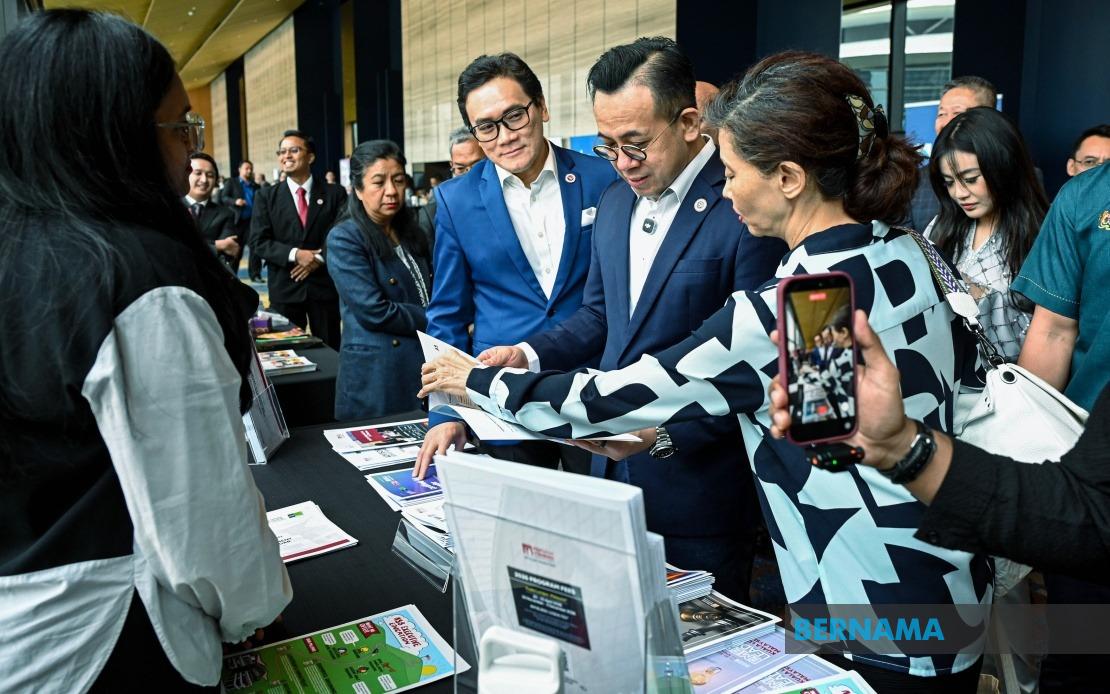
Malaysian companies need to fundamentally recalibrate their approach to product development and branding if they are to thrive in increasingly competitive international markets, according to Entrepreneur and Cooperatives Development Minister Steven Sim. Speaking at the BrandQuest 2026 programme and National Mark of Malaysian Brand Appreciation Ceremony in Kuala Lumpur, Sim emphasised that local enterprises must elevate quality, safety and health standards while embedding genuine innovation into their operations, rather than relying on price competition alone.
The minister's message reflects a broader governmental ambition to reshape Malaysia's economic identity on the global stage. For decades, the nation has largely positioned itself as a manufacturing hub where multinational corporations and local firms produce goods designed elsewhere under the "Made in Malaysia" banner. This model, while generating employment and revenue, has historically limited Malaysia's ability to capture premium market segments or establish distinctive, globally recognised brands. Sim articulated a compelling alternative vision: transitioning toward a "Made by Malaysia" framework in which Malaysians assume primary responsibility for conception, design, production and market positioning.
This strategic pivot carries substantial implications for the Malaysian business ecosystem. Under the envisioned model, local entrepreneurs would move beyond contract manufacturing into product innovation, intellectual property development and brand building. Such a transformation demands significant investments in research and development, talent cultivation and design expertise—areas where Malaysia has traditionally lagged behind regional competitors like Singapore and South Korea. The shift also requires a cultural reorientation within organisations, encouraging risk-taking and creative problem-solving rather than cost-cutting and efficiency optimisation.
To catalyse this transition, the government has already begun channelling financial support through targeted initiatives. The National Mark of Malaysian Brand certification programme received RM230,000 in allocation from SME Corp, benefiting approximately 40 micro, small and medium enterprises in obtaining the certification across 2025 and 2026. These resources serve a dual purpose: they provide direct assistance to companies pursuing quality certification while signalling government commitment to enterprises that invest in standards improvement. Sim indicated that the ministry would continue assessing whether further resource increases are justified as the programme expands.
The Power Up 10K programme represents a far more ambitious financial intervention. This initiative has distributed RM9 billion in financing to 250,000 entrepreneurs nationwide as of July, with an overall target of RM15 billion for the year. The scale of this deployment underscores the seriousness with which the government views entrepreneurial development and business expansion. For Malaysian companies competing internationally, access to adequate financing has historically been a bottleneck; by dramatically increasing capital availability, the government aims to remove this constraint and enable enterprises to invest in innovation infrastructure, marketing and market entry strategies.
The Malaysian Brand Heritage Award recipients recognised during the ceremony exemplify the diversity of sectors where this strategy can apply. Seasonings Specialties Sdn Bhd, Passive Fire Protection Sdn Bhd, Goodnite Sdn Bhd, Halagel (M) Sdn Bhd and Sydney Cake House Sdn Bhd span food processing, fire safety, consumer goods and hospitality—demonstrating that the value-innovation paradigm is not confined to high-technology industries. Smaller enterprises in traditional sectors can equally benefit from quality improvement, distinctive branding and premium positioning, provided they possess the vision and resources to execute such transformations.
The implications for Malaysia's regional and global competitive standing are substantial. Southeast Asia has witnessed remarkable brand emergence in recent years; companies from Vietnam, Thailand and Indonesia have successfully established themselves in international markets by combining cultural authenticity with quality assurance and innovation. Malaysia, possessing comparable assets and arguably greater technological capacity, has underperformed in brand development relative to its economic potential. A concerted pivot toward "Made by Malaysia" could unlock considerable value creation, particularly in sectors where Malaysian heritage, expertise or natural resources confer competitive advantages.
However, executing this strategic reorientation presents formidable challenges. Small and medium enterprises, which constitute the backbone of Malaysia's private sector, often operate with limited managerial depth, technical expertise and access to professional design and marketing services. Scaling quality standards across thousands of enterprises requires sustained capacity-building and knowledge transfer, extending well beyond financial provision alone. Additionally, established global supply chains and distribution networks favour incumbent players; displacing them through branding and innovation demands persistence and marketing sophistication that many Malaysian firms have not yet cultivated.
The minister's personal framing of his mission—"to make Malaysian businesses great"—reflects an almost nationalistic economic vision. This sentiment resonates particularly among Malaysian entrepreneurs who have long felt that their nation's economic potential has been constrained by external factors and structural limitations. By positioning entrepreneurial success as a patriotic endeavour and backing it with government resources, Sim attempts to catalyse a psychological shift in how local businesses perceive their role and aspirations. Whether such aspirational rhetoric translates into sustained competitive advantage depends ultimately on implementation quality, sustained policy commitment and the willingness of businesses themselves to embrace innovation risk.
The government's evolving approach also signals recognition that Malaysia cannot indefinitely compete primarily on labour costs or manufacturing efficiency. Automation, rising labour costs in developed economies and the emergence of competitors with lower wage bases have already eroded Malaysia's traditional advantages in these domains. Building distinctive brands and embedding innovation creates more durable competitive moats, particularly in middle-income segments where Malaysian products can command premium positioning relative to lower-cost producers without directly challenging luxury-tier incumbents.
Moving forward, the success of initiatives like BrandQuest 2026 and the National Mark certification programme will largely hinge on whether Malaysian companies internalise the philosophical shift from commoditised production to branded innovation. Government financing and institutional frameworks provide necessary but insufficient conditions; ultimately, entrepreneurial conviction and sustained investment in capability development will determine whether Malaysian brands gain meaningful international traction. For a nation with Malaysia's human capital and resources, the opportunity to construct a more valuable economic identity remains substantial—provided the business community embraces the challenge with genuine commitment.

