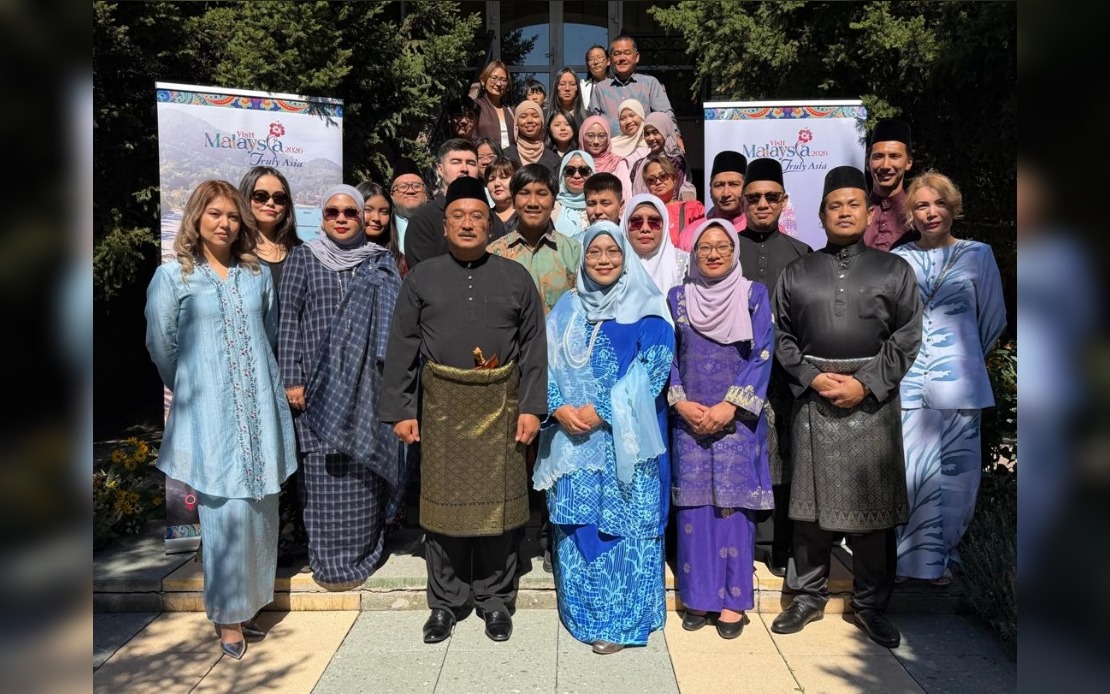
The Malaysian community residing in Kazakhstan demonstrated unwavering patriotic commitment on Saturday through a ceremonial gathering at Malaysia House in Astana, where the Jalur Gemilang was hoisted in a traditional flag-raising ceremony organised by the Embassy of Malaysia. The event, which coincided with Malaysia's 69th National Day celebrations, featured the performance of the national anthem Negaraku and the recitation of the Rukun Negara, anchoring the occasion in the nation's foundational values despite the geographical distance separating Kazakhstan from Kuala Lumpur.
Mohd Adli Abdullah, Malaysia's Ambassador to Kazakhstan, articulated a contemporary vision of national progress during his address at the reception, moving beyond conventional metrics of development. He emphasised that the Malaysia MADANI theme for the 2026 National Day and Malaysia Day celebrations—subtitled "Prosperity Enjoyed"—fundamentally challenges the notion that economic growth and infrastructure advancement alone constitute meaningful national achievement. This conceptual shift reflects a broader policy reorientation within Malaysia's governance framework, prioritising equitable distribution of development benefits across all strata of society rather than concentrating gains among privileged segments.
The Ambassador's remarks carried particular resonance for the assembled audience, which encompassed diplomatic staff, Malaysian students, alumni of the Malaysia Technical Cooperation Programme, and other expatriates maintaining ties to their homeland. By framing national progress through the lens of inclusive prosperity, Adli articulated a development philosophy that addresses persistent concerns about wealth inequality and uneven regional growth that have characterised Malaysia's economic trajectory over recent decades. This messaging becomes especially significant when directed toward Malaysian professionals abroad, positioning them as stakeholders in a reimagined national project rather than mere expatriate workers.
Central to the Ambassador's exhortation was a call for the Malaysian diaspora in Kazakhstan to embody Malaysia MADANI principles through personal conduct and professional endeavour. Adli emphasised that virtues including industriousness, moral integrity, disciplined conduct, respectful demeanour, and communal solidarity should guide the actions of Malaysians abroad. This framing elevates individual behaviour to diplomatic significance, recognising that expatriate communities function as cultural ambassadors whose conduct either enhances or diminishes their nation's international standing and image. The emphasis on maintaining unity and solidarity while fostering Malaysia's global reputation reflects longstanding concerns among Malaysian diplomatic missions regarding the representation of national values in international contexts.
The gathering coincided with the Malaysia Technical Cooperation Programme Alumni Get-Together 2026, underscoring the layered diplomatic objectives embedded within the celebration. Established in 1980 as Malaysia's institutional contribution to South-South cooperation frameworks, the MTCP represents a distinctive development assistance mechanism through which Malaysia exports technical expertise and human capital development capabilities to less-industrialised nations. By hosting an alumni reunion during National Day festivities, the embassy strategically linked patriotic observance with professional networking and knowledge-sharing among individuals who have benefited from Malaysian technical training across decades.
The MTCP's operational scope encompasses training programmes, capacity-building initiatives, and postgraduate educational opportunities specifically designed for officials and professionals from developing countries seeking to strengthen institutional capabilities and administrative competencies. The programme exemplifies Malaysia's self-positioning as a middle-power development partner capable of transferring expertise and facilitating human capital transformation within peer economies. This developmental diplomacy constitutes a subtle but consequential dimension of Malaysia's foreign policy apparatus, often overshadowed by more prominent bilateral relations but nonetheless strategically valuable in cultivating goodwill and reciprocal cooperation.
Kazakhstan has emerged as a notable beneficiary of Malaysian technical cooperation, with 196 Kazakh officials having participated in various capacity-building programmes as of 2025. This numerical representation indicates sustained engagement between the two nations across multiple sectors and institutional domains, suggesting that Malaysia-Kazakhstan cooperation extends beyond conventional diplomatic channels into technical and professional spheres. For Kazakhstan, access to Malaysian expertise in development administration and institutional governance provides practical benefits, whilst for Malaysia, such cooperation generates soft power dividends and positions the nation as a credible development partner within Central Asian contexts.
The embassy's strategic framing of the MTCP as a foundational platform for Malaysia-Kazakhstan relations illuminates how technical cooperation intersects with broader diplomatic objectives. By situating human capital development within the architecture of bilateral relations, the embassy emphasises that people-to-people connections and expertise-sharing constitute equally important dimensions alongside formal governmental cooperation. This multidimensional approach to international relations reflects evolving understandings of statecraft that privilege sustained professional networks and cultural interchange alongside traditional diplomatic protocols. For Malaysian policymakers, such initiatives demonstrate how development assistance functions simultaneously as a vehicle for humanitarian contribution and strategic relationship-building.
The reception's deliberate linkage between National Day celebrations and professional networking among MTCP alumni reveals calculated diplomatic messaging aimed at multiple audiences simultaneously. For the Malaysian expatriate community, the event reinforces emotional and institutional connections to the homeland whilst validating their professional contributions to international development. For Kazakhstani participants, the gathering offers opportunities to strengthen networks with Malaysian counterparts and deepen familiarity with Malaysian institutional cultures and developmental philosophies. For both embassy officials and respective governments, such occasions generate tangible evidence of functional bilateral cooperation and mutual benefit, supporting narratives of strategic partnership.
The ceremony's emphasis on Malaysia MADANI as an organising principle for national identity and diplomatic messaging reflects broader reorientations in Malaysian political discourse that have emerged over recent years. Rather than emphasising traditional markers of nationalism or appeals to ethnic and religious identity, this formulation prioritises inclusive prosperity, societal cohesion, and equitable development outcomes as the foundation of national purpose. When projected internationally through diplomatic channels and expatriate communities, this messaging potentially enhances Malaysia's appeal to international audiences and development partners whilst addressing internal concerns regarding divisiveness and inequality. The reception at Malaysia House in Astana thus functioned as both patriotic observance and strategic communication platform through which Malaysia articulates contemporary conceptions of national identity and purpose.
The gathering underscores enduring vitality of diaspora communities in maintaining connections to their home nations whilst contributing to international development cooperation frameworks. Malaysian professionals and students dispersed across Kazakhstan and beyond retain capacity to embody national values and advance bilateral relations through professional conduct and continued engagement with home-based institutions. For Malaysian foreign policy, cultivating diaspora commitment through symbolic occasions and professional networking platforms constitutes cost-effective leverage for extending diplomatic reach and maintaining soft power influence across geographically dispersed populations. The National Day celebration at Malaysia House thus exemplified how formal state ceremonies and grassroots community participation converge to reinforce national identity whilst advancing concrete diplomatic and development cooperation objectives.

