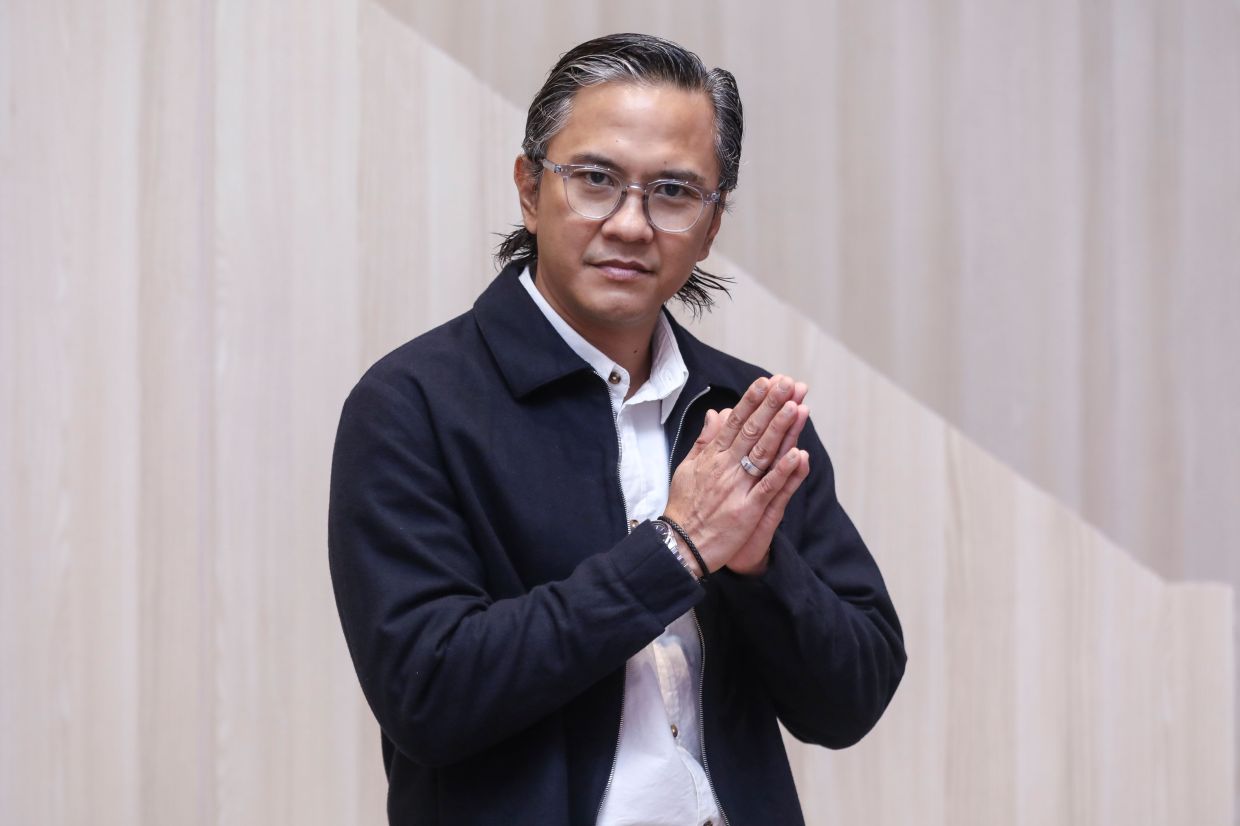
At this stage of his career, acclaimed Malaysian actor Beto Kusyairy has deliberately stepped away from chasing popularity or public recognition. Instead, the Malaysia Film Festival Best Actor winner has become selective about his projects, gravitating towards work that offers creative substance and personal meaning. This shift in priorities reflects a maturation in how he approaches his craft—one driven not by commercial appeal but by the intrinsic rewards of storytelling that resonates on a deeper level.
Kusyairy remains agnostic about the medium through which he pursues these opportunities. Whether a feature film, television series, or even radio drama, his decision-making hinges on a handful of critical factors: the quality of the screenplay, the calibre of the production team, and the director's vision. This flexible approach has allowed him to participate in diverse projects that align with his current artistic ambitions. The Astro Originals production GBGTH exemplifies this philosophy, offering him a role that challenged his abilities while tackling meaningful subject matter.
In the eight-episode series, Kusyairy portrays the father of an eight-year-old boy whose disappearance ends in tragedy. The narrative unfolds as a murder mystery, but beneath its whodunit framework lies a father figure plagued by memory gaps about the crucial day of the incident. These lapses in recollection transform him into a prime suspect in the eyes of investigators, creating a tense dynamic that drives much of the series' dramatic tension. Yet the character's obvious paternal affection complicates the audience's perception of his culpability, a storytelling device that anchors the emotional core of the production.
Beyond its function as a gripping crime drama, GBGTH has distinguished itself through its unflinching exploration of deeply uncomfortable social realities. The series addresses childhood trauma, sexual abuse, and child exploitation—themes that have historically remained either marginalised or completely absent from mainstream Malaysian television and film. This willingness to engage with such topics head-on has generated significant cultural impact, transcending the traditional boundaries of entertainment to catalyse meaningful public discourse. The production's ambition in this regard signals a potential evolution in what local creators are willing to tackle and what audiences are prepared to consume.
The numbers surrounding the series' reach underscore its widespread resonance across the region. Astro Shaw reported that GBGTH accumulated more than 58 million video views while reaching approximately 9.5 million individual users through various social media platforms. The momentum generated by this engagement extended to Netflix, where the series secured positioning on the platform's Top 10 chart for an impressive six consecutive weeks. Such metrics reflect not merely viewership but active audience participation—a phenomenon that distinguishes successful content from that which simply accumulates passive consumption.
Kusyairy has been gratified by the nature of audience engagement throughout the series' run, actively conversing with viewers across Instagram and Threads alongside his fellow cast members. In the initial phases of viewership, discussions centred on the mystery itself, with audiences developing competing theories about the perpetrator's identity. This participatory detective work, while superficially about plot speculation, represented something more significant: audiences were investing themselves in the narrative, discussing it, and sharing their hypotheses within social networks. For Kusyairy, this level of engagement demonstrated that the production had successfully captured public attention and sparked meaningful conversation.
However, as the series progressed through its episodes, the tenor of audience interaction shifted in ways that proved unexpectedly profound. Viewers began reaching out through direct messages and comments, sharing personal narratives that paralleled situations depicted in GBGTH. Many disclosed their own experiences with childhood trauma, sexual assault, and exploitation—stories they had previously held in silence. The series appeared to have functioned as a catalyst, emboldening viewers to articulate experiences they had struggled to discuss openly. For Kusyairy, these testimonials represented an extraordinary validation of the project's emotional authenticity and its capacity to create psychological safety for vulnerable disclosure.
This phenomenon reflects a broader cultural shift that Kusyairy attributes to generational change and evolving social attitudes. He observes that previous generations were often constrained by concerns about family reputation and social standing—considerations that frequently silenced victims and enabled perpetrators. Contemporary society, by contrast, has witnessed a gradual erosion of these protective silences. Younger Malaysians appear increasingly willing to bring issues of sexual abuse and harassment into public conversation, to demand accountability, and to pursue formal justice mechanisms. This willingness to discuss previously taboo topics represents not merely a change in conversation patterns but a fundamental reimagining of what constitutes family honour and social respectability.
The production team's original intention was deceptively modest: tell the story with honesty and hope that it would generate awareness. They did not anticipate the profound conversations that would subsequently emerge around the sensitive issues embedded within the narrative. Yet Kusyairy emphasises that GBGTH was never conceived as an explicitly educational medium. Television drama, by its nature, functions differently from documentaries or social advocacy campaigns. Instead, what the series accomplished was demonstrating that Malaysian audiences possess the sophistication and readiness to engage with complex, uncomfortable narratives when they are handled with subtlety and artistic integrity. The execution matters enormously—stories addressing taboo subjects must be told with nuance rather than didacticism to facilitate genuine audience engagement.
Looking toward the broader implications for Malaysian creative industries, Kusyairy expresses optimism about the trajectory of storytelling across film and television. He observes tangible improvements in production values, expanding narrative ambition, and an increasingly diverse range of genres finding expression within the local ecosystem. From action thrillers to comedies, horror productions to crime narratives, Malaysian creators are experimenting across multiple formats and tones. The success of GBGTH contributes to this momentum, potentially signalling to other producers that audiences are prepared for content that ventures beyond conventional boundaries. Kusyairy hopes the series inspires filmmakers and writers to think expansively about what storytelling can achieve—to push creative limits and explore human experiences in their full complexity. By embodying the philosophy of aspiring to inspire, GBGTH may catalyse a new era of Malaysian drama that prioritises artistic courage alongside commercial viability.

