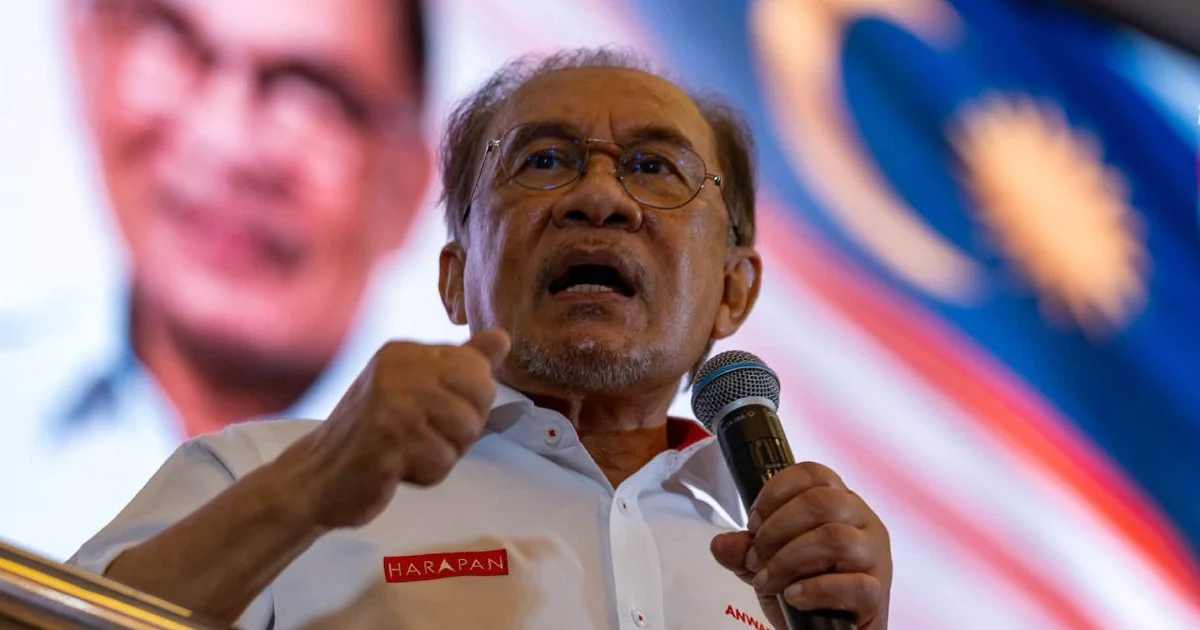
Prime Minister Datuk Seri Anwar Ibrahim has made clear that Malaysia will not be approaching Singapore with a request to help Malaysian workers cast their votes in the Johor state election taking place on July 11. The decision marks a practical approach to managing polling logistics for the estimated hundreds of thousands of Malaysians who commute daily to Singapore for employment but retain voting rights in their home constituencies.
The matter touches on a long-standing challenge facing Malaysian electoral authorities: how to accommodate citizens living and working abroad, particularly in neighbouring Singapore where the daily cross-border workforce represents one of the region's most significant labour flows. The Johor election, which will determine the state government for the next term, presents a test case for how Malaysia's Election Commission and government handle voter participation in an era of increased regional mobility.
Anwar's position reflects Malaysia's preference for managing its own electoral processes independently, avoiding formal arrangements with foreign governments that could complicate bilateral relations or set precedents. While neighbouring countries occasionally coordinate on matters affecting their citizens, facilitating voting for foreign nationals on a nation's territory involves sensitive questions about sovereignty and electoral integrity that both governments likely prefer to avoid.
The practical implication is that Malaysian voters working in Singapore will face familiar constraints: they must either return to their registered constituencies to vote in person or make alternative arrangements such as postal voting if eligible. The Election Commission has not indicated expanded postal voting facilities for this particular election, meaning most cross-border workers will need to navigate the decision between returning home to cast their ballot or forfeiting their vote.
This challenge particularly affects Johor, which shares the Causeway with Singapore and hosts one of the region's most intensely integrated labour markets. Estimates suggest that between 300,000 and 500,000 Malaysians work in Singapore daily, with a substantial proportion originating from Johor state. The logistics of ensuring these voters can participate without special arrangements from Singapore underscores the practical constraints facing Malaysian electoral processes in an increasingly mobile region.
The decision also reflects broader tensions in Malaysian electoral management. While some democratic advocates have called for expanded overseas voting mechanisms or bilateral arrangements to boost participation, others worry about the administrative burden and potential security concerns. By declining to pursue Singapore's involvement, Anwar's government signals that it views electoral participation as primarily a domestic responsibility, one that should not require arrangements affecting foreign territory or cooperation that might be politically contentious.
Singapore, for its part, would likely view any formal request to facilitate voting by foreign citizens on its soil as an unusual request that might set unwelcome precedents. The city-state maintains careful boundaries around activities conducted within its territory, and becoming involved in another nation's electoral logistics could be seen as overstepping those boundaries, regardless of the friendly bilateral relationship between the two countries.
For Malaysian voters in Singapore, the announcement effectively confirms that participation in the Johor election will depend on their ability to arrange personal leave to return home, or on mechanisms such as postal voting if they qualify. The voting date of July 11 falls on a Thursday, making it particularly difficult for working voters to justify extended absence from their employers without formal arrangements.
The cross-border voting question extends beyond Singapore. Malaysia's substantial diaspora in other countries regularly faces similar challenges during elections, prompting ongoing debate about whether the nation should expand overseas voting infrastructure. The government has periodically reviewed postal voting eligibility, but expanding it comprehensively remains politically complex and administratively demanding.
Anwar's clarification also suggests that no ground-level discussions had emerged between Malaysian and Singaporean officials about special arrangements for this election. Had there been serious consideration, the Prime Minister's office might have indicated it differently, perhaps noting that discussions were under way or that the matter was being studied. Instead, the outright statement of no plans suggests the idea either never gained traction in policy circles or was explicitly rejected at an early stage.
For election observers and Malaysian civil society, the announcement raises questions about whether the nation's electoral commission should proactively develop mechanisms to boost participation among cross-border voters. Some analysts argue that as regional integration deepens and more Malaysians work abroad, electoral systems should evolve to accommodate these demographic realities without requiring international coordination.
The Johor election will provide a natural test of voter participation rates among the state's working population. If turnout among constituencies near the Causeway proves notably lower than elsewhere, it could reignite debate about electoral accessibility for cross-border workers. Alternatively, if participation remains consistent, it may suggest that the current system, while imperfect, achieves acceptable outcomes for most voters willing to prioritise electoral participation.
Ultimately, Anwar's position underscores that managing electoral participation in an era of high regional mobility remains primarily a national challenge, one that Malaysia will address through its own institutional frameworks rather than through international agreements. Whether this approach best serves voter participation and democratic legitimacy in an increasingly interconnected Southeast Asia continues to generate discussion among policymakers and observers.

