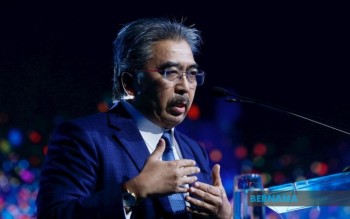
The Malaysian government is grappling with a fundamental challenge in its automotive transition strategy: how to build the charging infrastructure necessary for electric vehicle adoption without placing excessive financial burdens on consumers or the state budget. During a Dewan Negara session, MITI Minister Datuk Seri Johari Abdul Ghani acknowledged that discussions surrounding a potential EV levy remain ongoing, with no final decision yet made on whether such a mechanism will be implemented or how it would be structured.
The core dilemma centers on cost allocation. An EV levy imposed on manufacturers would likely be passed down to end consumers through higher vehicle prices, potentially dampening demand for greener vehicles. Conversely, direct government funding of charging infrastructure strains an already-stretched fiscal position. This tension reflects a broader policy challenge facing many developing economies attempting to accelerate decarbonization while managing competing budgetary priorities. Johari emphasized that the government must weigh multiple factors simultaneously: the appropriate levy level, the quantum of charges, and how much longer subsidies can be sustained without compromising other spending commitments.
Malaysia's electricity generation profile complicates the equation further. The nation remains substantially dependent on gas and coal-fired power plants, meaning that an expanded EV charging network would increase demand for electricity from these conventional sources—at least in the near term. Unlike countries with abundant renewable generation capacity, Malaysia cannot simply shift to electric vehicles without simultaneously addressing energy infrastructure modernization. The minister's observation that many stakeholders fail to appreciate this "broader picture" suggests frustration with public discourse that treats EV adoption in isolation rather than as part of an integrated energy transition.
The government is currently considering a dedicated levy mechanism whereby charges on each EV sold would flow into a specialized fund exclusively for public charging station development. This approach differs from general taxation and creates transparency around how much money is being collected and whether it correlates with infrastructure rollout. Johari articulated the rationale clearly: relying solely on vehicle manufacturers or distributors to fund charging networks has proven insufficient, given the scale of investment required. The comparison to China's experience is instructive—that nation has deployed hundreds of thousands of public charging points through massive state investment, a scale that exceeds Malaysia's current fiscal capacity.
Financial constraints underscore the urgency of this policy discussion. Operating under a fiscal deficit, the government faces difficult trade-offs between various development priorities. Johari's question—"When we are running a deficit, how are we going to fund it? Where will the money come from?"—reflects real budgetary pressure rather than ideological opposition to EV infrastructure. A levy on vehicle manufacturers could theoretically generate substantial revenue without directly impacting government accounts, though it would indirectly affect consumers through higher car prices. This approach essentially shifts the financing burden from public coffers to the automotive sector and ultimately to buyers.
The government's approach reflects a pragmatic recognition that Malaysia must accommodate both internal combustion engine vehicles and electric vehicles for the foreseeable future. Rather than pursuing aggressive rapid transition policies that might alienate large constituencies, policymakers are seeking mechanisms that encourage gradual adoption while building supporting infrastructure. This middle-ground strategy carries its own risks—it may neither accelerate the energy transition sufficiently to meet climate commitments nor satisfy those seeking faster decarbonization.
Regional context matters significantly. Several Southeast Asian nations face similar infrastructure challenges, though policy responses have varied considerably. Thailand, for instance, has offered substantial tax incentives to manufacturers, while Indonesia has focused on domestic battery production. Malaysia's approach of considering a dedicated levy and fund represents an attempt to create a sustainable, self-financing mechanism rather than indefinitely relying on budgetary allocations or private sector goodwill. The precedent set by this policy could influence how other regional governments approach the infrastructure financing question.
The minister's repeated emphasis on subsidy sustainability signals that budget allocation for EV incentives may not continue indefinitely at current levels. This creates urgency for the government and industry to establish funding mechanisms that do not depend on recurring taxpayer support. A self-sustaining levy system would theoretically enable continued infrastructure expansion even if general government subsidies decline. However, the mechanism requires careful calibration to ensure that revenue generated matches infrastructure development costs and that charges do not become prohibitively high.
Stakeholder perspectives will likely shape the final policy design. Vehicle manufacturers may resist levies that increase production costs or sales prices, potentially arguing that current market conditions already present sufficient barriers to EV adoption. Consumer groups will presumably advocate for lower charges or exemptions for lower-income buyers. Infrastructure companies may seek attractive operating margins for charging station deployment. The government must navigate these competing interests while maintaining its fiscal consolidation objectives—a complex balancing act that explains why no decision has yet been finalized.
Looking forward, the timing of any levy implementation carries implications for market dynamics. Introducing charges too early might dampen nascent EV adoption, particularly among price-sensitive buyers in Malaysia's car market. Delaying implementation risks prolonging the period in which public infrastructure development lags consumer demand, potentially creating bottlenecks that undermine confidence in electric vehicle practicality. The government's deliberative approach suggests officials are acutely aware of these timing risks and are attempting to find an optimal implementation window.
The broader significance of this policy discussion extends beyond vehicle electrification. It reflects how Malaysia is attempting to balance developmental aspirations, environmental commitments, and fiscal realities—tensions that will characterize many policy debates in coming years. The resolution of the EV levy question will reveal policymakers' willingness to implement moderately unpopular measures in service of longer-term infrastructure goals, and their capacity to manage stakeholder expectations around cost-sharing in the green transition. Johari's emphasis on helping the public understand "the broader picture" suggests the government recognizes that policy success ultimately depends on public acceptance of the trade-offs involved.

