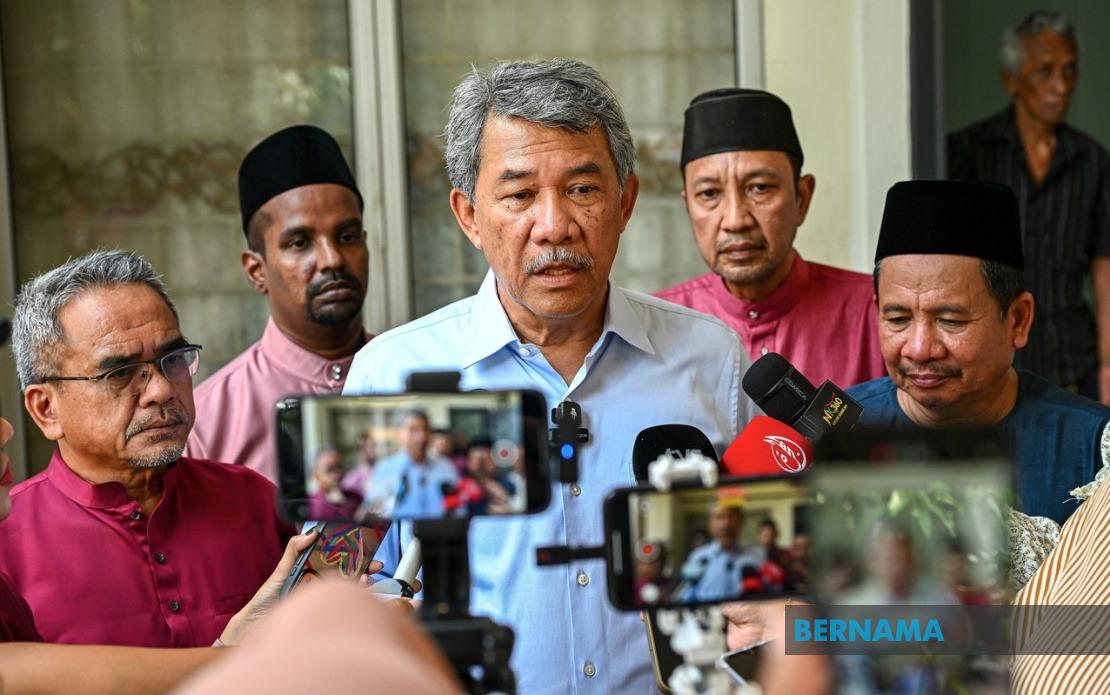
Malaysia remains committed to ensuring the welfare and security of Myanmar refugees before returning them home, Foreign Minister Datuk Seri Mohamad Hasan declared, underscoring that the government will not rush the repatriation process despite international pressures. Speaking in Seremban following a community service programme, Mohamad Hasan outlined a cautious, staged approach that prioritises individual assessment over mass transfers, signalling Malaysia's determination to uphold humanitarian standards despite the significant numbers of displaced persons from Myanmar currently residing in the country.
The Foreign Minister emphasised the critical role of international cooperation in executing the repatriation plan responsibly. Close coordination between the UNHCR and Malaysia's Home Ministry will form the foundation of the process, with both organisations working to authenticate refugee identities and evaluate the security landscape that returnees would encounter upon arrival in Myanmar. This dual verification mechanism addresses concerns that premature repatriation could expose vulnerable individuals to persecution, violence, or political instability in their home regions. The collaboration reflects Malaysia's understanding that the Myanmar situation extends beyond simple border management to encompass complex humanitarian and geopolitical dimensions.
Mohamad Hasan revealed that diplomatic channels have been activated at senior levels to facilitate orderly repatriation arrangements. The Secretary-General of the Ministry of Foreign Affairs has been tasked with engaging Myanmar's government through its embassy in Malaysia to negotiate the logistics and timelines for refugee returns. This diplomatic engagement signals Malaysia's preference for bilateral cooperation rather than unilateral action, acknowledging Myanmar's sovereignty while maintaining its own humanitarian commitments. The measured pace of these negotiations reflects the complexity of coordinating movements across international borders during a period of significant instability in Myanmar.
Contradicting earlier reports suggesting Myanmar authorities were ready to receive 5,000 nationals via ship, Mohamad Hasan indicated Malaysia's flexibility in determining repatriation numbers and methods. Rather than waiting for large cohorts to accumulate, the government is prepared to initiate transfers immediately for individuals whose documentation has been verified and whose security can be assured. The Foreign Minister noted that the first batch of approximately 1,000 refugees already cleared for repatriation need not await completion of processing other cases. This incremental approach acknowledges the heterogeneous nature of Myanmar's displaced population, recognising that different individuals face varying degrees of risk depending on their ethnic background, political affiliations, or previous involvement in civil unrest.
The Malaysian government's position reflects growing regional awareness of Myanmar's refugee challenge as a collective concern requiring coordinated ASEAN action. Mohamad Hasan stressed that member states must address this issue collectively rather than allowing individual nations to shoulder disproportionate burdens. The ASEAN framework provides a mechanism for burden-sharing and establishing common humanitarian standards, though implementation challenges persist given divergent national interests and capacities. Malaysia's leadership in articulating this multilateral perspective demonstrates its awareness that unilateral repatriation drives risk creating resentment among ASEAN partners already hosting significant refugee populations.
Central to Malaysia's approach remains adherence to ASEAN's Five-Point Consensus regarding Myanmar, a diplomatic framework established to guide regional engagement with the junta-ruled nation. Mohamad Hasan reaffirmed that this consensus must remain the cornerstone of ASEAN mechanisms addressing Myanmar's broader political crisis, which has generated the refugee flows Malaysia now grapples with. The Five-Point Consensus encompasses calls for ceasefire, dialogue initiation, humanitarian assistance provision, and ASEAN's special envoy role, positioning refugee repatriation within a larger context of political resolution. Malaysia's insistence on this framework suggests its belief that premature or coercive refugee returns could undermine fragile diplomatic efforts aimed at long-term Myanmar stabilisation.
The practical implications of Malaysia's cautious stance carry significant weight for the estimated millions of Myanmar nationals and ethnic minorities currently displaced across Southeast Asia. Malaysia hosts one of the largest Myanmar refugee populations in the region, with communities stretching across urban centres and sprawling camps. These individuals represent diverse backgrounds, including persecuted ethnic minorities, political opponents of Myanmar's military government, and economic migrants whose status remains ambiguous under international refugee law. Mohamad Hasan's emphasis on individual verification and security assessment acknowledges this complexity, recognising that blanket repatriation would expose many to genuine danger.
The Foreign Minister's statements also implicitly address concerns within Malaysia's own refugee management infrastructure regarding the sustainability of hosting large displaced populations indefinitely. By committing to staged, verified repatriation rather than mass transfers, Malaysia balances humanitarian obligations against domestic resource constraints and social integration challenges. This calibrated approach seeks to manage expectations among various stakeholders, from UNHCR and humanitarian organisations pressing for movement on refugee cases, to Myanmar authorities interested in reclaiming nationals, to Malaysian communities absorbing refugee populations in urban areas and camps.
The involvement of the Home Ministry alongside the Foreign Ministry underscores the security dimensions of repatriation decisions. Beyond humanitarian verification, Malaysian authorities must assess whether returning individuals could pose security risks domestically or facilitate trafficking networks, money laundering, or extremist activity. The Home Ministry's cooperation ensures that repatriation policies integrate national security considerations with international humanitarian law, preventing the process from becoming either a tool of indiscriminate expulsion or a vulnerable population remaining indefinitely in limbo.
Looking forward, Malaysia's position suggests that repatriation timelines will stretch considerably, with the government prioritising quality assurance over rapid processing volumes. This approach may frustrate some international observers or Myanmar authorities eager for swift population transfers, yet it reflects Malaysia's determination to prevent tragic outcomes resulting from premature returns to unstable regions. The phased methodology allows time for evolving security situations in Myanmar to improve, for diplomatic efforts within ASEAN to potentially achieve breakthrough progress, and for both the UNHCR and Malaysian authorities to conduct thorough individual assessments ensuring returnees face manageable risks upon repatriation to their home regions.

