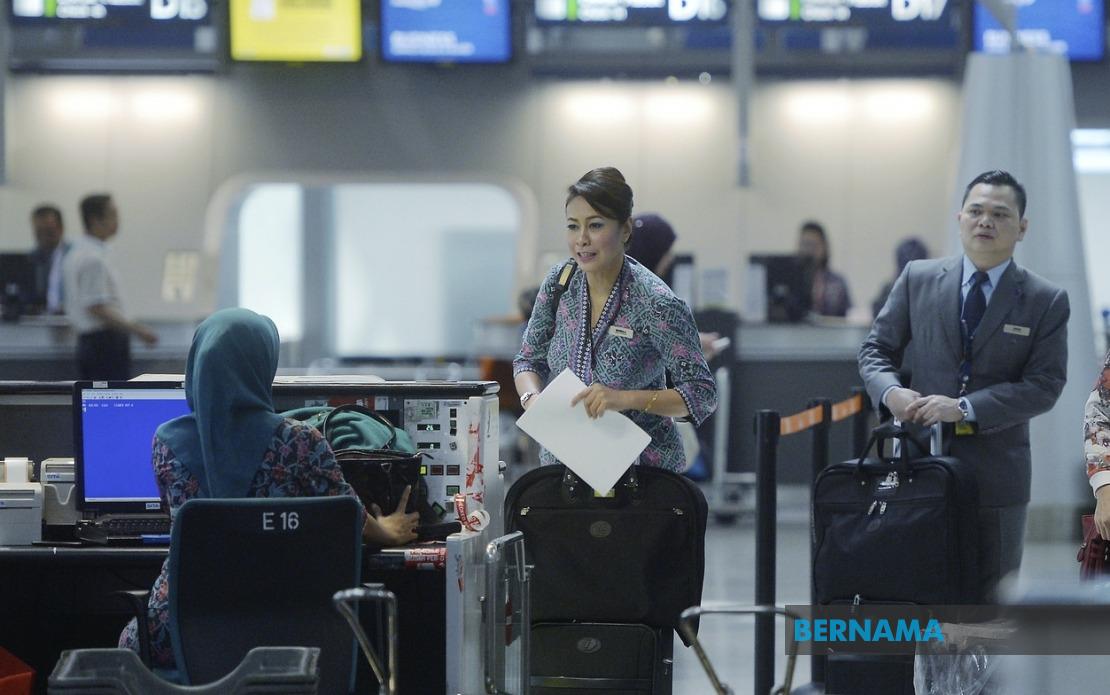
Malaysia's aviation authorities have committed to strengthening security screening procedures for pilots and flight crew across all airports in the country, a move triggered by the recent arrest of a 39-year-old Malaysian pilot in Indonesia on suspicion of attempting to smuggle drugs. The enhancement forms part of a comprehensive security review launched by the Malaysian Border Control and Protection Agency (AKPS) in collaboration with the Transport Ministry, Royal Malaysia Police, and Malaysia Aviation Group.
The decision came after Datuk Seri Mohd Shuhaily Mohd Zain, director-general of AKPS, chaired a high-level meeting at Sepang on August 3 alongside Transport Ministry secretary-general Datuk Seri Jana Santhiran Muniayan and representatives from Malaysia's aviation operators. The directive signals a coordinated effort among key government bodies to address vulnerabilities in existing airport security protocols, with particular focus on personnel with direct access to aircraft and sensitive airport zones.
The incident that prompted this action unfolded when the Malaysian pilot was apprehended shortly after landing at Soekarno-Hatta International Airport in Jakarta on July 29. He had operated an international passenger flight from Kuala Lumpur and was found carrying approximately 25 kilogrammes of ecstasy, valued at roughly Rp60 billion (approximately RM13.5 million), concealed within his luggage. According to Indonesia's Director-General of Customs and Excise Djaka Budi Utama, the suspect arrived at the Jakarta airport carrying prohibited narcotics that had somehow evaded detection at Malaysia's departure point.
What has particularly troubled Malaysian authorities is that the pilot successfully cleared all security screening procedures at Kuala Lumpur International Airport before his departure on July 28. Speaking at a press conference, Mohd Shuhaily acknowledged this troubling aspect of the case, explaining that routine scanner screening at KLIA detected no suspicious images of either the contraband or the luggage itself. The apparent failure of existing detection methods to identify such a substantial drug consignment has prompted authorities to conduct a thorough investigation into the screening protocols and identify potential gaps in security infrastructure.
The AKPS director-general indicated that the agency is awaiting detailed feedback from the Royal Malaysia Police to better understand how the suspect navigated security screening undetected. This investigative process is expected to inform the design of enhanced screening measures that will be implemented in the near future. The review extends beyond just technical improvements to scanning equipment and includes comprehensive reassessment of personnel vetting and monitoring procedures that apply to aviation workers with airside access.
Malaysia Aviation Group's participation in the security review underscores the serious approach taken by private operators within the aviation sector. The MAG representatives who attended the meeting acknowledged the severity of the incident and committed to supporting enhanced screening measures at their respective operations. This collaborative stance suggests that the aviation industry recognises the reputational and operational risks posed by security breaches involving flight crew, who occupy positions of significant trust and responsibility within the sector.
The enhanced screening procedures will encompass all pilots and crew members, as well as broader airport staff categories with access to sensitive areas. Mohd Shuhaily stated that screening protocols will become more comprehensive, though specific implementation details remain under review. This expansion reflects an understanding that security vulnerabilities can exist at multiple points within the airport ecosystem, not solely at passenger checkpoints but also in areas controlled by aviation personnel themselves.
For Malaysia's aviation sector, this incident represents a significant setback in an industry that has worked to rebuild international confidence following previous security challenges. The fact that a senior aviation professional with regular international flight responsibilities could allegedly attempt such an operation raises questions about existing pre-employment vetting procedures, ongoing monitoring of personnel conduct, and the effectiveness of background checks for those with access to aircraft and restricted airport zones.
The timing of this case also carries regional significance at a moment when Southeast Asian nations are collectively strengthening border security measures and working to combat transnational drug trafficking. Malaysia's response demonstrates commitment to international aviation security standards while also addressing what appears to be a failure in existing protocols designed to prevent exactly this type of violation. The enhanced procedures being contemplated will likely set benchmarks that other carriers and airports in the region may subsequently adopt.
Authorities have indicated that the comprehensive review will take several weeks, with implementation expected in the near future. During this interim period, Malaysian aviation authorities will likely implement interim measures to provide additional scrutiny of personnel with airside access. The goal extends beyond mere procedural adjustments to encompass a cultural shift within aviation operations that treats security screening of staff with the same rigour typically applied to passenger and baggage screening.
This incident also highlights the broader challenge facing aviation security worldwide: balancing operational efficiency with the need to prevent misuse of trusted positions within the system. Pilots and flight crew occupy roles that inherently involve restricted access and reduced screening scrutiny compared to passengers, making them potentially attractive to criminal organisations seeking to exploit systemic vulnerabilities. Malaysia's response suggests a recognition that this trusted status cannot be taken for granted and must be reinforced through regular reassessment of screening methodologies and personnel conduct monitoring.
The investigation by AKPS and PDRM is expected to yield recommendations that could reshape Malaysia's approach to aviation security for years to come. Beyond the immediate incident, the review process offers an opportunity to modernise procedures that may have remained largely unchanged for several years. As international travel patterns continue to expand within Southeast Asia and Malaysia positions itself as a regional aviation hub, robust and contemporary security screening procedures will prove essential to maintaining passenger confidence and international compliance standards.

