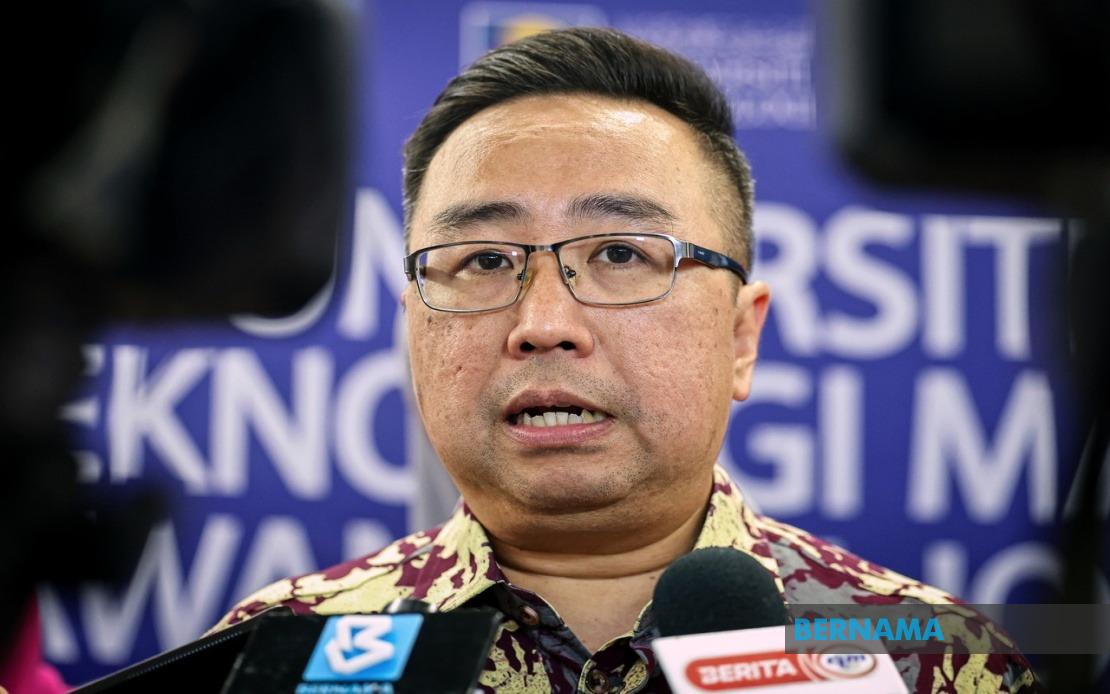
Malaysia's commitment to building a competitive scientific and technological workforce has crystallized into a comprehensive strategy centred on talent cultivation, as the nation prepares for its role as host of the 23rd ASEAN Ministerial Meeting on Science, Technology and Innovation (AMMSTI-23) in June 2027. The Ministry of Science, Technology and Innovation (MOSTI), helmed by Datuk Chang Lih Kang, has positioned human capital development as the cornerstone of its regional leadership agenda, recognising that sophisticated technical expertise forms the foundation upon which nations attract and retain high-value investments in advanced industries.
Datuk Chang articulated the ministry's conviction that systematic investment in talent development directly translates into enhanced capacity to draw cutting-edge manufacturing and research operations to Malaysian soil. This linkage between workforce capability and foreign direct investment reflects the evolving competitive dynamics in Southeast Asia, where nations vie for semiconductor fabrication facilities, artificial intelligence research hubs, and biotechnology operations that generate substantial economic multipliers and export earnings. The strategic sequencing of this messaging—announcing talent prioritisation ahead of hosting a ministerial summit—signals Malaysia's intent to position itself as a serious contender in the regional innovation economy.
Beyond talent cultivation, MOSTI has delineated a robust portfolio of technological frontiers commanding the ministry's strategic attention. The enumerated focus areas—energy transition, artificial intelligence, digitalisation, advanced materials, nanotechnology including hydrogen applications, and biotechnology—reflect both global megatrends and Malaysia's inherent competitive advantages. The emphasis on hydrogen technology, in particular, capitalises on Malaysia's existing petrochemical infrastructure and abundant natural resources, positioning the nation to become a hydrogen economy pioneer in Southeast Asia. Similarly, the biotechnology designation acknowledges Malaysia's tropical biodiversity and pharmaceutical manufacturing heritage, sectors capable of generating premium-value economic activity.
The execution of this vision depends fundamentally on the revitalisation of Technical and Vocational Education and Training (TVET) systems across the country. MOSTI, whilst lacking direct administrative authority over vocational education, has assumed a coordinating role across 12 government ministries involved in TVET implementation, including the Ministry of Education, Ministry of Higher Education, Ministry of Rural and Regional Development, and Ministry of Human Resources. This multi-ministerial architecture reflects the complexity of transforming occupational education systems inherited from earlier industrial paradigms into agile mechanisms capable of producing practitioners fluent in robotics, artificial intelligence algorithms, and computational thinking.
Datuk Chang stressed that TVET curriculum modernisation cannot be merely additive—layering contemporary technologies atop conventional technical instruction—but must represent a fundamental pedagogical reorientation. The incorporation of robotics, artificial intelligence, and coding into vocational programmes serves not to replace traditional craftsmanship but to enhance technicians' capacity to operate within increasingly automated and digitalised production environments. This represents a critical distinction for Malaysia's workforce development: technicians emerging from modernised TVET pathways will possess the adaptability to service both legacy manufacturing equipment and next-generation Industry 4.0 infrastructure, a versatility that commands premium compensation in regional labour markets.
The MOSTI TechTalks Series 2/2026 programme exemplifies the ministry's approach to cultivating intellectual interest and career awareness among Malaysia's youth. Conducted iteratively at university campuses nationwide, these engagements function as bridge mechanisms between academic environments and the practical STI ecosystem increasingly shaping Malaysia's industrial future. By exposing students to contemporary innovations, policy trajectories, and employment pathways within science and technology sectors, the university-based TechTalks programme addresses a persistent disconnect between tertiary education and labour market realities in Malaysia.
The timing of AMMSTI-23 in June 2027 affords Malaysia approximately two years to demonstrate tangible progress in talent pipeline development and technological capability elevation. Regional peer nations—Singapore, Thailand, and Vietnam—have each invested heavily in similar ecosystem-building initiatives, creating competitive pressure on Malaysia to articulate distinctive advantages. The emphasis on collaboration and cross-ministerial coordination signals recognition that technology-driven economic transformation cannot be achieved through any single government agency, requiring instead orchestrated effort spanning education, employment, regional development, and human resources portfolios.
For Malaysian technology enterprises and multinational corporations operating within the country, MOSTI's talent and innovation agenda carries direct implications. Companies dependent on sophisticated technical labour—semiconductor manufacturers, pharmaceutical firms, advanced materials producers—stand to benefit from improved pipeline quality and reduced recruitment friction. Simultaneously, the government's explicit prioritisation of emerging technology domains creates policy predictability and potential incentive frameworks supporting private sector investment in these sectors. The articulation of a coherent national STI strategy ahead of the regional summit positions Malaysia as a serious destination for technology talent and capital flows competing with established innovation hubs in Singapore and Seoul.
The broader Southeast Asian context amplifies the significance of Malaysia's hosting role and talent development emphasis. The ASEAN region collectively faces pressure to develop indigenous technological capabilities rather than remaining dependent on technology transfer from developed economies. Malaysia's demonstrated commitment to systematic workforce development and focus on globally competitive technology domains resonates with regional aspirations for greater technological self-reliance. By positioning talent development as the central messaging around AMMSTI-23, Malaysia contributes to a regional conversation prioritising human capital as the essential catalyst for technological advancement and competitive advantage.
Implementation challenges remain substantial. Transforming TVET systems requires substantial curriculum development resources, instructor retraining programmes, and equipment investment across vocational institutions nationwide—commitments demanding sustained budgetary priority amid competing fiscal pressures. Ensuring that emerging technology expertise translates into accessible employment opportunities for TVET graduates necessitates private sector engagement and potentially wage subsidies or tax incentives supporting early-career employment in high-tech occupations. The multi-ministerial coordination structure, whilst conceptually sound, introduces complexity and potential coordination friction across agencies with divergent institutional cultures and resource constraints.
Nevertheless, MOSTI's strategic articulation reflects recognition that Malaysia's prosperity increasingly depends on technological sophistication and human capital cultivation rather than natural resource extraction or low-cost labour competition. The deliberate sequencing of talent development messaging ahead of Malaysia's AMMSTI-23 hosting role signals serious intent to translate stated priorities into institutional practice and measurable capability elevation. As Malaysia assumes its position as regional convener for science, technology, and innovation dialogue, the strength of its domestic talent pipeline and technological ecosystem will substantially determine the credibility and influence it projects within ASEAN and the broader international innovation community.

