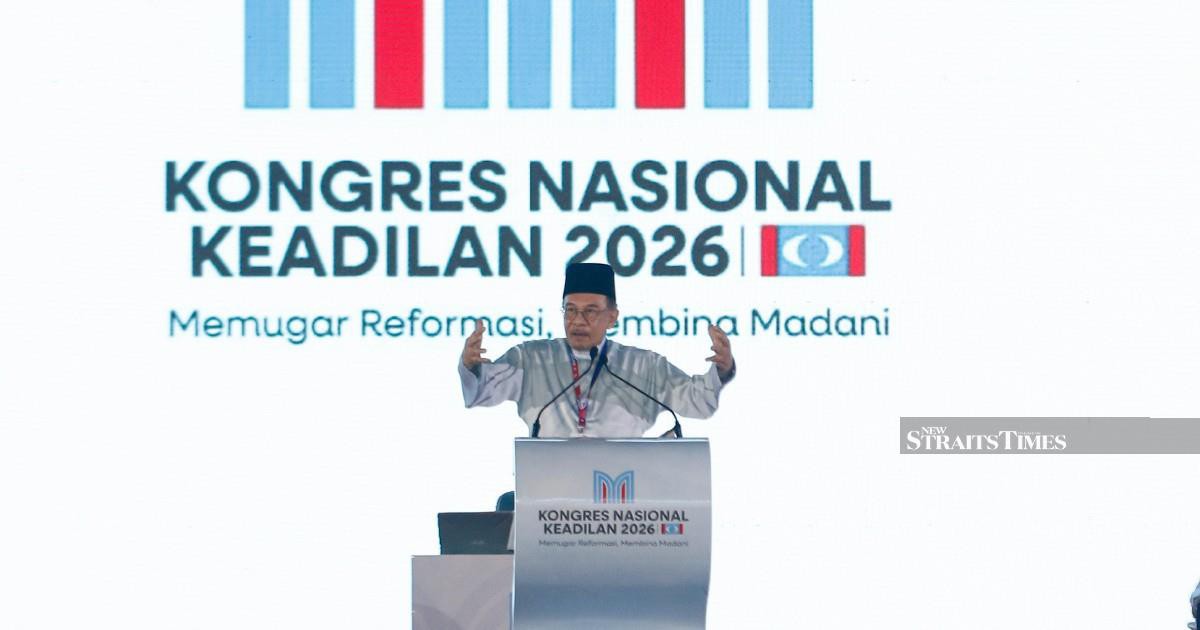
Prime Minister Datuk Seri Anwar Ibrahim has signalled his government's intention to repeal the Universities and University Colleges Act 1971, a foundational piece of legislation that has governed Malaysia's university system for over five decades. The announcement, made at Ayer Keroh, represents one of the most substantial structural changes to the nation's higher education framework in recent years and reflects the administration's broader agenda to modernise institutional frameworks.
The Universities and University Colleges Act 1971, commonly referred to as Act 30, has provided the regulatory backbone for Malaysia's university sector since the early 1970s, defining governance structures, operational frameworks, and statutory powers of public and private institutions. The legislation emerged during a different era of higher education policy and has remained largely intact despite significant demographic, economic, and technological shifts in the intervening decades. Its repeal would necessitate the development of entirely new legislative mechanisms to oversee Malaysia's rapidly expanding higher education landscape.
The proposed abolition carries substantial implications for Malaysia's university autonomy and governance models. Under Act 30, public universities operate under strict ministerial oversight with limited institutional independence, a framework that education analysts have long argued constrains institutional decision-making and competitive positioning on the regional stage. By removing this legislation, the government could potentially create space for enhanced university autonomy, though the specific replacement framework remains unclear at this stage.
For Malaysian students and families, the change signals potential shifts in how universities operate, the flexibility available to institutions in curriculum development, fee structures, and employment of academic staff. The current act imposes considerable uniformity across public universities, limiting differentiation and specialisation that might otherwise develop if institutions operated under less prescriptive regulations. A new framework could theoretically allow universities to pursue distinct missions and develop competitive advantages.
The timing of this announcement aligns with growing international pressure on Southeast Asian nations to enhance their university rankings and research output. Malaysia's public universities, whilst respectable regional performers, have seen their relative standing challenged by peers in neighbouring countries and by the rapid internationalisation of higher education. Removing restrictive legislation could enable bolder strategic positioning and more dynamic resource allocation decisions.
Education observers anticipate that any replacement legislation would need to address critical governance questions that Act 30 currently handles: institutional accountability mechanisms, quality assurance frameworks, academic standards, and the balance between ministerial oversight and institutional autonomy. The process of drafting successor legislation will likely involve consultations with universities, student bodies, employers, and international education bodies to ensure the new framework supports both institutional excellence and public accountability.
The announcement also reflects broader reform momentum within the Anwar administration on institutional modernisation. Previous initiatives addressing judicial independence, regulatory agencies, and government structures suggest a pattern of reassessing post-independence legislation to align with contemporary governance standards. Higher education reform fits naturally within this agenda, though the complexity of educational policy means that legislative change must be carefully calibrated to avoid operational disruptions.
Institutionally, Malaysia's universities have been preparing for potential governance changes amid wider global trends toward greater operational autonomy and performance-based accountability. The proposed legislative change could accelerate adoption of international best practices in areas such as research management, international partnerships, and revenue diversification. Some universities have already begun modelling themselves on more autonomous institutions, suggesting they are positioned to operate effectively under a reformed framework.
The implications for Malaysia's position within the regional higher education ecosystem are significant. Singapore, Thailand, and Indonesia have all undertaken substantial university reforms in recent years, and Malaysia risks falling behind if its institutions remain constrained by outdated legislation. Enhanced autonomy could enable Malaysian universities to compete more effectively for international talent, partnerships, and research funding, potentially strengthening the sector's contribution to national innovation and economic development.
For international students considering Malaysian universities, the reform could signal institutional vibrancy and engagement with contemporary higher education practices, though substantial uncertainty remains until replacement legislation is detailed. International accrediting bodies and university partners typically value clarity on governance frameworks, so the transition period will require careful management to maintain confidence.
The government has not yet detailed the timeline for introducing replacement legislation, the process for consulting stakeholders, or the specific principles that will guide the new regulatory framework. These details will prove crucial for determining whether the reform genuinely enhances Malaysia's higher education competitiveness or creates governance vacuums that inhibit institutional performance. The coming months will reveal whether this initiative represents genuine transformation or primarily symbolic institutional housekeeping.

