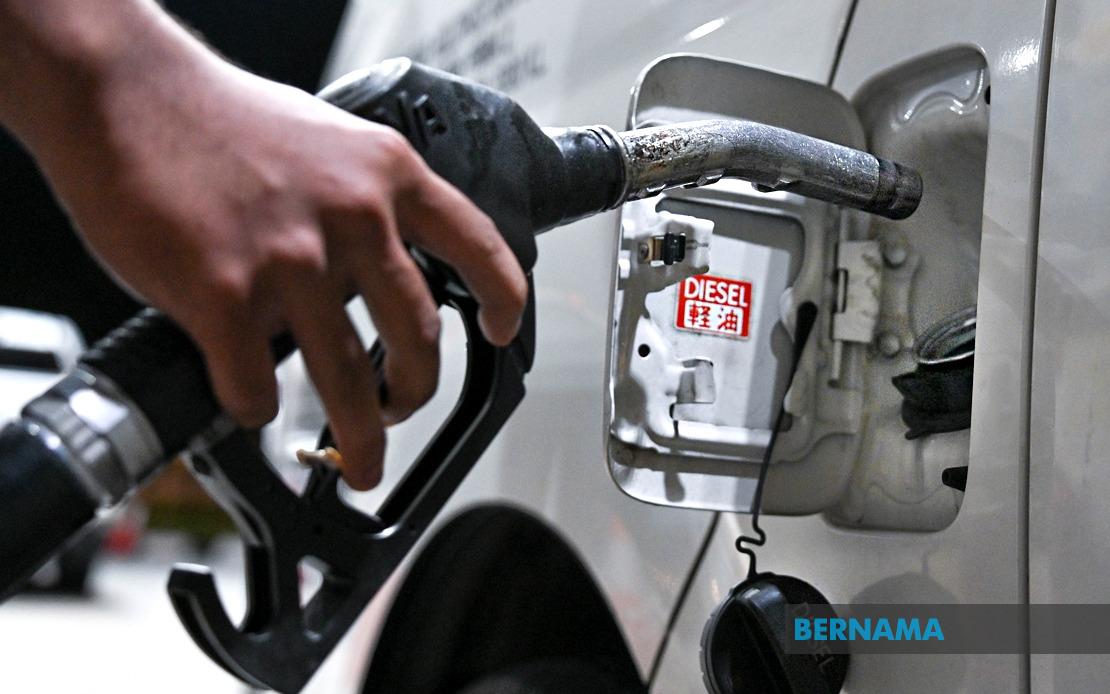
Malaysia's government is preparing to launch a comprehensive diesel subsidy reform programme starting July 1 that officials project will recover up to RM2 billion in annual savings from fuel subsidy leakages. The BUDI MADANI Diesel initiative, announced by Second Finance Minister Datuk Seri Amir Hamzah Azizan, will standardise diesel pricing at RM2.10 per litre nationwide through a uniform, transparent verification system designed to ensure subsidies benefit only genuinely eligible recipients.
The announcement represents a critical shift in how Malaysia manages its substantial fuel subsidy burden, which has become increasingly unsustainable as global oil prices fluctuate. Prior to recent volatility, the government's monthly subsidy cost for both petrol and diesel hovered around RM800 million. However, this ballooned dramatically to nearly RM4.7 billion in March and RM4.9 billion in April as international crude prices surged, exposing the vulnerability of the existing subsidy mechanism to external shocks and placing enormous pressure on government finances.
One of the most alarming findings driving the reform is the dramatic spike in diesel consumption patterns indicating widespread leakages throughout the distribution system. National consumption jumped abnormally from approximately 624 million litres monthly to nearly 1.2 billion litres—almost double the previous level—within a short timeframe. This suspicious surge points to systematic exploitation of the subsidy channels, where unauthorised parties gained access to government-subsidised fuel that should have been available only to qualifying domestic consumers.
The leakage problem manifests through multiple channels that have eroded government resources while destabilising domestic fuel availability. Cross-border smuggling operations transport subsidised diesel across national boundaries for sale at higher prices in neighbouring countries, representing a direct loss of government revenue. Simultaneously, individuals and businesses that should be purchasing full-priced unsubsidised diesel instead exploit loopholes to obtain cheaper subsidised fuel from petrol station pumps. These combined factors create a vicious cycle where legitimate subsidy beneficiaries face potential shortages while the government finances inefficiency and illicit export activities.
East Malaysia presents a particularly acute manifestation of this challenge. Diesel consumption patterns in Sabah and Sarawak reveal usage approaching two billion litres annually, substantially exceeding estimated actual requirements of approximately one billion litres per year. This billion-litre annual discrepancy represents enormous financial leakage and suggests organised diversion of fuel resources on a massive scale. Addressing this regional anomaly has become essential for improving overall fiscal management and ensuring adequate domestic supply security.
The government's response centres on the BUDI Diesel programme, which deploys MyKad identity verification technology similar to the existing BUDI RON95 petrol subsidy system. This mechanism restricts subsidised diesel access to verified Malaysian citizens meeting eligibility criteria, creating a digital gatekeeping system at petrol station pumps. By integrating national identity verification with point-of-sale fuel transactions, officials aim to prevent diversion of subsidised supplies to ineligible purchasers and cross-border smuggling operations that exploit the price differential between subsidised domestic fuel and unsubsidised international markets.
The programme will directly benefit approximately 700,000 private diesel vehicle owners across Malaysia who will gain access to fuel at the subsidised rate through MyKad verification at participating petrol stations. This targeted approach contrasts with the previous universal subsidy mechanism that inadvertently subsidised consumption regardless of actual need or eligibility. Current BUDI Diesel Individual recipients receiving RM400 monthly cash assistance will transition automatically to the new direct subsidy model without requiring additional applications, ensuring continuity of support during the transition period.
From a fiscal perspective, the potential RM2 billion in annual savings represents a substantial recovery that the government intends to redirect toward public benefit. According to Amir Hamzah's statement, these reclaimed resources will ultimately be returned to the people through the maintained RM2.10 per-litre diesel price rather than absorbed as government budget savings. This creates a virtuous cycle where eliminating wasteful leakages and inefficient subsidy distribution paradoxically maintains affordable fuel prices while improving overall fiscal sustainability—a significant departure from policies that unsustainably subsidise uncontrolled consumption.
For Malaysian businesses relying on diesel fuel, the reform carries mixed implications. Transportation companies and industries dependent on diesel inputs benefit from the guaranteed RM2.10 per-litre pricing, providing cost certainty for operational planning. However, the shift toward targeted subsidies means only qualifying private diesel vehicle owners receive the benefit; commercial users not meeting eligibility criteria will face full market pricing, potentially affecting operational costs for logistics and agriculture sectors. This segmentation reflects the government's strategic prioritisation toward consumer relief rather than broad industrial subsidisation.
The geographical rollout of BUDI Diesel illustrates the government's cautious implementation approach. Early access commences June 27, 2026, for eligible Peninsular Malaysia owners, with full nationwide implementation following July 1. This phased approach allows officials to monitor system performance, identify technical glitches with MyKad verification at petrol stations, and adjust procedures before nationwide expansion. Given the magnitude of subsidy fraud detected across Sabah and Sarawak, careful rollout in these regions becomes particularly critical for preventing system circumvention by sophisticated smuggling networks accustomed to exploiting administrative vulnerabilities.
The BUDI MADANI Diesel programme addresses a fundamental governance challenge: delivering legitimate public benefits efficiently while preventing abuse by those exploiting subsidy mechanisms. By weaponising identity verification technology and restricting geographic benefit distribution, Malaysia attempts to modernise fuel subsidy administration beyond previous cash-transfer or pump-price models. Success depends substantially on petrol station cooperation, MyKad system reliability, and enforcement against dealers who attempt circumventing verification requirements.
Broader implications extend across Southeast Asia, where fuel subsidy management remains politically sensitive and fiscally challenging across the region. Malaysia's experience with billion-litre annual leakages and the resultant reform strategy offers instructive lessons for neighbouring economies facing similar subsidy sustainability crises. Whether the BUDI MADANI approach successfully recovers projected savings will likely influence policy discussions regarding subsidy targeting and technology deployment across the region's energy sector.