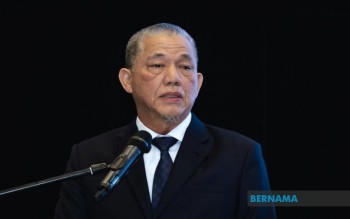
Malaysia will leverage existing coal plant infrastructure to accelerate its clean energy transition, Deputy Prime Minister Datuk Seri Fadillah Yusof announced at the World Economic Forum's Malaysia Energy Future summit in Kuala Lumpur. The government plans to establish a National Coal Site Repurposing Framework that converts retiring coal facilities into renewable energy hubs and battery energy storage centres, transforming stranded industrial assets into engines for economic growth and technological innovation.
The deputy minister, who also oversees the Energy Transition and Water Transformation portfolio, emphasised that Malaysia's retiring coal fleet represents far more than obsolete infrastructure. These strategically positioned facilities come equipped with existing transmission networks, industrial installations, and land parcels that would be expensive and time-consuming to develop from scratch. Rather than allowing these sites to deteriorate into brownfields, the government views repurposing as a pragmatic path to maintaining economic momentum in regions where coal mining and power generation have historically anchored local communities and employment.
Fadillah outlined the framework's broader ambitions during the WEF's closing ceremony, noting that each decommissioned power station presents a distinct opportunity to establish new industries and attract foreign and domestic investment. The initiative aligns with Malaysia's binding commitment to cease construction of new coal plants, phase out coal-based electricity generation entirely by 2044, and achieve 70 per cent renewable energy installed capacity by 2050. These targets position Malaysia among Southeast Asia's more ambitious decarbonisation pledges, reflecting growing recognition that sustained economic competitiveness depends on alignment with global climate commitments.
Crucially, Fadillah flagged a significant risk that could undermine the transition's success: premature coal retirement without parallel renewable energy deployment could inadvertently shift Malaysia's energy dependency from coal to imported liquefied natural gas. This substitution trap represents a genuine policy vulnerability in the region, where energy security often hinges on supply diversification and price stability. Should renewable capacity fail to grow sufficiently ahead of coal phase-out timelines, Malaysia would trade one imported fuel's price volatility for another, while remaining exposed to geopolitical disruptions affecting global LNG markets and international shipping routes.
The government is pursuing multiple pathways to ensure renewables expand faster than coal plants retire. Large-scale solar deployment continues as a foundation strategy, given Malaysia's equatorial geography and consistent solar irradiance. The Corporate Renewable Energy Supply Scheme represents an emerging lever, enabling businesses to procure renewable electricity directly, reducing reliance on utility supply chains and creating commercial incentives for private sector clean energy investment. Battery energy storage systems address intermittency challenges inherent to solar and wind generation, while smart grid modernisation enhances system flexibility and real-time demand-response capabilities.
Regional cooperation will amplify Malaysia's renewable transition prospects. Fadillah reaffirmed commitment to the ASEAN Power Grid initiative, which envisions cross-border electricity trading among Southeast Asian nations. This framework could allow Malaysia to export solar or wind power during peak generation periods and import hydroelectric power from neighbours like Laos during dry seasons, creating mutual resilience and reducing average generation costs. Expanded intra-regional electricity trade would accelerate renewable deployment across ASEAN by improving the economic viability of large-scale projects and distributing investment risks across multiple jurisdictions.
Beyond conventional renewables, Malaysia is exploring long-term low-carbon technologies including advanced nuclear power and small modular reactors. While these options remain nascent and require substantial regulatory development, the government recognises their potential to provide baseload clean electricity complementing variable renewables. However, Fadillah emphasised that nuclear deployment hinges on establishing robust safety governance, regulatory frameworks, and public confidence—prerequisites that Southeast Asian nations have historically approached cautiously, given limited domestic nuclear experience and public perception concerns.
The coal site repurposing framework reflects a sophisticated understanding of energy transition mechanics in developing economies. Unlike wealthy nations that can absorb stranded asset losses, Malaysia must extract continued economic value from existing infrastructure while building new capacity. Repurposing coal sites preserves local employment, maintains transmission and grid infrastructure investments, and reduces capital requirements for renewable deployment. This approach acknowledges that abrupt coal retirement without community transition planning risks social backlash and political resistance that could derail broader climate objectives.
For Malaysian policymakers and investors, the framework signals a long-term commitment to renewable energy as the core growth vector for Malaysia's energy sector. The explicit rejection of new coal construction and the 2044 coal phase-out target create planning certainty for renewable technology developers and investors, reducing policy risk and enabling confident capital allocation. As regional economies increasingly demand clean energy credentials from suppliers and partners, Malaysia's demonstrated progress on decarbonisation enhances competitiveness in attracting foreign direct investment and participating in sustainable global value chains.
The timing of this announcement also reflects shifting regional dynamics. Southeast Asia faces mounting pressure to accelerate climate action as developed economies tighten carbon border adjustment mechanisms and sustainability requirements embedded in trade agreements. Malaysia's proactive repurposing strategy positions it favourably against peers still dependent on coal-heavy energy portfolios, while the emphasis on maintaining local economies through site transformation offers a template other coal-dependent nations might emulate. This balance between climate ambition and economic pragmatism could elevate Malaysia's influence in regional energy policy discussions and climate negotiations.
Implementation success will depend on coordination across multiple government agencies, utilities, regulators, and private investors. The National Coal Site Repurposing Framework must establish clear timelines, financing mechanisms, and accountability measures. Workforce transition programmes will prove critical for coal workers and mining communities, requiring partnerships with vocational training providers and industries seeking skilled technicians for renewable energy operations and battery manufacturing. Public engagement will shape outcomes, particularly in regions where coal operations remain economically significant and where energy transition anxieties are most acute.

