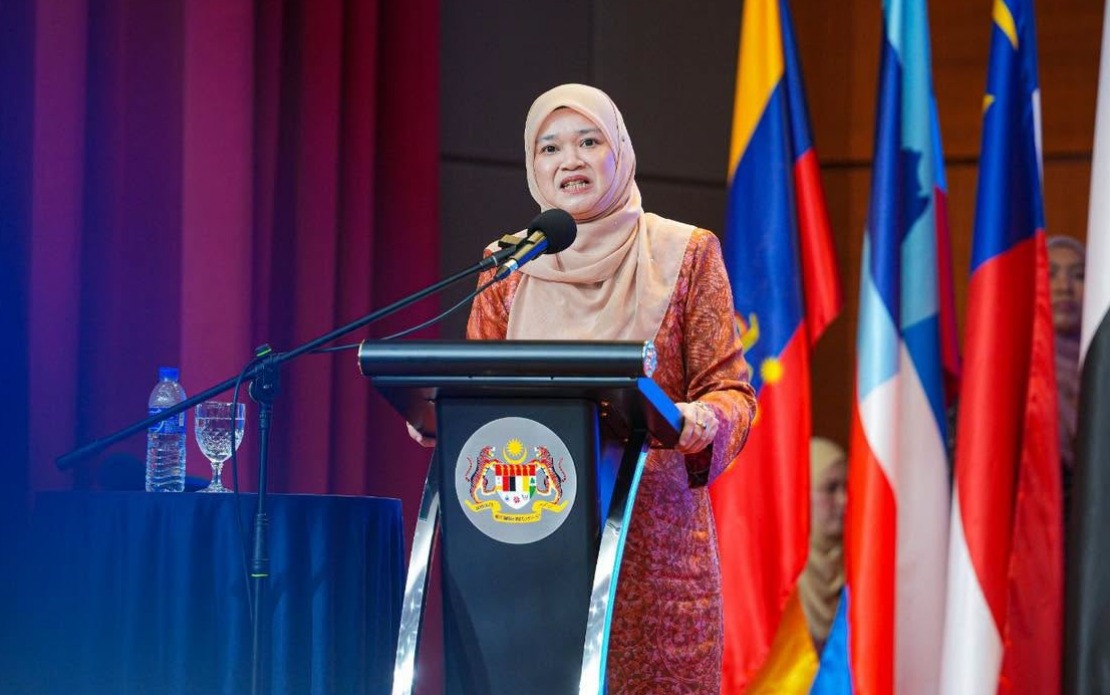
The Education Ministry has announced plans to formally recognise the co-curricular and sporting achievements of students attending schools within Malaysian prison institutions, opening a significant pathway for them to compete fairly in university admissions processes. Education Minister Fadhlina Sidek unveiled the initiative while closing the 17th Hijrah Kasih Programme in Kajang, a joint venture between the ministry and the Malaysian Prison Department aimed at supporting incarcerated learners. The recognition represents a substantial shift in policy, acknowledging that students in these circumstances deserve equitable access to higher education pathways based on their demonstrated abilities beyond academic performance alone.
Under the proposed framework, participation in sports, cultural activities, and other co-curricular pursuits will be formally documented and credited during university applications. This development addresses a critical gap in the current system where achievements gained within prison institutions have largely been disregarded by tertiary education institutions. The ministry's commitment signals recognition that educational circumstances should not determine ultimate educational outcomes, and that merit earned through dedication in any setting holds genuine value. Fadhlina emphasised that the objective is to ensure students who complete the Sijil Pelajaran Malaysia examination while incarcerated retain viable pathways to continuing their education at tertiary level, rather than facing closure of educational opportunities upon release.
The timeline for implementation shows ambition tempered with practicality. According to Datuk Zainal Abas, the deputy director-general of Education for the School Operations Sector, the ministry aims to achieve official recognition of Physical, Sports and Co-curricular Assessment scores this year. This recognition will enable SPM candidates from 2027 onwards to receive a 10 per cent merit advantage when submitting university applications, a meaningful boost that could influence acceptance decisions at competitive institutions. The five-year implementation window allows educational institutions and universities time to adjust their assessment and selection mechanisms while ensuring the policy gains traction before the first cohort benefits.
Beyond co-curricular recognition, the ministry is simultaneously developing a vocational pathway through skills certification. Students undergoing technical and vocational training programmes within prison institutions will be eligible to receive formal skills certificates upon completion. This approach acknowledges the practical reality that many incarcerated learners develop valuable competencies in areas such as sewing, food preparation, and other trades while serving their sentences. Rather than allowing these skills to go unrecognised and unrewarded, formal certification will provide credentials that carry weight in the employment market, enhancing rehabilitation prospects and reducing recidivism risks through improved economic integration upon release.
The educational performance of prison school students provides compelling evidence supporting this investment in alternative pathways. Students at prison institutions achieved a 100 per cent pass rate in the SPM examination for two consecutive years, a statistic that demolishes assumptions about the academic capacity of incarcerated populations. This exceptional performance demonstrates that environmental circumstances and institutional location do not inherently limit learning capacity or motivation. Fadhlina pointedly characterised success as dependent upon individual determination rather than physical location or school identity, a message that reframes public perception of prison education and validates the substantial investment the ministry has made in maintaining educational standards in these settings.
The inclusion of digital learning represents a modernisation component essential to educational equity. The ministry is working to provide students in prison institutions with controlled access to the DELIMa platform, which stands for Digital Educational Learning Initiative Malaysia. This initiative ensures that incarcerated learners can participate in online education and access contemporary digital learning materials, preventing the knowledge gap that would otherwise widen between prison schools and conventional institutions. Providing comparable technological access acknowledges that modern education requires digital literacy and engagement, and that students in restricted environments deserve equivalent developmental opportunities.
Teacher capacity and professional development form another critical dimension of the improvement agenda. The ministry plans to extend DELIMa platform access to educators working in integrity schools and Henry Gurney schools across the country, ensuring that pedagogical staff have the tools and resources necessary to deliver contemporary, digitally-integrated instruction. This approach recognises that quality educational delivery depends fundamentally upon teacher capability and access to modern educational technologies. By equipping educators with platforms and resources comparable to those in conventional schools, the ministry addresses quality disparities that might otherwise persist.
Parental engagement emerges as a significant factor in the ministry's strategic approach. Fadhlina highlighted the importance of sustained parental support, particularly when students face the psychological and emotional challenges of incarceration. Maintaining family connections and demonstrating parental belief in educational progress during periods of maximum vulnerability influences student motivation and resilience. This recognition reflects understanding that education in prison contexts functions within a complex psychosocial environment where family involvement can meaningfully improve outcomes. The ministry's explicit acknowledgement of parental support's centrality to success may encourage families to maintain engagement despite the challenges posed by incarceration.
The policy changes address a significant social reintegration challenge. Students completing education while incarcerated face substantial barriers to labour market integration and further educational advancement, factors that historically increase recidivism risk. By creating explicit recognition of achievements gained in prison institutions and establishing clear pathways to university admission and vocational certification, the ministry substantially improves the incentive structure for educational engagement during incarceration. Students can now envision concrete post-release benefits from their educational efforts, fundamentally altering the calculus of whether investing in learning makes sense while serving sentences.
The implications extend beyond the immediate beneficiaries to broader Malaysian society. Creating educational and vocational pathways for incarcerated individuals addresses human capital waste while reducing the likelihood of criminal recidivism. From a public policy perspective, investments in prison education demonstrate superior return on investment compared to purely punitive incarceration approaches, producing individuals more capable of productive economic participation and less likely to reoffend. Malaysia's willingness to develop these initiatives reflects modernised thinking about criminal justice and rehabilitation that aligns with international best practices in correctional education.
Regional context matters here as well. Across Southeast Asia, few countries have systematically integrated co-curricular recognition and vocational certification into prison education frameworks. Malaysia's adoption of these measures positions the nation as a regional leader in progressive correctional education policy, potentially influencing neighbouring countries considering similar reforms. The model demonstrates that incarceration need not represent educational discontinuity or the erasure of student achievement, principles that resonate beyond Malaysian borders.
Implementation challenges remain non-trivial. Universities must adopt new assessment protocols and admission criteria incorporating prison school credentials. Employers require confidence in vocational certificates issued from non-traditional educational settings. Public perception of prison-educated individuals may lag behind policy changes, creating friction even as formal barriers dissolve. The ministry's success depends upon sustained commitment through inevitable implementation difficulties and the willingness of tertiary institutions and employers to genuinely value credentials earned in prison educational settings rather than treating them as marginal or less rigorous than conventional qualifications.
The Education Ministry's comprehensive approach—combining co-curricular merit recognition, vocational skills certification, digital learning access, and enhanced teacher capacity—reflects sophisticated understanding that educational equity for incarcerated populations requires multifaceted intervention. Rather than isolated policy gestures, the integrated strategy addresses recognised barriers across multiple dimensions simultaneously, increasing probability of meaningful impact upon student outcomes and social reintegration trajectories.

