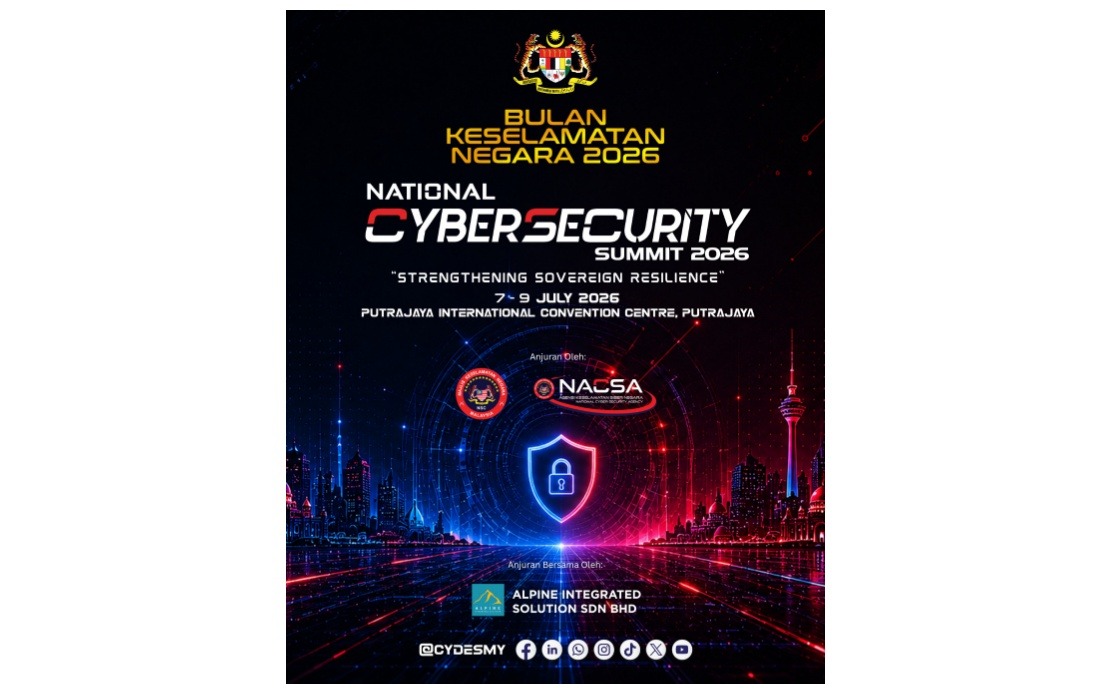
Malaysia will host the National Cyber Security Summit 2026 from July 7 to 9 at the Putrajaya International Convention Centre, marking a pivotal moment for the country's ongoing effort to strengthen its digital defences. Organised by the National Cyber Security Agency under the National Security Council's oversight within the Prime Minister's Department, this three-day gathering represents a critical juncture in translating legislative progress into tangible cybersecurity improvements across government and private sectors.
The timing of NCSS 2026 is notably significant, arriving just days after Malaysia's Dewan Rakyat approved the Cybercrimes Bill 2026 on July 1. This legislative milestone reflects years of policy development and coordination among security agencies, establishing a modernised legal framework to combat evolving digital threats. The summit thus serves as both a celebration of this legislative achievement and a working forum to operationalise the new law's provisions across government ministries, law enforcement, and commercial enterprises.
Placed under the banner "Strengthening Sovereign Resilience", the summit directly advances Malaysia's Malaysian Cyber Security Strategy 2025-2030, a comprehensive roadmap guiding national cyber policy for the next half-decade. This strategic framework articulates Malaysia's vision for a secure and trusted digital ecosystem capable of withstanding sophisticated attacks while enabling economic growth and innovation. By convening stakeholders at this scale, the government seeks to align diverse interests and capabilities toward shared objectives.
The summit's scope is substantial, encompassing 41 high-impact sessions designed to address multifaceted cybersecurity challenges. Sessions will span Malaysian Cyber Security Strategy-related forums, dedicated tracks for cyber crime investigation and response, conventions for ICT security officers tasked with protecting critical infrastructure, and specialised workshops addressing emerging domains such as women's participation in cybersecurity careers and artificial intelligence system security. This breadth reflects the complexity of contemporary digital threats, which span criminal enterprises, state-sponsored actors, infrastructure vulnerabilities, and technological gaps.
Participation levels underscore the summit's regional significance. Ninety-six speakers and panellists representing government agencies, commercial technology providers, enforcement bodies, academic institutions, and professional security communities will lead discussions. The 122 exhibiting companies comprise 78 Malaysian firms alongside 44 international companies from seven countries, indicating growing cross-border collaboration on cybersecurity matters. This international dimension is particularly relevant for Southeast Asia, where cyber threats transcend national boundaries and require coordinated response mechanisms.
The anticipated attendance of 3,000 participants, including 250 distinguished domestic guests, reflects strong stakeholder engagement across Malaysia's public and private sectors. Trade visitors will evaluate emerging technologies and services, while conference delegates will acquire knowledge and forge partnerships. This convening function carries particular importance for Malaysia as it positions the nation as a regional hub for cybersecurity expertise and policy coordination.
Three major policy frameworks will be formally launched during the summit under Prime Minister Datuk Seri Anwar Ibrahim's patronage. The National Security Policy 2026-2030 establishes overarching security governance principles, while the National Cryptography Policy and accompanying action plan address encryption standards and implementation timelines critical to infrastructure protection and secure communications. Most significantly, the Artificial Intelligence Systems Cybersecurity Framework responds to emerging challenges posed by AI deployment across critical sectors, recognising that algorithmic systems themselves become cybersecurity vulnerabilities requiring proactive governance.
The summit's integration with Malaysia's National Security Month designation amplifies its policy messaging. By aligning this technical summit with broader national security awareness campaigns, the government reinforces that cybersecurity represents a national priority transcending narrow technical considerations. This framing acknowledges that cyber resilience depends not only on technological investment and regulatory frameworks but also on citizen awareness, workforce development, and institutional commitment across government levels.
For Malaysia and the wider Southeast Asian region, this summit demonstrates how countries can translate strategic ambitions into operational reality through multi-stakeholder engagement. The emphasis on public-private collaboration recognises that critical infrastructure protection depends on coordinated effort, information sharing, and aligned incentives across sectors often characterised by competitive dynamics. The inclusion of women-focused programming and academic participation further signals commitment to pipeline development and knowledge transfer across generations.
The convergence of legislative action, policy framework launches, and large-scale stakeholder engagement at NCSS 2026 reflects Malaysia's recognition that cybersecurity has become integral to economic competitiveness, national security, and citizen trust in digital systems. By hosting this summit, Malaysia reinforces regional leadership on cyber policy while creating networking and learning opportunities that strengthen the regional cybersecurity ecosystem. As digital threats continue evolving in sophistication and scope, such coordinated national efforts become increasingly essential to maintaining economic and security resilience across Asia-Pacific.

