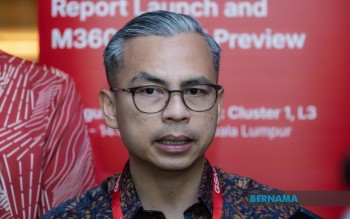
Malaysia has secured a significant regional accolade with Kuala Lumpur's selection as the host city for M360 ASEAN 2026, scheduled for September 9 and 10. Communications Minister Datuk Seri Fahmi Fadzil characterised the appointment as a milestone opportunity to strengthen the nation's standing within ASEAN's rapidly evolving telecommunications, artificial intelligence and digital connectivity landscape. The GSM Association-organised gathering marks the first instance of the event being held both within Malaysia and across the ASEAN bloc, underscoring the region's growing prominence in global technology discussions.
The conference will function as a convergence point for a diverse array of stakeholders spanning the entire digital ecosystem. Participants will encompass telecommunications operators, technology vendors, subject matter experts, venture capital investors, academic researchers and senior government officials drawn from across Southeast Asia. This multifaceted representation creates an environment conducive to cross-sector dialogue and partnership formation, potentially catalysing collaborative initiatives that transcend national borders. The breadth of representation reflects the interconnected nature of modern digital challenges, which increasingly demand coordinated regional responses rather than siloed national approaches.
Fahmi emphasised that M360 ASEAN 2026 will furnish ASEAN nations with a structured forum to deliberate on the strategic direction of their collective digital sectors. The deliberations will encompass expansion of digital infrastructure to underserved populations, the responsible deployment and governance of artificial intelligence technologies, and mechanisms to bridge the digital divide within the region. For Malaysia specifically, hosting this conference positions the country as a thought leader capable of facilitating regional consensus-building on critical technology governance issues, enhancing its diplomatic soft power within Southeast Asia.
The economic implications are substantial. According to analysis presented by the GSMA, mobile technologies and allied services are projected to inject US$1.4 trillion into the Asia-Pacific economy by 2030, representing a 40 per cent expansion from the current annual contribution of approximately US$1 trillion. This projection underscores the sector's centrality to regional economic trajectories and justifies the elevated priority governments are according to digital infrastructure investment and policy frameworks. For Malaysian policymakers, these figures provide quantifiable justification for allocating resources toward telecommunications advancement and fostering a competitive tech ecosystem.
The conference agenda addresses four interconnected strategic priorities that will shape the region's digital evolution over the coming decade. The first centres on artificial intelligence's rapid proliferation across economic sectors, from healthcare to financial services to manufacturing. Unlike previous technological transitions, AI's transformative potential generates both unprecedented opportunities for productivity enhancement and genuine risks around data privacy, algorithmic bias and labour displacement. Southeast Asian nations must develop coherent policy frameworks that maximise AI's benefits whilst mitigating potential harms—a balancing act that M360 ASEAN 2026 will facilitate through structured dialogue among technologists, regulators and civil society representatives.
Decreasing digital trust represents a second critical concern commanding attention at the conference. Cybersecurity breaches, data misuse by technology platforms and misinformation dissemination through digital channels have collectively eroded public confidence in digital systems across the region. This erosion threatens the adoption of crucial digital services, from mobile financial inclusion initiatives to health information systems. Restoring trust requires concerted action encompassing stronger data protection regulations, transparency requirements for technology companies and digital literacy programmes. Malaysia's experience navigating these challenges can contribute valuable insights to other ASEAN members grappling with similar trust deficits.
The third priority addresses infrastructure resilience in an era of increasing cyber threats and natural disasters. Southeast Asia's vulnerability to typhoons, flooding and other climate-related hazards means that digital infrastructure must incorporate redundancy and rapid recovery capabilities. Simultaneously, sophisticated state-sponsored and criminal cyber operations targeting critical digital infrastructure demand sophisticated defensive architectures. The conference will likely facilitate information-sharing on resilience best practices and potentially catalyse regional cooperation on cybersecurity standards and mutual assistance protocols during emergencies.
Digital sovereignty emerges as the fourth priority shaping regional strategy. Governments across ASEAN increasingly recognise that dependence on foreign technology platforms and infrastructure providers creates strategic vulnerabilities. Whether concerning data localisation requirements, homegrown telecommunications equipment standards or regional cloud computing capabilities, digital sovereignty reflects a desire to maintain autonomy over critical digital systems. Malaysia, possessing domestic technology capabilities and serving as a regional technology hub, can contribute meaningfully to crafting regional approaches that balance innovation incentives with sovereignty preservation.
The convergence of these four priorities creates an intricate policy landscape that transcends conventional telecommunications sector concerns. Governments must simultaneously encourage private sector innovation whilst maintaining regulatory oversight, expand digital access whilst protecting vulnerable users, embrace transformative technologies like AI whilst managing risks, and develop domestic capabilities whilst maintaining integration within regional and global technology ecosystems. The complexity of this balancing act necessitates precisely the type of multi-stakeholder dialogue that M360 ASEAN 2026 will facilitate.
For Malaysia specifically, hosting the conference enhances the nation's positioning as a preferred destination for regional technology investment and talent. It signals governmental commitment to digital advancement and creates visibility for Malaysian technology companies and research institutions. The conference will attract international media attention to Malaysian tech innovations and policy initiatives, potentially influencing investor perceptions of the market's maturity and growth prospects. Simultaneously, Malaysian participants will gain direct access to peer governments' digital strategies, creating informal channels for policy learning and regulatory harmonisation.
The selection of Kuala Lumpur for this inaugural ASEAN event reflects both Malaysia's established role as a regional business and technology centre and broader recognition of Southeast Asia's strategic importance in global technology competition. As competition intensifies between major powers to shape technology standards and governance frameworks, ASEAN's unified voice on critical issues assumes greater significance. M360 ASEAN 2026 will help forge that collective regional perspective, with Malaysia contributing from the vantage point of host nation and experienced regional participant.

