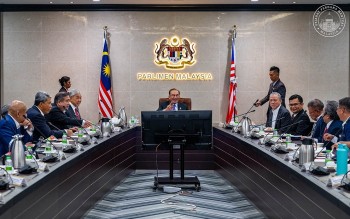
Prime Minister Datuk Seri Anwar Ibrahim has instructed the Ministry of Investment, Trade and Industry and the Ministry of Economy to work closely with manufacturers struggling under the weight of escalating costs triggered by disruptions across global supply chains. The directive emerged following a meeting of the National Economic Action Council, which Anwar chairs in his dual capacity as finance minister, where officials deliberated on strategies to fortify Malaysia's manufacturing foundation against ongoing external shocks.
The government's intervention signals recognition that supply chain instability poses a material threat to Malaysia's competitive standing in global markets. Anwar's announcement, made via social media, underscores the administration's intent to move beyond mere acknowledgment of industry grievances toward concrete problem-solving engagement with affected sectors. By directing both investment and economy-focused ministries to coordinate directly with manufacturers, the approach aims to identify tailored interventions rather than broad-brush policy responses that may miss sector-specific needs.
The plastics industry emerged as a focal point of concern during the council's deliberations, reflecting its outsized influence across Malaysia's manufacturing ecosystem. As Economy Minister Akmal Nasrullah Mohd Nasir explained during a public briefing, this sector functions as a critical enabler for numerous downstream industries essential to the national economy. The data illustrates the scale of disruption potential: plastics sales reached RM62.69 billion in 2025, a notable decline from RM64.78 billion recorded in 2024, signalling already-manifest contraction even before acute supply pressures intensified.
The composition of demand within the plastics sector reveals how interconnected Malaysia's industrial base has become. Packaging applications command approximately 45 percent of the market, serving predominantly the food and beverage sector, while the electrical and electronics segment accounts for a further 29 percent. This concentration means that cost inflation in plastics manufacturing ripples outward with considerable force, affecting food producers dependent on affordable packaging solutions and electronics manufacturers competing on razor-thin margins in global competition.
Beyond these primary consumers, the vulnerability extends through automotive suppliers, medical device manufacturers, construction companies, agricultural producers, and export-oriented facilities across multiple sectors. When plastics prices spike due to raw material shortages or logistics complications, the burden eventually reaches end consumers through higher food costs, more expensive electronics, and reduced competitiveness of Malaysian manufactured goods abroad. This cascading effect explains why the government views plastics industry stability as a matter of broader economic concern rather than a niche industrial issue.
The timing of this intervention reflects deepening anxiety within Malaysia's manufacturing community about sustained supply chain fragmentation. Global logistics networks remain strained following pandemic-era disruptions, while geopolitical tensions, port congestion in key shipping hubs, and weather-related disasters continue to interrupt the reliable flow of raw materials and finished goods. For Malaysia, which depends heavily on global trade and positions itself as a manufacturing hub for complex products requiring intricate international supply chains, these pressures strike at the heart of economic competitiveness.
Akmal's public briefing on the supply crisis, conducted through the Ministry of Economy's Facebook channel, represented an attempt to maintain transparency with industry stakeholders while demonstrating government attentiveness to their predicament. By providing concrete figures on sector performance and explicitly naming the cascading impacts across multiple industries, the ministry signalled that officials grasp both the severity and complexity of the challenge. This communication strategy serves a dual purpose: reassuring manufacturers that their concerns have reached senior levels while managing public expectations about the pace of relief.
The directive to MITI and the Economy Ministry to conduct further engagement suggests the government recognises that solutions must emerge through dialogue rather than unilateral policy pronouncement. Manufacturers possess frontline knowledge about specific bottlenecks, whether in raw material sourcing, shipping logistics, regulatory compliance, or financing arrangements. By creating space for structured consultation, the government positions itself to craft interventions addressing actual pain points rather than presumed difficulties. Such engagement may yield recommendations ranging from trade financing support to regulatory streamlining to strategic stockpiling initiatives.
For Malaysia's manufacturing sector, the stakes of this intervention extend beyond immediate cost relief. Global competition for manufacturing investment remains fierce, with companies constantly evaluating whether Malaysia's operating environment offers sufficient stability and cost efficiency compared to alternatives across Southeast Asia and beyond. Protracted supply chain problems that governments fail to address risk eroding Malaysia's appeal as an investment destination. By demonstrating responsive governance, Anwar's administration signals commitment to maintaining the institutional frameworks and policy support that multinational manufacturers require.
The resilience language deployed in official statements carries particular significance given Malaysia's goal of sustaining high-value manufacturing activity against the centripetal pull of other regional economies. Building resilience implies both addressing immediate crises and implementing structural improvements that reduce future vulnerability. This might encompass encouraging domestic production of critical plastic resins, diversifying supplier bases geographically, strengthening logistics infrastructure, or enhancing access to supply chain financing for smaller manufacturers lacking international credit facilities.
Regional context amplifies the urgency facing Malaysian policymakers. Neighbouring countries including Thailand, Vietnam, and Indonesia compete fiercely for manufacturing investment, often by highlighting their supply chain advantages or cost structures. Manufacturing sector difficulties in Malaysia, if perceived as unresponsive to government support, risk accelerating relocation decisions among companies already evaluating alternatives. The government's swift acknowledgment and directed action attempt to counter this possibility by demonstrating that Malaysia remains a responsive environment for manufacturing operations even amid global disruption.

