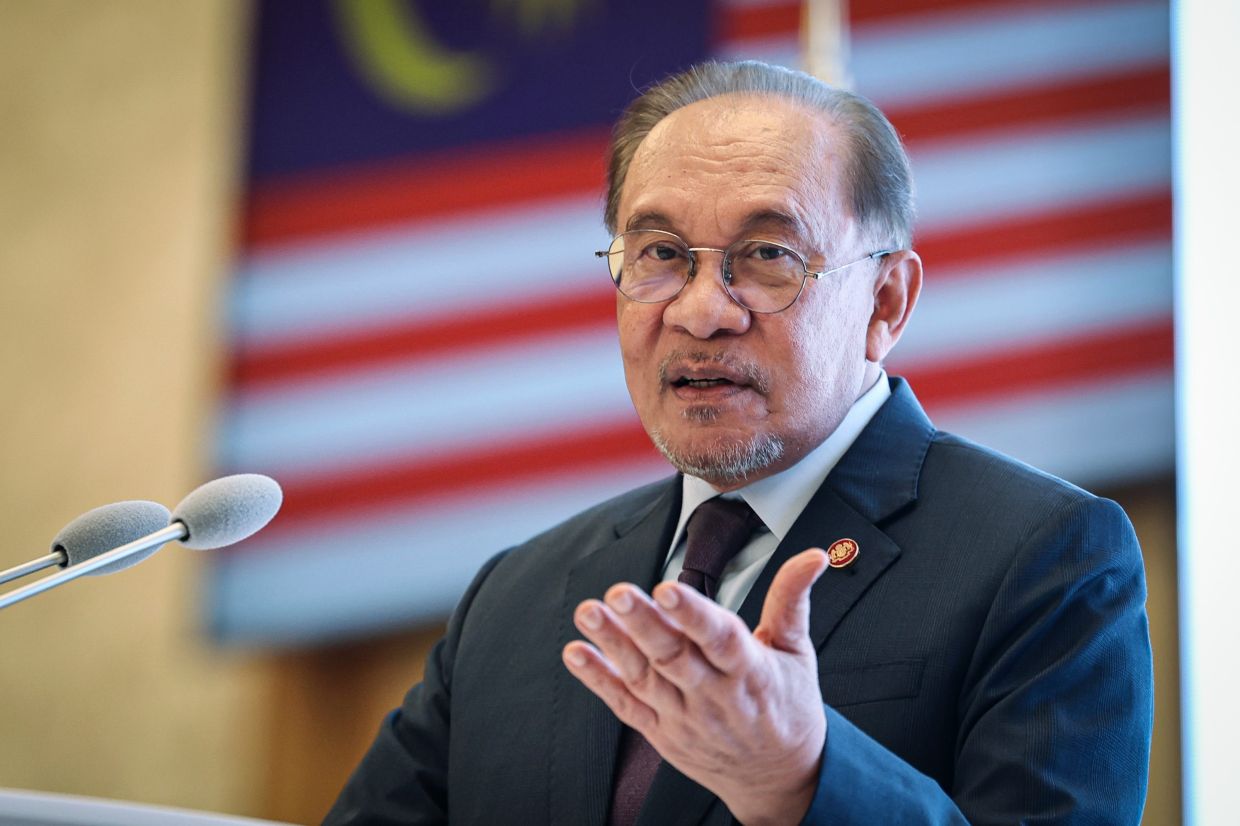
The Malaysian government is open to examining a taxation framework that incorporates selective features from the Goods and Services Tax alongside the existing Sales and Service Tax, Prime Minister Datuk Seri Anwar Ibrahim disclosed at the closing of the Budget 2027 engagement session in Putrajaya. The proposal would aim to strengthen the country's tax system in ways that benefit lower-income households while maintaining fiscal efficiency. However, Anwar, who holds the dual portfolios of Prime Minister and Finance Minister, made clear that the SST would remain the cornerstone of Malaysia's taxation architecture, with any GST-inspired modifications introduced only where they align with the government's equity-focused agenda.
The government's willingness to explore this middle-ground approach reflects ongoing debate within policy circles about how to balance revenue requirements with social protection. Since the previous administration's introduction of the GST in 2015 and its subsequent replacement with SST in 2018, Malaysia has grappled with finding the optimal tax structure. Anwar's comments suggest the current administration is not ideologically opposed to learning from GST mechanics, but rather concerned about the distributional consequences of such a system. This nuanced position indicates the government recognises that tax policy involves trade-offs between efficiency and equity, and that certain technical features of different systems might coexist beneficially.
Anwar articulated his fundamental objection to the GST model with particular emphasis on its universal coverage. A broad-based consumption tax, by design, applies across the entire population without exemptions or thresholds, meaning even citizens previously outside the formal tax system would be required to contribute. The Prime Minister characterised this as unjust given Malaysia's current economic pressures, noting that implementation during periods of high cost-of-living inflation would amplify hardship for vulnerable groups. This reflects a policy philosophy prioritising targeted taxation over universal systems, aligning with Malaysia MADANI's social-centric development framework.
The cost-of-living dimension is particularly salient for Malaysia, where real wages for lower-income workers have stagnated while essential expenses including housing, transport, and food have risen substantially. A consumption tax imposed without exemptions for basic goods would directly reduce purchasing power among those least able to absorb additional financial burdens. Anwar's resistance to such a mechanism thus carries political legitimacy beyond rhetorical commitment to equity, rooted in observable economic conditions facing ordinary Malaysians. The government's inclination to study hybrid approaches rather than dismiss reform entirely suggests openness to solutions that address genuine efficiency concerns without replicating GST's regressive characteristics.
The timing of this announcement, coinciding with the Budget 2027 engagement process, signals that tax architecture considerations are central to the government's medium-term fiscal planning. The engagement session brought together Finance Minister II Datuk Seri Amir Hamzah Azizan, Deputy Finance Minister Liew Chin Tong, Bank Negara Malaysia Governor Datuk Seri Abdul Rasheed Ghaffour, Treasury secretary-general Tan Sri Johan Mahmood Merican, and representatives from industry, civil society, and academia. This inclusive consultation format suggests the government recognises that major tax policy reforms require broad stakeholder input and technical scrutiny before implementation.
From a regional perspective, Malaysia's approach carries implications for ASEAN tax harmonisation discussions. While countries including Thailand, Vietnam, and Indonesia operate GST or VAT systems, each has grappled with designing structures that protect lower-income populations. Malaysia's exploration of hybrid models might offer insights for other nations balancing development imperatives with social protection, particularly as regional trade integration intensifies. The country's demonstrated willingness to learn from different systems while adhering to domestic equity priorities could strengthen its position in regional economic policy dialogue.
The specifics of what constitutes an "acceptable feature" from GST remain unclear, but potential candidates might include mechanisms for zero-rating essential goods, simplified compliance frameworks for small businesses, or input tax credit systems that reduce cascading effects. These technical components address legitimate efficiency concerns without imposing regressive burdens on all citizens. Whether such features can be integrated within SST's structure or require legislative amendments represents a technical question the government's study phase should clarify.
The Budget 2027 proposal, themed "Malaysia MADANI: Menggapai di Langit, Mengakar di Bumi" (Malaysia MADANI: Reaching for the Sky, Rooted in Earth), positioned for parliamentary tabling on October 9, will likely incorporate preliminary findings from the tax study. This naming reflects government aspiration to balance development ambitions with grounding in Malaysian values and social cohesion. Tax policy forms a crucial infrastructure for realising such ambitions, as revenue generation and income distribution mechanisms fundamentally shape societal outcomes.
Anwar's repeated emphasis that he will not compromise on protecting the broader population from regressive taxation indicates this is a non-negotiable parameter for his administration's fiscal strategy. The intensity of his language—describing GST as imposing burdens on "the rakyat" and questioning the justifiability of taxing previously untaxed citizens during economic hardship—reflects genuine ideological commitment rather than mere political positioning. This consistency across multiple public statements suggests any tax reform will be carefully calibrated to avoid outcomes his government considers socially damaging.
The government's proposed study represents a pragmatic path forward, acknowledging that perfect systems do not exist while refusing to accept outcomes it deems inequitable. For Malaysian citizens, this suggests continued reliance on SST as the primary consumption tax mechanism in the near term, with possible incremental refinements rather than wholesale restructuring. For international observers and trading partners, it demonstrates Malaysia's intention to maintain a distinctive tax approach reflecting its particular development priorities and social values.

