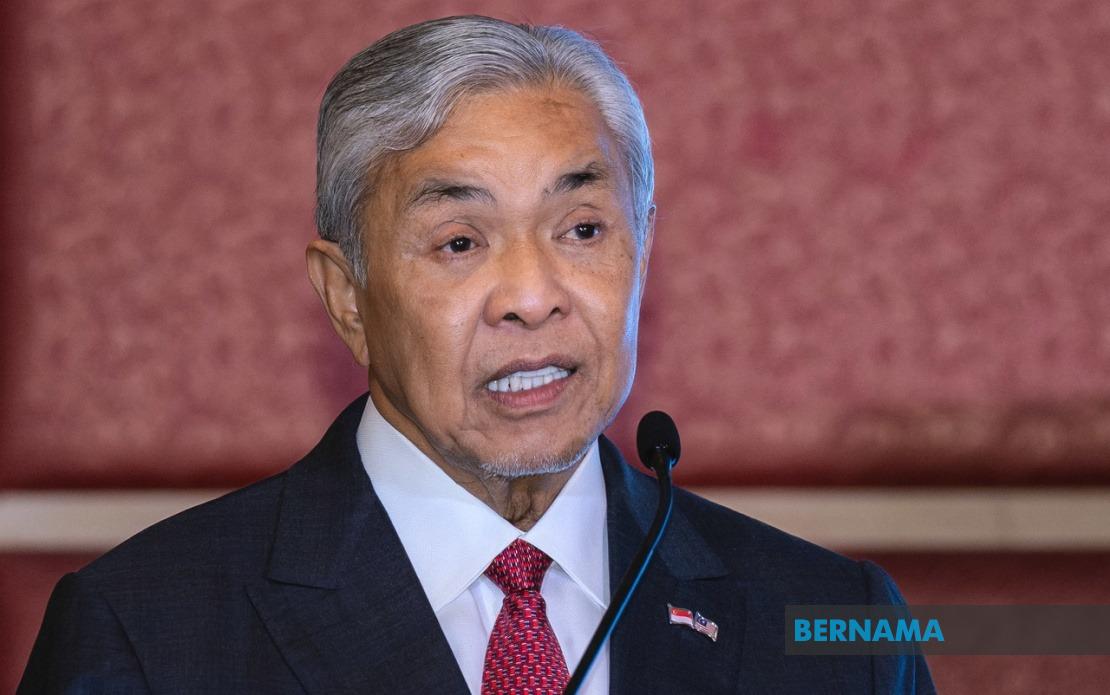
Malaysia intends to establish a self-contained system for overseeing refugees and asylum seekers, steering clear of dependence on international bodies in accordance with the National Security Council Directive No. 23, which was revised in 2023. Deputy Prime Minister Datuk Seri Dr Ahmad Zahid Hamidi outlined the government's approach during parliamentary proceedings, emphasising that the framework would prioritise both operational efficiency and law enforcement while maintaining Malaysia's national interests and territorial integrity.
The proposed management structure represents a significant policy shift, combining stringent administrative controls with provisions for social integration. According to Ahmad Zahid, the strategy encompasses coordinated policymaking across multiple government agencies, expanding qualified refugees' entitlements to medical facilities, schooling opportunities and formal employment channels. This dual approach seeks to address the practical needs of displaced populations whilst simultaneously protecting domestic interests and maintaining public order.
Ahmad Zahid, who concurrently serves as Minister for Rural and Regional Development, highlighted a critical challenge facing implementation efforts: the activities of local intermediaries who exploit refugee situations for personal benefit. He identified rental income extraction and access to below-market labour costs as primary incentives driving informal support networks that undermine official enforcement mechanisms. This acknowledgement reveals tensions between grassroots economic behaviour and top-down regulatory frameworks that characterise refugee management across Southeast Asia.
The directive itself, formally endorsed by Prime Minister Datuk Seri Anwar Ibrahim on June 14, 2023, represents the culmination of inter-agency coordination involving the NSC under the Prime Minister's Department alongside multiple sectoral ministries and government bodies. The comprehensive nature of the directive reflects recognition that refugee administration extends beyond immigration controls, encompassing healthcare coordination, employment regulation, education access and security protocols. Each participating ministry received clearly delineated responsibilities to ensure accountability and prevent institutional gaps.
Malaysia's refugee situation demands urgent policy clarity, with more than 126,000 registered Rohingya individuals currently residing within the country. This substantial population, largely stateless due to Myanmar's citizenship policies, represents one of the world's most protracted displacement crises. The parliamentary question posed by Datuk Shamshulkahar Mohd Deli from Jempol specifically raised concerns about creating holistic policy frameworks following introduction of the Refugee Registration Document scheme, suggesting existing measures required consolidation and enhancement.
The independent mechanism approach carries particular significance for regional dynamics, as neighbouring countries including Thailand, Indonesia and Bangladesh shoulder comparable or larger refugee burdens with varying institutional capacities. Malaysia's assertion of autonomous management capability signals intent to chart its own policy course rather than defaulting to United Nations High Commissioner for Refugees frameworks or multilateral arrangements. This positioning reflects broader South Asian and Southeast Asian trends toward national-level solutions addressing displacement challenges.
Balancing enforcement rigour against community-oriented obligations presents an ongoing tension in the proposed system. Ahmad Zahid's emphasis on this equilibrium acknowledges that purely restrictive approaches generate humanitarian concerns whilst uncontrolled access creates security vulnerabilities and social friction. The framework therefore attempts positioning enforcement not as punishment but as essential infrastructure protecting both nationals and refugee populations from exploitation and disorder.
The directive's establishment of ministerial role definitions addresses a persistent governance weakness in refugee-hosting countries, where institutional overlaps and jurisdictional ambiguities often create implementation failures. By assigning specific functions to named agencies, the framework aims to establish clear accountability chains and facilitate inter-agency information sharing. Healthcare ministries, education departments, labour authorities and security services each receive distinct mandates reflecting their sectoral expertise and operational capacity.
Implementation success will substantially depend on resource allocation and political commitment across multiple parliamentary cycles. Previous Malaysian refugee policies demonstrated vulnerability to shifting priorities and budget constraints, particularly when media attention or public pressure diminished. The NSC's location within the Prime Minister's Department theoretically elevates refugee management to strategic importance, though sustained political focus requires consistent leadership engagement.
The emphasis on providing healthcare, education and employment access to eligible refugees distinguishes this framework from purely containment-focused approaches prevalent elsewhere in the region. Recognition that displaced populations require functioning social infrastructure reflects evidence that managed integration reduces irregular movement pressures, criminal vulnerability and public health risks. This pragmatic dimension suggests Malaysian policymakers acknowledge that refugee populations represent permanent resident categories requiring normalised institutional relationships.
However, significant implementation challenges remain unaddressed in Ahmad Zahid's parliamentary response. Defining refugee eligibility criteria, establishing employment quotas, preventing credential fraud in education systems and ensuring healthcare quality without overwhelming existing services all require detailed operational guidelines currently absent from public discussion. The directive provides strategic direction without necessarily resolving technical complexities that determine practical effectiveness.
For Malaysian stakeholders including businesses seeking regulatory certainty, labour markets competing for employment opportunities and receiving communities managing social cohesion, the autonomous mechanism represents both promise and risk. Clear rules establish predictability, yet enforcement inconsistency could generate grievances among both refugee and citizen populations. Regional observers will monitor Malaysian implementation carefully, as outcomes could influence policy trajectories across Southeast Asia's refugee-hosting landscape.

