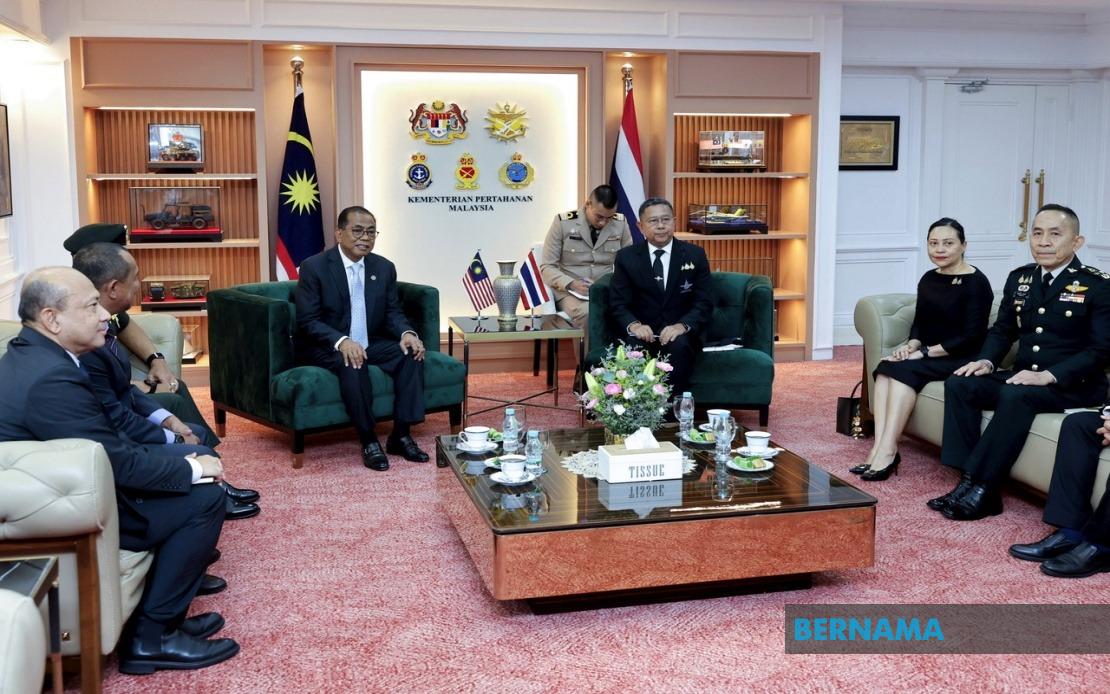
Malaysia has signalled its commitment to deepening coordination with Thailand following the appointment of Thanut Suvarnananda as chief of the Peace Dialogue Panel for the Thai government. Defence Minister Datuk Seri Mohamed Khaled Nordin announced Malaysia's backing for the leadership change during discussions with visiting Thai Defence Minister Lieutenant General Adul Boonthumjaroen, underscoring the importance both nations place on resolving the decades-long insurgency affecting Thailand's restive southern region.
The diplomatic gesture carries weight within the broader architecture of regional peace-building. Malaysia has long served as a crucial intermediary in the Thai conflict, hosting talks and providing neutral ground for negotiations. With Datuk Rabin Basir continuing as Malaysia's official facilitator for the Southern Thailand Peace Dialogue, the appointment of Thanut represents an opportunity to reset engagement and inject fresh momentum into stalled negotiations. Khaled's explicit welcome of the new chief signals that Malaysia sees potential for substantive progress under fresh leadership.
The Defence Minister carefully delineated Malaysia's role as facilitator rather than principal actor, emphasising that military operations and internal security remain strictly Thailand's domain. This distinction is politically important for Malaysia, which must maintain delicate credibility with all stakeholders—the Thai government, the rebel groups, and the affected civilian populations. By accepting Thailand's sovereign authority while offering facilitation services, Malaysia positions itself as an honest broker capable of bridging divides without threatening any party's core interests.
Beyond the peace dialogue itself, the bilateral defence discussions revealed a comprehensive agenda spanning multiple security challenges. Both ministers acknowledged the urgency of combating cross-border smuggling and preventing the movement of what they described as subversive elements through their shared frontier. These concerns reflect the reality that southern Thailand's instability creates conditions for broader transnational criminal networks, weapons trafficking, and ideological recruitment that threaten stability across the region. Malaysia's emphasis on tackling these issues through the Malaysia-Thailand General Border Committee demonstrates recognition that peace requires addressing not just political grievances but also the criminal economies that sustain conflict.
The scheduled 57th General Border Committee Meeting, to be hosted by Malaysia this year, will tackle an unusually broad portfolio of concerns. Beyond immediate security matters, the agenda encompasses socio-economic development in border zones and disaster management cooperation. This holistic approach reflects contemporary understanding that sustainable peace requires addressing root causes of instability, including poverty and underdevelopment that drive recruitment into armed groups. The inclusion of economic development initiatives signals that both nations view border stability as inseparable from prosperity and opportunity for frontier communities.
Malaysia's position on Thailand's separate border tensions with Cambodia further illustrates the country's broader regional diplomacy. By endorsing Thailand's preference for bilateral resolution through the "ASEAN Way"—the regional bloc's tradition of non-interference and consensus-building—Malaysia reinforces Southeast Asian norms of peaceful dispute settlement. Notably, Kuala Lumpur has channelled the matter to the Philippines as 2026 ASEAN Chair, suggesting Malaysia expects the incoming chair to exercise diplomatic weight in encouraging restraint between Bangkok and Phnom Penh. This approach distributes responsibility across ASEAN rather than concentrating pressure on any single state.
The proposed Memorandum of Understanding on regional security and domestic defence industry cooperation represents a strategic deepening of the Malaysia-Thailand military relationship. Such agreements typically establish frameworks for joint training, technology sharing, and standardisation of equipment—measures that enhance interoperability and demonstrate mutual confidence. For Malaysian readers, the expansion of defence industry cooperation carries economic implications, potentially creating procurement opportunities and industrial partnerships that extend beyond the military establishment to broader manufacturing sectors.
The timing of these developments merits attention. The discussions occur as ASEAN prepares for the 2026 Philippine chairmanship, with Defence Ministers' meetings scheduled for the Philippines later this year. Malaysia's efforts to align positions with Thailand before these gatherings suggests recognition that regional security architecture—particularly regarding South China Sea freedom of navigation, maritime boundary disputes, and transnational challenges—increasingly requires consensus among ASEAN defence establishments. By strengthening bilateral military ties with Thailand, Malaysia reinforces its role as a serious player in regional security conversations.
The southern Thailand conflict remains one of Southeast Asia's most intractable problems, with more than two decades of violence claiming thousands of lives and displacing communities across Pattani, Yala, and Narathiwat provinces. Previous peace initiatives have achieved limited success, with negotiations repeatedly stalling over fundamental issues including the scope of dialogue, representation of diverse insurgent groups, and mechanisms for addressing past atrocities. Malaysia's willingness to maintain its facilitation role despite these setbacks reflects strategic patience and recognition that its credibility as an intermediary provides long-term value for regional stability, even when immediate breakthroughs remain elusive.
For Malaysia specifically, the stability of Thailand's southern provinces carries direct implications. Cross-border security challenges, refugee flows, and the transnational networks exploiting the conflict zone directly affect Malaysian communities in bordering states like Kedah, Perlis, and Terengganu. Malaysian armed forces have historically provided support to their Thai counterparts, and the country's own experience with insurgency and separatism makes it a sophisticated partner in counter-insurgency matters. However, Malaysia's role as mediator requires maintaining sufficient neutrality that all parties—including armed groups—view it as trustworthy, a balance that demands careful political management.
The appointment of Thanut Suvarnananda and Malaysia's supportive response may signal that Thailand's government believes new approaches are necessary. The previous peace dialogue architecture encountered persistent obstacles related to fragmentation among insurgent groups, with splinter factions sometimes more committed to continued violence than negotiated settlement. Whether Thanut can overcome these structural challenges remains uncertain, but Malaysia's explicit backing suggests both governments believe attempting renewed engagement serves their mutual interests more effectively than allowing the conflict to fester indefinitely.

