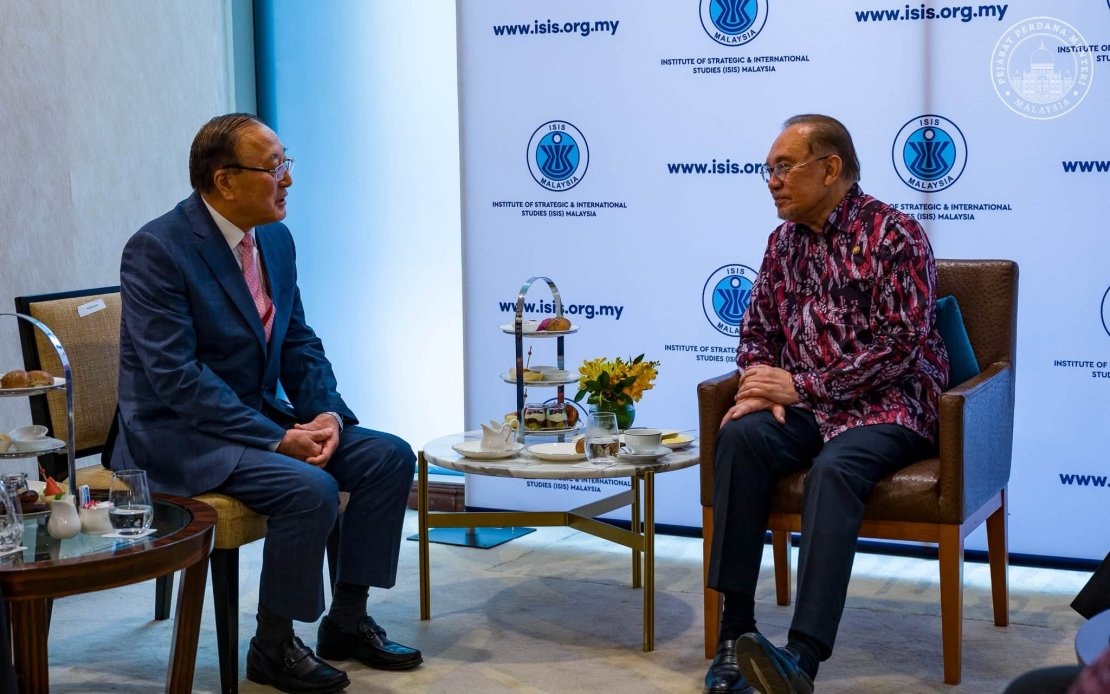
Prime Minister Datuk Seri Anwar Ibrahim has committed Malaysia to strengthening its partnership with the Boao Forum for Asia (BFA) across a broad spectrum of economic and technological domains. The announcement came during a recent visit by BFA secretary-general Zhang Jun to Kuala Lumpur, where the two officials discussed strategies for navigating an increasingly volatile international environment. Through his Facebook statement, Anwar outlined Malaysia's intention to collaborate more intensively with the influential regional think tank on matters ranging from conventional commerce to cutting-edge technological advancement.
The scope of proposed collaboration reflects the multifaceted challenges facing Southeast Asia and the broader Asia-Pacific region. Trade and investment partnerships form the cornerstone of the envisioned cooperation, recognising that economic interdependence remains a stabilising force despite mounting protectionist pressures globally. Alongside conventional commerce, Malaysia seeks to align with BFA initiatives on digital transformation—a critical frontier where nations are racing to modernise infrastructure and create competitive advantages in the digital economy. This dimension carries particular significance for Malaysia, which has positioned itself as a technology hub within ASEAN and a gateway to emerging markets.
Artificial intelligence represents perhaps the most strategically significant collaboration area. As AI technologies reshape labour markets, governance, and industrial productivity, Malaysia recognises that regional dialogue through platforms like the BFA can help establish shared standards and ethical frameworks. Uncoordinated AI development across Asia risks creating fragmented ecosystems where interoperability suffers and smaller economies fall further behind. By engaging through the BFA, Malaysia can help shape continental approaches to AI governance whilst ensuring its own businesses and workers transition smoothly into an AI-augmented future.
Energy transition cooperation addresses one of Asia's most pressing sustainability imperatives. The region remains heavily dependent on fossil fuels, yet faces mounting pressure to decarbonise in line with international climate commitments. Malaysia, with its substantial renewable energy potential and position as a major energy producer, stands to benefit from shared research, technology transfer, and investment coordination through BFA channels. This cooperation extends beyond climate compliance—it presents genuine economic opportunities in green technology manufacturing, renewable infrastructure development, and the emerging carbon credit markets.
Food security has emerged as a paramount concern across Asia, particularly following pandemic-related supply chain disruptions and climate-related agricultural challenges. Malaysia, as both a significant regional food importer and agricultural exporter, faces complex food security dynamics that require collaborative solutions. Through the BFA framework, Malaysia can participate in discussions about regional food systems resilience, agricultural innovation, and supply chain diversification—issues with direct implications for consumer prices and national self-sufficiency.
Education and talent development cooperation reflects recognition that human capital remains the foundation of regional competitiveness. As economies transition toward higher-value-added sectors, the demand for skilled workers in emerging fields intensifies. Coordinated approaches to curriculum development, skills certification, and student mobility through BFA initiatives can help align Southeast Asian educational systems with regional labour market needs. For Malaysia specifically, closer cooperation on talent development can attract back diaspora workers whilst positioning the country as an educational destination for regional students.
Anwar emphasised that in an era of geopolitical tension, economic fragmentation, and rapid technological disruption, regional cooperation grounded in inclusive dialogue represents the most pragmatic pathway toward sustained prosperity. This framing reflects Malaysia's traditional foreign policy orientation toward multilateralism and consensus-building, particularly within ASEAN frameworks. The BFA, as a premier Asia-focused platform, provides institutional mechanisms through which Malaysia can amplify its voice in regional affairs whilst contributing to broader stability.
The emphasis on dialogue-based cooperation carries particular weight given current global tensions. With great power competition intensifying and trade blocs increasingly fractious, medium-sized Asian economies like Malaysia navigate a precarious balancing act. The BFA offers a non-aligned space where regional countries can discuss shared challenges without the polarising dynamics that characterise bilateral relationships or broader geopolitical forums. This relative neutrality makes it an invaluable venue for Malaysian diplomacy.
For ordinary Malaysians, the practical implications of enhanced BFA cooperation manifest gradually but significantly. Improved trade and investment frameworks mean better job prospects and potentially lower consumer prices. Digital transformation initiatives create pathways for workers to upskill in emerging sectors. AI governance collaboration protects consumer privacy and labour standards. Energy transition creates green jobs. Food security cooperation stabilises agricultural incomes and moderates food inflation. Talent development initiatives expand educational opportunities for Malaysian youth.
The timing of Anwar's commitment reflects Malaysia's evolving position within regional dynamics. As a founding member of ASEAN with sophisticated financial markets and manufacturing capabilities, Malaysia holds genuine convening power. Yet as a middle-income country, it faces competitive pressures from both wealthier developed nations and rapidly ascending economies. Strategic engagement through platforms like the BFA allows Malaysia to amplify influence that bilateral relationships alone might not provide, whilst building coalitions around shared interests in regional stability and equitable development.
Moving forward, the substance of Malaysia-BFA cooperation will depend on concrete institutional arrangements and resource commitments. Joint research initiatives, capacity-building programmes, and investment vehicles will determine whether this partnership generates tangible benefits. The BFA's track record in facilitating regional dialogue is solid, but translating high-level commitments into implementable projects requires sustained political will and bureaucratic coordination—areas where Malaysian government agencies will face their own challenges.

