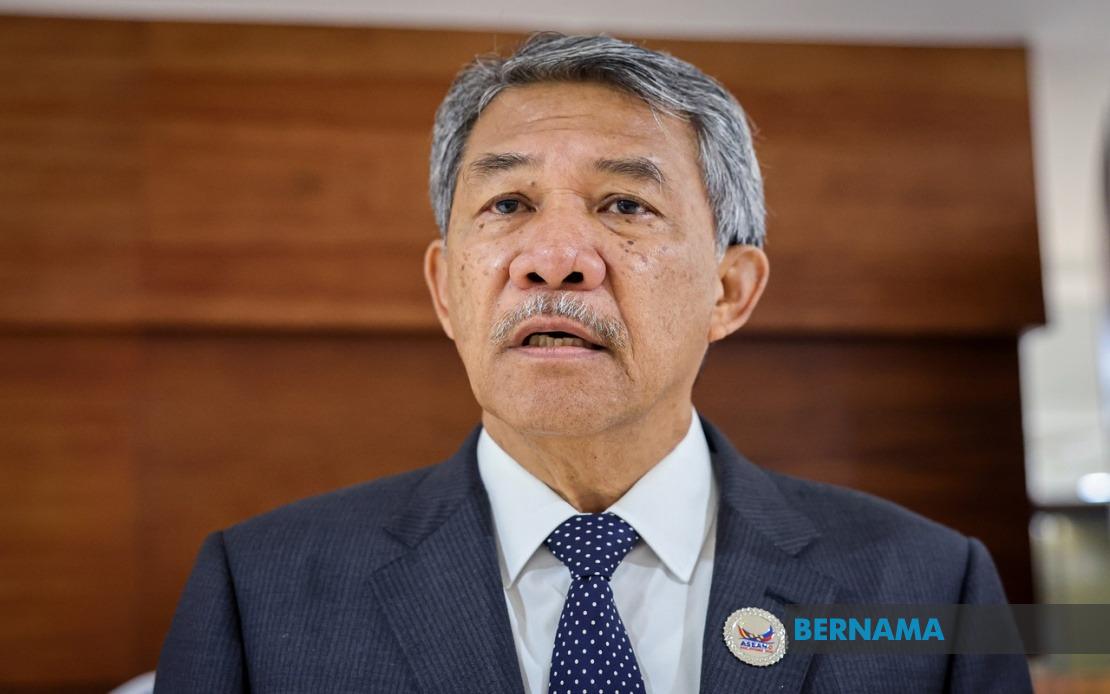
ASEAN members have formally accepted Turkey as a new Dialogue Partner and tasked Malaysia with serving as country coordinator for the relationship, Foreign Minister Datuk Seri Mohamad Hasan announced at the conclusion of the 59th ASEAN Foreign Ministers' Meeting in Manila. The twin decisions mark a significant expansion of the regional grouping's diplomatic reach and underscore Malaysia's pivotal role within the bloc, particularly as it prepares to assume the ASEAN Chair in 2025.
The dual approvals emerged from plenary discussions held alongside the Post-Ministerial Conference, where foreign ministers from across Southeast Asia convened under the chairmanship of Philippine Foreign Affairs Secretary Ma. Theresa P. Lazaro. Mohamad explained that both matters had undergone rigorous scrutiny at multiple institutional levels—from the ASEAN Secretariat through to foreign ministers and official delegations—reflecting the bloc's commitment to maintaining stringent standards when welcoming new partnerships and institutional participants.
Malaysia's elevation to country coordinator status carries particular weight given that it had championed Turkey's admission during its ongoing ASEAN Chair tenure. This coordinating role positions Kuala Lumpur as the primary liaison between ASEAN and Ankara, responsibility that extends beyond ceremonial functions to encompassing substantive engagement on issues ranging from economic cooperation to security dialogue. The appointment reflects confidence in Malaysia's diplomatic capacity and its ability to bridge diverse interests within the 10-member bloc.
Turkey's acceptance as a Dialogue Partner places it alongside other major powers and regional actors with similar status, granting the country structured access to ASEAN deliberations and cooperative frameworks. For Turkey, the arrangement opens channels for deepening engagement across Southeast Asia on trade, investment, and geopolitical matters, particularly as Ankara seeks to expand its influence beyond its traditional European and Middle Eastern spheres. The move also recognises Turkey's growing strategic importance to the Indo-Pacific region.
In parallel developments, ASEAN approved the United Kingdom's admission as a new member of the ASEAN Regional Forum, the region's oldest multilateral security dialogue mechanism. This expansion of the ARF reflects the forum's continued relevance as a venue for dialogue on regional security challenges, from maritime safety to counterterrorism. The UK's inclusion reinforces the forum's role as an inclusive platform encompassing major powers with significant interests in Indo-Pacific stability.
During the plenary session, ministers also reflected on ASEAN's positioning amid turbulent international conditions. Mohamad underscored the importance of preserving ASEAN centrality—the principle that the bloc, rather than individual major powers, should drive the regional agenda. This concern reflects ongoing anxiety within ASEAN about great power competition in Southeast Asia, where strategic competition between the United States and China, alongside assertiveness from India and Russia, creates pressure on smaller nations to choose sides. Maintaining centrality allows ASEAN to navigate these crosscurrents while maximising its collective bargaining power.
The discussions also encompassed ASEAN Community Vision 2045, the blueprint guiding the bloc's strategic direction over the next two decades. ASEAN Secretary-General Dr Kao Kim Hourn presented updates on implementation progress, emphasising the importance of regional cohesion and shared prosperity. Vision 2045 encompasses ambitious targets for economic integration, people-to-people connectivity, and sustainable development, though its realisation depends on maintaining the unity and commitment demonstrated at meetings such as this one.
Mohamad's remarks about geopolitical uncertainty carry particular resonance for Malaysia and other Southeast Asian nations navigating competing interests from global powers. The region remains strategically vital—sitting astride critical sea lanes, hosting major economies, and serving as home to over 650 million people. ASEAN's ability to maintain its centring role amid external pressures remains essential to regional stability and the interests of individual member states.
The acceptance of new partners and members reflects ASEAN's gradual opening to international participation, balanced against longstanding concerns about diluting its cohesion or becoming a tool for external powers. The standards Mohamad referenced—applied to both Turkey and the UK—demonstrate ASEAN's determination to remain selective rather than expansive, ensuring that new entrants can meaningfully contribute to the grouping's objectives rather than simply seeking strategic advantage.
For Malaysia specifically, the coordinator appointment elevates its profile within ASEAN mechanisms and positions it advantageously as it prepares for the Chair role. Country coordinators typically develop expertise and relationships that extend their influence across the bloc, making the position valuable for advancing Malaysian interests during and beyond its year of leadership. This pattern has historically allowed Chair countries to set agendas and shape outcomes on key regional questions.
Looking forward, the Philippines' role as current ASEAN Chair will transition to Malaysia in 2025, a handover that traditionally involves careful planning to ensure continuity of initiatives and momentum on priority issues. The inclusion of new Dialogue Partners like Turkey and expanded ARF membership will require coordination efforts that Malaysia, in its coordinator and forthcoming Chair capacities, will help manage. These relationships are likely to feature prominently in Malaysia's ASEAN agenda, offering opportunities for showcasing Malaysian diplomacy.

