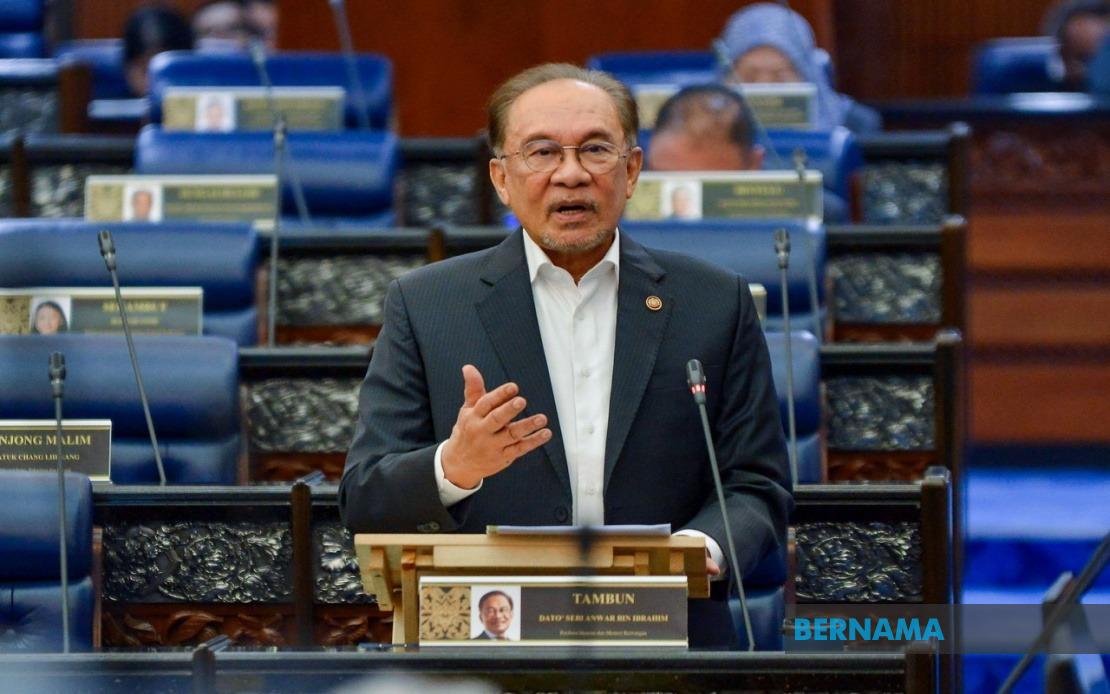
The Malaysian government intends to maintain a careful balance between creating employment opportunities for locals and meeting genuine sectoral demands for foreign labour, according to Prime Minister Datuk Seri Anwar Ibrahim. Speaking in the Dewan Rakyat on July 14, Anwar acknowledged that while several industries genuinely require overseas workers, recruitment processes must be streamlined to ensure that existing foreign workers already in the country are considered before new hiring takes place. This dual-track approach reflects ongoing tensions between business needs and the government's electoral commitment to young Malaysian jobseekers.
The Prime Minister's remarks came in response to parliamentary questioning about the labour shortage affecting small and medium enterprises across Malaysia. Recognising the economic pressures facing SMEs, Anwar emphasised that the government does not dispute the necessity of foreign workers in certain contexts. However, he framed this necessity within a broader governance challenge, noting that millions of foreign workers already reside in Malaysia and should be utilised more efficiently before additional recruitment occurs. This perspective suggests a significant stocktaking exercise may be underway within government regarding the true scale and composition of Malaysia's foreign workforce.
A key component of the government's revised approach involves addressing what Anwar described as the entrenched problem of foreign worker syndicates. For decades, these networks have operated as both employment facilitators and wealth-accumulation mechanisms for particular individuals and groups, creating parallel systems outside formal regulatory frameworks. The Prime Minister's acknowledgment that tackling this issue is essential indicates recognition that much of Malaysia's foreign labour landscape operates beyond transparent oversight. Dismantling these syndicates could prove challenging given their institutional entrenchment and the vested interests that benefit from their continuation.
The coordination mechanism Anwar outlined places responsibility jointly on the Ministry of Human Resources and the Ministry of Home Affairs, with explicit incorporation of security considerations into labour policy decisions. This interagency approach represents a departure from treating foreign worker issues purely as economic questions. By involving the Home Affairs Ministry, the government signals that immigration, national security, and labour market management must be evaluated together rather than compartmentalised. Security vetting of foreign workers has become increasingly sophisticated globally, and Malaysia's adoption of this integrated model aligns with regional trends toward stricter employment verification.
Enforcement against non-compliant workers will intensify irrespective of nationality or origin, Anwar stressed, including action targeting undocumented Rohingya workers in Malaysia. This blanket approach indicates the government's determination to appear even-handed in labour law implementation, though it also signals heightened pressure on vulnerable migrant populations. The Prime Minister framed enforcement as conditional respect for rules rather than selective targeting, suggesting that workers complying with regulations would receive protection while those breaching them would face business seizures and legal consequences. This formulation attempts to reposition enforcement from a humanitarian issue into a straightforward compliance matter.
A particular concern animating government policy is the misuse of professional worker visa categories by employers seeking to circumvent restrictions on standard labour recruitment. Anwar pointed to cases where companies applied to hire specialists in artificial intelligence and digital fields, only for investigators to discover that recruited workers were not performing roles aligned with their claimed expertise. This pattern indicates employers may be exploiting regulatory approval mechanisms designed to facilitate genuinely scarce skills importation. Tightening entry requirements for professional workers represents an effort to close this loophole while still permitting legitimate high-skill recruitment.
The government's approach acknowledges that Malaysia faces a genuine skills gap, particularly in emerging fields like artificial intelligence and digital technologies. Rather than restricting such expertise entirely, the strategy seeks to ensure that when foreign professionals are hired, their actual work corresponds to approved specialisations. This distinction is important because it frames the policy not as blanket protectionism but as preventing bureaucratic capture and misrepresentation. Companies bringing in AI experts genuinely needed for Malaysia's digital economy would continue to operate normally, while those using professional visas as backdoors for cheaper general labour would face increased scrutiny.
For Malaysia's young workforce and small business sector, this framework presents mixed implications. Youth unemployment and underemployment remain concerns despite the economy's formal growth rates, making the priority afforded to local hiring practically important. Simultaneously, SMEs operating in labour-intensive sectors frequently cite genuine difficulty in finding Malaysian workers willing to accept prevailing wage rates or working conditions. The government's emphasis on studying sectoral needs rather than blanket restrictions suggests differentiated treatment may emerge, with some industries eventually permitted higher foreign worker quotas while others face tighter controls.
Regionally, Malaysia's recalibration of foreign labour policy mirrors similar approaches adopted by other Southeast Asian economies grappling with large migrant populations and youth employment anxieties. Thailand, Indonesia, and the Philippines have all pursued modified frameworks seeking to balance migrant worker rights, domestic labour market protection, and economic necessity. Malaysia's integration of security considerations alongside employment policy aligns with this broader regional turn toward more comprehensive labour governance. However, implementation challenges remain significant, given existing networks' resistance to reform and the practical difficulties of displacing informal labour arrangements.
The long-term sustainability of this approach depends on whether the government can genuinely reform foreign worker systems or merely layers new bureaucratic requirements atop existing structures. Anwar's emphasis on studying needs rather than immediately increasing quotas suggests preliminary assessment work remains incomplete. Whether the Ministry of Human Resources and Ministry of Home Affairs can develop genuinely joint strategies that serve both labour market and security objectives represents a critical implementation question. The government's stated commitment to balancing local opportunities with sectoral requirements will be tested as individual industry requests for additional foreign workers accumulate, requiring consistent application of the stated principles.

