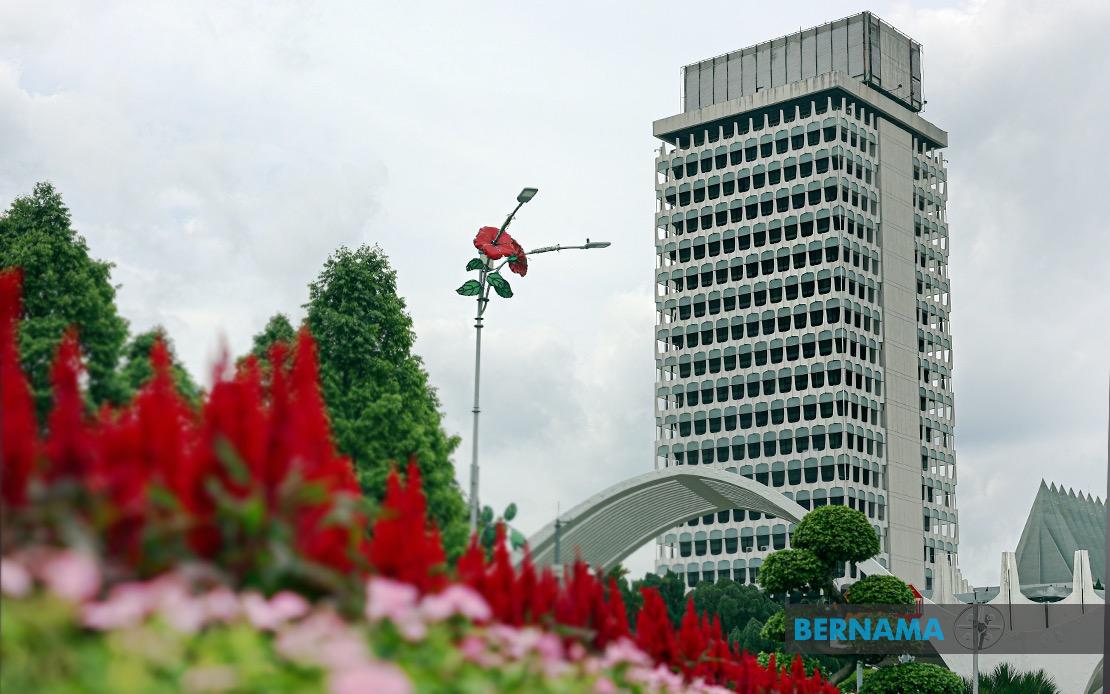
Malaysia's lawmakers are preparing to scrutinise two pressing regional concerns today when the Dewan Rakyat convenes for its question-and-answer session: the emerging opportunities from the Malaysia-Thailand Border Economic Zone and the escalating maritime tensions affecting global trade routes. The dual focus reflects parliament's commitment to examining both the nation's development agenda and its vulnerability to external geopolitical shocks in one of the world's most critical shipping corridors.
Barisan Nasional member Datuk Adnan Abu Hassan, representing Kuala Pilah, will press the Prime Minister on what tangible economic gains Malaysia expects to realise from the Malaysia-Thailand BEZ initiative. This line of questioning signals growing parliamentary interest in ensuring that cross-border development projects deliver measurable returns rather than remaining abstract policy commitments. The BEZ represents a significant undertaking to harness the commercial potential along the shared frontier between the two nations, yet many lawmakers and constituents remain unclear about the specific mechanisms through which wealth will be generated and distributed.
Abu Hassan's inquiry will dig deeper into a critical implementation concern: how the government intends to guarantee that small enterprises and grassroots communities in the border regions themselves participate meaningfully in the zone's prosperity. This reflects a common challenge across Southeast Asian economic cooperation ventures, where benefits frequently accrue to large corporations and urban centres whilst peripheral populations remain marginalised. Without explicit frameworks to include local traders, agricultural producers, and service providers, the BEZ risks becoming another development project that widens regional inequality rather than narrowing it.
Parallel to these economic zone discussions, parliament will confront a more immediate security challenge when Datuk Rosol Wahid from Perikatan Nasional's Hulu Terengganu constituency directs the Prime Minister's attention toward the Strait of Hormuz crisis. His question demands a comprehensive government assessment of how the prolonged tensions in this vital waterway threaten Malaysia's both political equilibrium and economic performance. As roughly one-third of all seaborne traded petroleum transits through the Strait, disruptions carry ramifications far beyond the Middle East, affecting energy costs, inflation rates, and investor confidence across the entire region.
The Strait of Hormuz's strategic importance to Malaysia cannot be overstated. Fluctuations in oil prices driven by tensions in this chokepoint reverberate through Malaysian domestic prices, government revenues dependent on energy sector taxes, and the competitiveness of export-dependent industries. Beyond immediate economic metrics, the crisis introduces geopolitical uncertainty that complicates Malaysia's efforts to maintain its traditional non-aligned foreign policy position whilst navigating great power competition in Southeast Asia. Parliament's focus on this issue reflects legitimate concern that external instability could undermine internal stability if energy supplies become unreliable or prohibitively expensive.
Government responses to Wahid's questioning will likely outline contingency measures, energy diversification strategies, and diplomatic initiatives aimed at protecting Malaysian interests. Whether these measures prove adequate remains an open question, particularly given Malaysia's limited capacity to influence events in the Middle East and its reliance on maintaining stable international trade relationships. The Prime Minister's response will signal to both domestic audiences and international observers the seriousness with which the government views these risks and the robustness of mitigation plans.
Beyond these headline issues, parliament will address a range of matters reflecting diverse constituent concerns. Datuk Yusuf Abd Wahab, the GPS representative for Tanjong Manis, will question the Transport Minister on strategies to suppress illegal highway racing following a dangerous incident in Simpang Renggam, Johor, last month. This queriy underscores how parliamentary focus extends to public safety matters affecting ordinary Malaysians, even as international and macroeconomic questions dominate headlines.
Following the question-and-answer period, the sitting will transition to legislative business with the introduction of two significant bills. The Statistics Bill 2026, to be tabled by the Economy Minister, will modernise Malaysia's statistical framework, whilst the National Trust Fund Bill 2026, presented by the Finance Minister, addresses another dimension of financial governance. These legislative initiatives suggest the government is advancing a comprehensive institutional reform agenda.
A particularly noteworthy development centres on the Parliamentary Special Select Committee's constitutional amendment report, which Minister in the Prime Minister's Department Datuk Seri Azalina Othman Said will present. The committee's recommendation to separate the roles of Attorney General and Public Prosecutor represents a significant constitutional restructuring aimed at strengthening institutional independence. After seven intensive meetings, the committee refined its proposal through seven key enhancements designed to bolster the Public Prosecutor's independence, integrity, and accountability. This separation recognises that concentrating prosecutorial and legal advisory functions within a single office can create conflicts of interest and compromise judicial impartiality, an issue that has preoccupied legal reform advocates across Southeast Asia.
The current parliamentary session, spanning sixteen days from June 22 through to the following Thursday, provides ample opportunity for backbench members to raise constituent concerns and hold the executive accountable. The combination of economic development questions, security assessments, public safety inquiries, and constitutional reform reflects the breadth of governance challenges facing contemporary Malaysia. Each issue carries implications extending beyond immediate parliamentary debate into the lived experiences of Malaysian citizens navigating an increasingly complex economic and geopolitical landscape.

