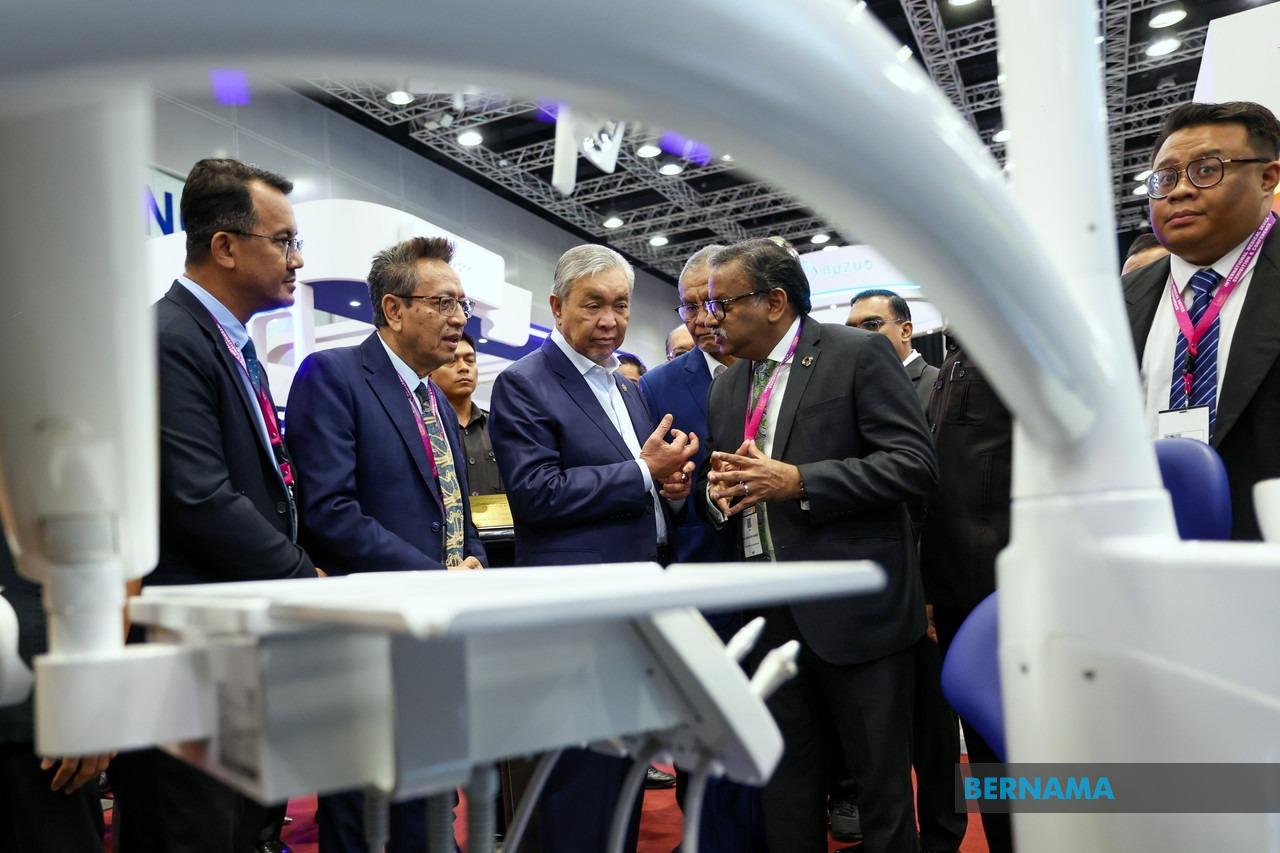
Malaysia's ambitions for its medical technology sector have crystallised into a concrete roadmap aimed at transforming the country from a manufacturing hub into a genuine innovation epicentre. Deputy Prime Minister Datuk Seri Dr Ahmad Zahid Hamidi has set an export target exceeding RM50 billion by 2030, representing a significant jump from the RM34.54 billion achieved in the previous year. This escalation reflects not merely a quantitative growth expectation, but a qualitative shift in how Malaysia positions itself within the global medical device marketplace.
Addressing participants at the closing ceremony of the International Medical Device Exhibition and Conference (IMDEC) 2026, Ahmad Zahid articulated three interlocking strategic ambitions that collectively define Malaysia's vision for the sector over the next half-decade. Beyond the export surge, the government aims to nurture at least 10 Malaysian MedTech champions capable of competing effectively at both regional and global levels—a meaningful departure from Malaysia's historical reliance on foreign multinational corporations. This aspiration suggests a deliberate pivot toward building indigenous technological capacity and intellectual property ownership, rather than remaining primarily a host for international manufacturing operations.
The third pillar of the strategy targets employment quality rather than mere job creation. Malaysia intends that at least half of all positions generated by new MedTech investments by 2030 should constitute managerial, technical, and supervisory roles. This threshold matters considerably because it reflects a sophisticated understanding that attracting investment capital means little if the resulting employment remains concentrated in assembly-line and routine production work. Currently, Malaysia's medical device sector maintains a managerial, technical, and supervisory employment index standing at only 33.1 percent as of 2025—substantially below the government's ambition.
Ahmad Zahid's commentary on this employment gap reveals a frustration with the current trajectory. He emphasised that Malaysia possesses strong competitive foundations including established manufacturing infrastructure, proven market access, and considerable global credibility. However, he cautioned that continued export expansion cannot rely indefinitely on volume increases from lower-value product categories. The phrase "capital may enter Malaysia, but capability must remain in Malaysia" encapsulates a crucial policy philosophy: investment is welcome only insofar as it builds lasting technical sophistication within the domestic workforce and economy.
A critical element of this strategy involves reshaping the relationship between industry and vocational education. Ahmad Zahid, who chairs the National Technical and Vocational Education and Training Council, called for multinational companies and investors to engage with Malaysian education institutions earlier in the investment cycle, rather than approaching them only after encountering labour shortages. This represents a proactive, demand-driven approach to skills development, where industry partners help shape curricula, identify emerging skill requirements, facilitate workplace exposure, and expand apprenticeship opportunities before operations commence. Such coordination could substantially reduce the mismatch between graduate competencies and employer needs that often characterises fast-moving sectors.
The investment momentum underpinning these ambitions has already begun building. During 2025 alone, the medical device sector attracted RM4 billion in new investments distributed across 46 separate projects, generating approximately 3,400 employment opportunities. These figures suggest strong investor confidence in Malaysia's regulatory environment, manufacturing capabilities, and market positioning within Southeast Asia. The employment numbers also indicate that medical device manufacturing remains relatively labour-intensive despite its high-tech character, underscoring the importance of ensuring that new jobs genuinely advance worker productivity and earning potential.
Placing Malaysia's targets within global context illuminates both the opportunity and the challenge. The worldwide medical device industry reached a valuation exceeding USD572 billion in the previous year, with projections indicating the sector will surpass USD1 trillion by 2034. Malaysia's goal of achieving RM50 billion in annual exports—equivalent to approximately USD12 billion at current exchange rates—would position the country as a meaningful player in this rapidly expanding global market, potentially capturing between 1 and 1.5 percent of projected global demand. For a nation of Malaysia's size and resource base, such market penetration would represent substantial achievement.
The IMDEC 2026 conference itself demonstrated the sector's gathering momentum. The three-day event from August 26 to 28 attracted more than 160 exhibitors and hosted over 50 regional and international speakers addressing topics spanning regulatory frameworks, innovation pathways, and healthcare system transformation. This scale of participation suggests that Malaysia has succeeded in establishing itself as a credible convening point for serious MedTech industry players, potentially enhancing the nation's capacity to attract both investment and talented professionals.
Implementing these ambitions will require coordinated action across multiple fronts. Government agencies must streamline regulatory approvals and intellectual property protections to encourage local entrepreneurs. Education and training institutions need resources and industry partnership mechanisms to develop sophisticated technical skills. State governments should prioritise MedTech infrastructure development and investment incentives. Importantly, multinational corporations must see genuine advantage in locating research, development, and higher-value manufacturing activities in Malaysia rather than merely assembly operations. The convergence of these factors will determine whether Malaysia achieves its 2030 targets or merely maintains incremental improvements over current performance levels.
For Malaysia and the broader Southeast Asian region, the success or failure of this strategy carries implications extending well beyond medical devices. The region's manufacturing competitiveness increasingly depends on climbing the value chain rather than competing indefinitely on labour costs alone. Malaysia's attempt to build a sophisticated, high-value MedTech sector offers a template for how developing economies can leverage existing manufacturing expertise while deliberately fostering innovation capacity and technical employment. Should the strategy succeed, it would strengthen Malaysia's position as a premium regional manufacturing destination and potentially inspire similar initiatives across ASEAN.

