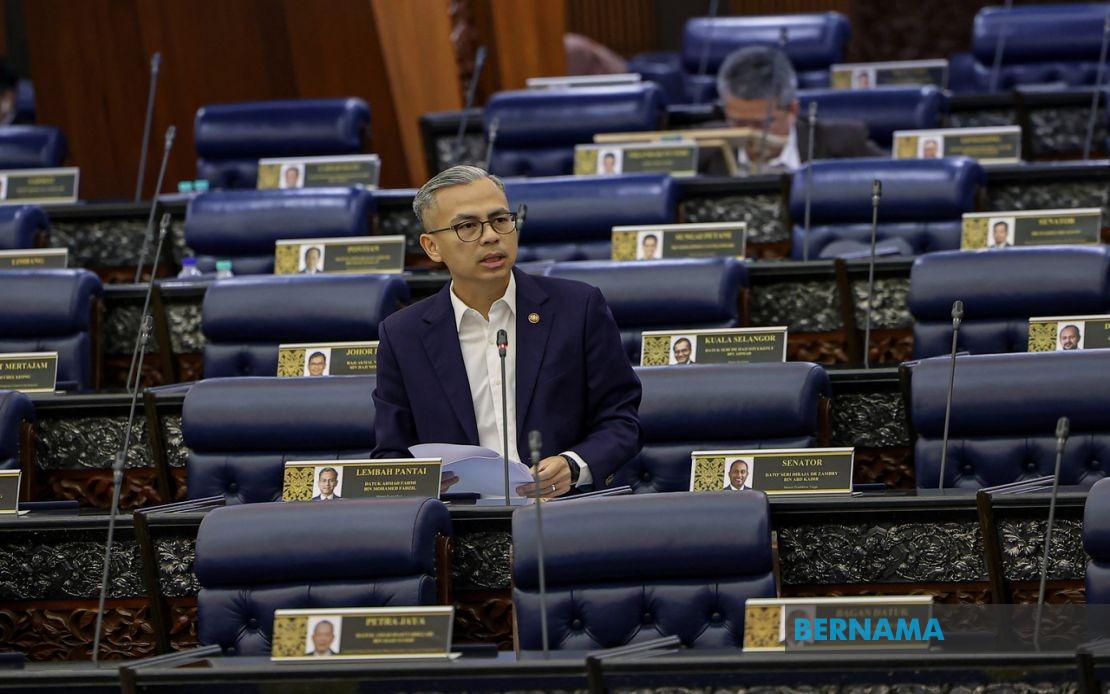
Communications Minister Datuk Seri Fahmi Fadzil tabled the Communications and Multimedia (Amendment) Bill 2026 in the Dewan Rakyat on July 13, marking a significant step toward embedding national security considerations into Malaysia's telecommunications regulatory framework. The legislation, scheduled for second reading during the current parliamentary session, represents a substantial refinement of how the government approaches universal service obligations across the communications sector, blending traditional connectivity goals with modern security imperatives.
At its core, the proposed legislation revises Section 202 of the Communications and Multimedia Act 1998, introducing two new subsections that fundamentally expand ministerial authority over universal service provision. The amendments grant the Minister power to direct the Malaysian Communications and Multimedia Commission to champion universal service initiatives that encompass both network services and application services when deemed necessary for national security purposes. This represents a departure from previous frameworks that emphasised accessibility and affordability without explicitly factoring security considerations into the mandate.
The Bill's architects contend that these amendments respond to the evolving technological landscape and Malaysia's contemporary security environment. By empowering the MCMC to facilitate initiatives such as infrastructure deployment and service provision aimed at safeguarding national security, the legislation attempts to create a more holistic approach to telecommunications governance. Critically, determinations regarding what constitutes a national security matter rest with the National Security Council under Section 4 of the National Security Council Act 2016, introducing a coordinated institutional framework rather than placing such judgements unilaterally with the communications regulator.
The proposed subsection 202(1B) ensures that any universal service initiative must remain consistent with the overarching objectives of the Communications and Multimedia Act 1998. This constraint seeks to maintain alignment with established regulatory principles while accommodating the new security dimension. Additional amendments to Section 202(2) would enable the Minister to promulgate regulations under Section 16 of Act 588 specifically governing these national universal service initiatives, providing the necessary legal machinery to operationalise the framework once enacted.
From a practical standpoint, the amendment positions telecommunications infrastructure as a critical national asset requiring coordinated government oversight. Network facilities and application services can now be conceptualised as components of national security strategy, potentially enabling targeted interventions in sectors previously treated primarily as commercial domains. The integration of the National Security Council into decision-making processes reflects a whole-of-government approach to identifying and prioritising security-related universal service projects.
Malaysia's telecommunications sector has experienced rapid growth and increasing sophistication, with 5G rollout accelerating and digital services penetrating deeper into everyday commerce and governance. Against this backdrop, legislators appear concerned that purely market-driven universal service obligations may not adequately address security vulnerabilities or ensure strategic infrastructure resilience. The amendment attempts to correct this by providing regulatory tools to shape telecommunications development according to national security parameters.
The government's commitment to implementing this legislation without requiring additional budgetary expenditure suggests reliance on existing regulatory mechanisms and potential cost-sharing arrangements with service providers. The MCMC's existing mandate would be reoriented to accommodate security-focused initiatives, though the financial implications for telecommunications operators remain unclear pending detailed regulatory guidance. This approach balances legislative ambition with fiscal restraint, a consideration particularly relevant given Malaysia's broader budgetary constraints.
Regionally, Malaysia's amendment reflects a broader pattern across Southeast Asia of integrating security considerations into digital infrastructure policy. Countries including Thailand, Vietnam, and Indonesia have similarly sought to align telecommunications governance with national security objectives, often amid concerns about foreign technological dominance and data sovereignty. Malaysia's legislative approach, anchored in the National Security Council's determinations, positions security considerations within an institutional framework rather than relying on ad hoc ministerial discretion.
Industry stakeholders will likely scrutinise how the amendment translates into concrete regulatory expectations. Telecommunications operators, particularly those involved in providing critical infrastructure services, may face new compliance requirements or project obligations justified on national security grounds. The scope for regulatory interpretation remains substantial, and subsequent rules issued under the amended Section 16 authority will prove crucial in determining practical impact.
The amendment also signals Malaysia's evolving conception of universal service in the digital era. Traditional definitions emphasised ensuring basic connectivity for underserved populations and affordability for disadvantaged groups. The incorporation of security as a universal service imperative reflects recognition that connectivity without trustworthiness may be counterproductive. This philosophical shift aligns with international regulatory trends emphasising digital sovereignty and infrastructure resilience alongside traditional access concerns.
Parliamentary passage appears likely given government control of the legislature, though the second reading may generate debate regarding the scope of ministerial discretion and the criteria governing National Security Council determinations. Opposition parliamentarians may seek clarifications on how security-based universal service obligations will be monitored and whether mechanisms exist to prevent regulatory overreach or favour particular commercial interests under security guises.
Looking forward, the amendment establishes foundations for more sophisticated telecommunications governance integrating multiple policy objectives. Future amendments could build on this framework to address data localisation requirements, cybersecurity standards, or technology-specific security protocols. The institutional architecture—delegating security determinations to the National Security Council while vesting implementation authority in the Minister—creates flexibility for policy evolution as technological and geopolitical circumstances change.
Implementation will require close coordination between the MCMC, the National Security Council, and telecommunications operators to establish clear, predictable criteria for security-based universal service initiatives. Without transparent guidelines, the amendments risk creating regulatory uncertainty that could deter investment or disadvantage particular operators perceived as security risks. Successful execution depends on balancing legitimate security imperatives with competitive market principles and consumer welfare considerations that have historically underpinned telecommunications regulation.

