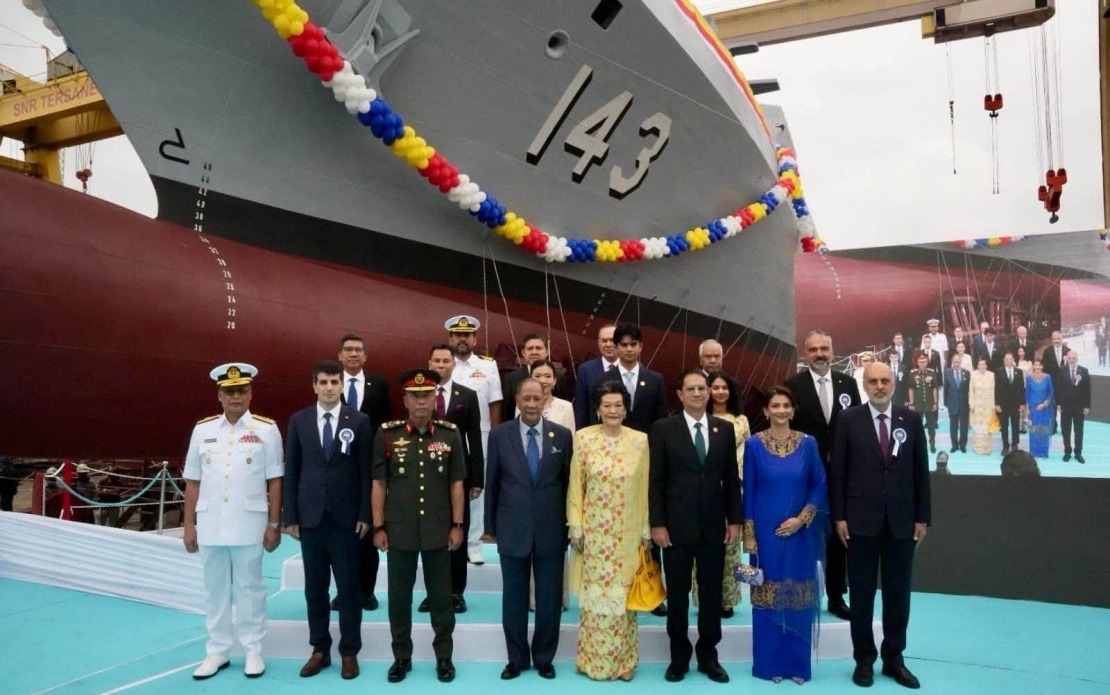
The Royal Malaysian Navy is taking another significant step towards operational modernisation with the launch of its third Littoral Mission Ship Batch 2 vessel, underscoring the critical importance of equipping the maritime force with contemporary capabilities to navigate an increasingly complex security landscape. Defence Minister Datuk Seri Mohamed Khaled Nordin used the occasion to reaffirm the government's strategic commitment to ensuring the RMN possesses the technological sophistication and military hardware necessary to safeguard Malaysia's vast maritime domain and protect national sovereignty against evolving threats ranging from piracy and smuggling to territorial disputes.
The vessel, christened Tunku Osman Jewa, carries profound symbolic weight within Malaysia's military and royal heritage. By naming the ship after the late General Tan Sri Tunku Osman Tunku Mohammad Jewa—a decorated former chief of the Armed Forces and member of the Kedah royal family—the nation honours both its institutional memory and the contributions of military leaders who shaped the country's defence posture. The presence of the Sultan of Kedah, Al Aminul Karim Sultan Sallehuddin Sultan Badlishah, and the Sultanah of Kedah, Sultanah Maliha Tengku Ariff, at the naming and launching ceremony underscored the significance of the occasion within royal and national contexts, demonstrating the continuity between Malaysia's traditional institutions and contemporary defence modernisation efforts.
The completion of the three-ship LMSB2 construction series marks a watershed moment in Malaysian naval history, not merely for the operational capabilities these vessels will bring but for what they represent institutionally. This acquisition programme embodies the first direct Government-to-Government collaboration between Malaysia and Turkey in the procurement of warships for the RMN, signalling a diversification of Malaysia's defence partnerships beyond traditional Western suppliers. Turkey's participation demonstrates the utility of South-South cooperation frameworks in acquiring cutting-edge naval technology, potentially offering Malaysia greater autonomy in fleet development while fostering long-term bilateral ties with a regional and global defence technology innovator.
The Littoral Mission Ships are specifically designed to operate effectively in shallow waters and coastal environments, capabilities particularly relevant to Malaysia's geography and strategic requirements. With maritime boundaries spanning the Strait of Malacca, the South China Sea, and multiple exclusive economic zones, the RMN must maintain persistent presence across diverse operational theatres. These vessels provide the manoeuvrability and mission flexibility needed to conduct patrols, interdict smuggling operations, respond to maritime emergencies, and project presence in areas where larger capital ships may prove less suitable. Their acquisition thus addresses genuine operational gaps within the current fleet structure.
The delivery timeline for these three vessels—expected by the end of 2027—aligns with the RMN's broader 15-to-5 Transformation Plan, an ambitious framework aimed at fundamentally restructuring the service's composition and capabilities. This modernisation initiative represents a strategic pivot away from maintaining numerous aging vessels towards operating a smaller number of sophisticated, integrated platforms networked through advanced command-and-control systems. Such transformation requires not only procurement of new hardware but also substantial investment in personnel training, doctrinal development, and operational integration—dimensions that extend well beyond the shipbuilding programme itself.
Malaysia's maritime security challenges have intensified markedly over recent years, encompassing traditional concerns such as piracy and coastal smuggling alongside newer threats including cyber-enabled disruptions, irregular migration flows, and the militarisation of disputed maritime zones. The Strait of Malacca remains one of the world's busiest shipping corridors, with approximately one-third of global maritime trade transiting through its waters, making regional stability a matter of international economic consequence. Chinese and Vietnamese military activities in the South China Sea have grown more assertive, while rising tensions with maritime neighbours have occasionally escalated into confrontational incidents. Against this complex backdrop, maintaining a credible naval deterrent becomes essential to protecting Malaysian interests and stability throughout Southeast Asia.
The investment in modern naval platforms also carries implicit technological and doctrinal implications for how Malaysia conceptualises maritime defence. Contemporary naval operations increasingly emphasize integration across domains, with vessels serving as nodes within broader surveillance and response networks rather than independent platforms. The Littoral Mission Ships, presumably equipped with modern sensors, communications suites, and weapon systems, will enable the RMN to participate more effectively in maritime domain awareness initiatives and coordinated responses to transnational threats. This networking capability becomes particularly valuable given Southeast Asia's shared maritime challenges and growing emphasis on multilateral security cooperation through mechanisms like the ASEAN Regional Forum and cooperative arrangements between coastal states.
The Turkish partnership itself warrants consideration within broader geopolitical currents shaping Southeast Asia's defence landscape. Turkey's emergence as a significant provider of naval vessels and defence systems reflects its technological maturation and willingness to export advanced capabilities to non-Western markets. For Malaysia, engaging Turkish suppliers diversifies technological dependencies and creates pathways for knowledge transfer that might enhance domestic defence industrial development. Over the long term, such partnerships can catalyse local manufacturing capacity and technical expertise, potentially positioning Malaysia as a regional node for naval capability development and maintenance within the broader Indian Ocean region.
Resourcement of the RMN at this scale also reflects Malaysia's determination to maintain maritime relevance amid shifting regional power dynamics. While larger regional players expand their naval footprints and technological sophistication, smaller countries must innovate strategically by acquiring platforms optimised for their specific operational environments rather than attempting to match great power capabilities directly. The Littoral Mission Ships exemplify this pragmatic approach, providing the RMN with vessels suited to Malaysia's geography and likely operational requirements rather than pursuing larger, more expensive frigates or destroyers that might exceed actual functional necessity while straining defence budgets. This realistic assessment of strategic requirements, combined with judicious technological choices, offers Malaysia a sustainable path towards maintaining credible maritime defences.
The broader significance of this naval modernisation extends into Malaysia's regional positioning and diplomatic standing. A technologically capable RMN enhances Malaysia's negotiating leverage in maritime disputes, strengthens its capacity to contribute meaningfully to regional security arrangements, and demonstrates commitment to international maritime law and order. These considerations become increasingly important as Southeast Asian countries navigate between pressures to align with greater powers and desires to maintain autonomy and regional stability. Malaysia's investment in modern naval capabilities signals that the country intends to remain an active, competent participant in shaping maritime order rather than a passive observer of regional strategic competition.

