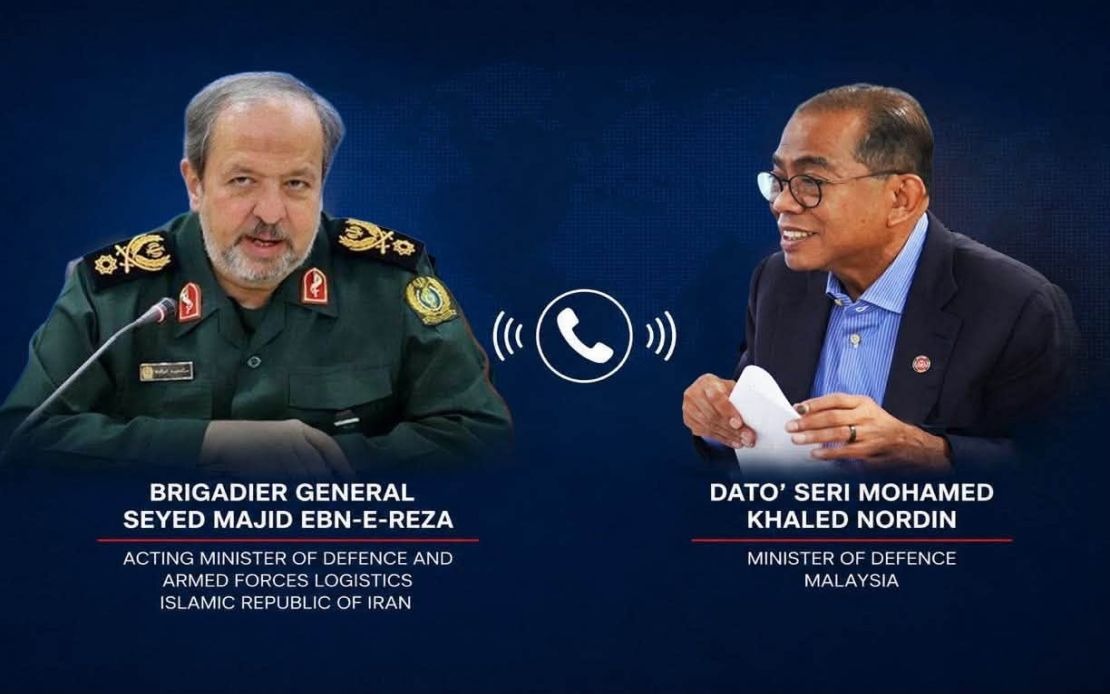
Malaysia is prepared to expand its defence cooperation with Iran, moving beyond existing bilateral relations to establish more comprehensive military partnerships. Defence Minister Datuk Seri Mohamed Khaled Nordin conveyed this commitment during a telephone discussion with Iran's Acting Minister of Defence and Armed Forces Logistics, Brigadier General Seyed Majid Ebn-e-Reza, signalling Kuala Lumpur's intent to build upon the historic friendship between the two nations through concrete defence mechanisms.
The conversation outlined Malaysia's willingness to institutionalise the defence relationship through a formal Memorandum of Understanding, which would serve as an official framework governing cooperation across military sectors. This approach reflects Malaysia's broader strategy of converting diplomatic goodwill into structured agreements that can withstand political transitions and provide clarity to defence planners in both countries regarding shared interests and operational parameters.
A particularly significant overture involves Malaysia's invitation to Iran to participate in the Langkawi International Maritime and Aerospace Exhibition in the coming year. LIMA stands as Southeast Asia's premier defence and aerospace showcase, attracting military delegations, defence contractors, and technology exhibitors from across the globe. Iranian participation would signal both countries' commitment to exploring technological partnerships and demonstrating their respective capabilities on an international stage, while providing opportunities for bilateral discussions away from bilateral forums.
Matthew Mohamed Khaled's comments also extended to acknowledging the casualties sustained by Iran throughout the ongoing West Asian conflict. By specifically mentioning the deaths of Iranian leaders, security personnel, and civilians, Malaysia demonstrated sensitivity to Tehran's strategic concerns and the human cost of regional instability. This expression of condolence carries diplomatic weight, particularly given Malaysia's traditionally balanced approach to Middle Eastern geopolitics, where the country maintains ties across the ideological spectrum.
Centrally, Malaysia reaffirmed its commitment to regional peace through dialogue and diplomatic channels rather than military escalation. The Defence Minister explicitly stated that Malaysia hoped ceasefire arrangements could hold and that diplomatic solutions would continue receiving international backing. This position reflects Malaysia's established principle of non-alignment and its belief that lasting stability in the Middle East and beyond cannot be achieved through military means alone, a principle increasingly relevant as maritime security challenges intensify across multiple theatres.
The discussion also touched upon Iran's indigenous defence capabilities, with Malaysia noting Tehran's demonstrated resilience and self-sufficiency in developing military technologies. This acknowledgment carries subtle implications, recognising Iran's strategic autonomy and reducing dependence on external defence suppliers—a position that some regional actors view as a stabilising factor, while others perceive as a source of concern depending on their geopolitical alignment.
Malaysia specifically highlighted Iran's cooperation in ensuring safe maritime passage during the conflict and underscored the critical importance of protecting commercial shipping routes, particularly the Strait of Hormuz. This focus reflects Malaysia's vulnerability as a maritime trading nation dependent on freedom of navigation across critical chokepoints. Any disruption to shipping lanes through Iranian waters directly threatens Malaysian commercial interests, making the security and stability of the Strait of Hormuz a national priority for Kuala Lumpur regardless of broader geopolitical considerations.
The timing of this defence overture carries particular significance given Malaysia's chair in ASEAN and the bloc's own efforts to maintain dialogue with Iran despite regional polarisation. By actively strengthening ties with Tehran, Malaysia simultaneously positions itself as a bridge-builder within ASEAN, demonstrating that engagement with Iran need not conflict with maintaining broader international relationships and security partnerships.
From a Malaysian perspective, developing stronger defence cooperation with Iran opens pathways for intelligence sharing on maritime security threats, joint training exercises, and potentially enhanced capacity-building in naval operations—areas where Iran's experience managing regional challenges could provide valuable insights. Additionally, deeper military-to-military contacts establish communication channels that can prove invaluable during crises, allowing political leaderships to access reliable interlocutors for confidential diplomatic messaging.
The proposed MoU represents a significant step beyond rhetorical commitments, creating legal obligations and institutional mechanisms that would require both defence establishments to allocate resources and personnel to maintaining the relationship. Such formalisation typically includes provisions for regular military delegations, defence attaché coordination, and potentially joint projects in areas like naval training, counter-terrorism operations, or maritime surveillance—all domains where Malaysia and Iran share practical interests despite their different regional alliances.
Forward-looking, Malaysia's overture to Iran reflects a sophisticated understanding that regional stability depends on maintaining open channels with all significant powers and resisting pressure from external actors to choose sides in ways that compromise Malaysian autonomy. As the region faces mounting tensions linked to great power competition, proxy conflicts, and maritime disputes, Kuala Lumpur's determination to strengthen its diplomatic and defence toolkit demonstrates pragmatic statecraft focused on protecting national interests through diversified partnerships and principled engagement.

