Geopolitical tensions in the Middle East posed a genuine threat to Malaysia's food security when regional instability disrupted maritime routes through the Strait of Hormuz, potentially choking supplies of critical agricultural inputs. The crisis threatened to squeeze global fertiliser availability and disrupt plastic packaging stocks, both essential to feeding the nation's population. With crude oil and derivatives deeply embedded in the agricultural production chain, Malaysian households braced for the twin squeeze of scarcity and inflation. Yet despite these tremors in the global system, food prices at Malaysia's markets and supermarkets have remained surprisingly resilient, a stability that stems not from good fortune but from deliberate government action taken well before the conflict erupted.
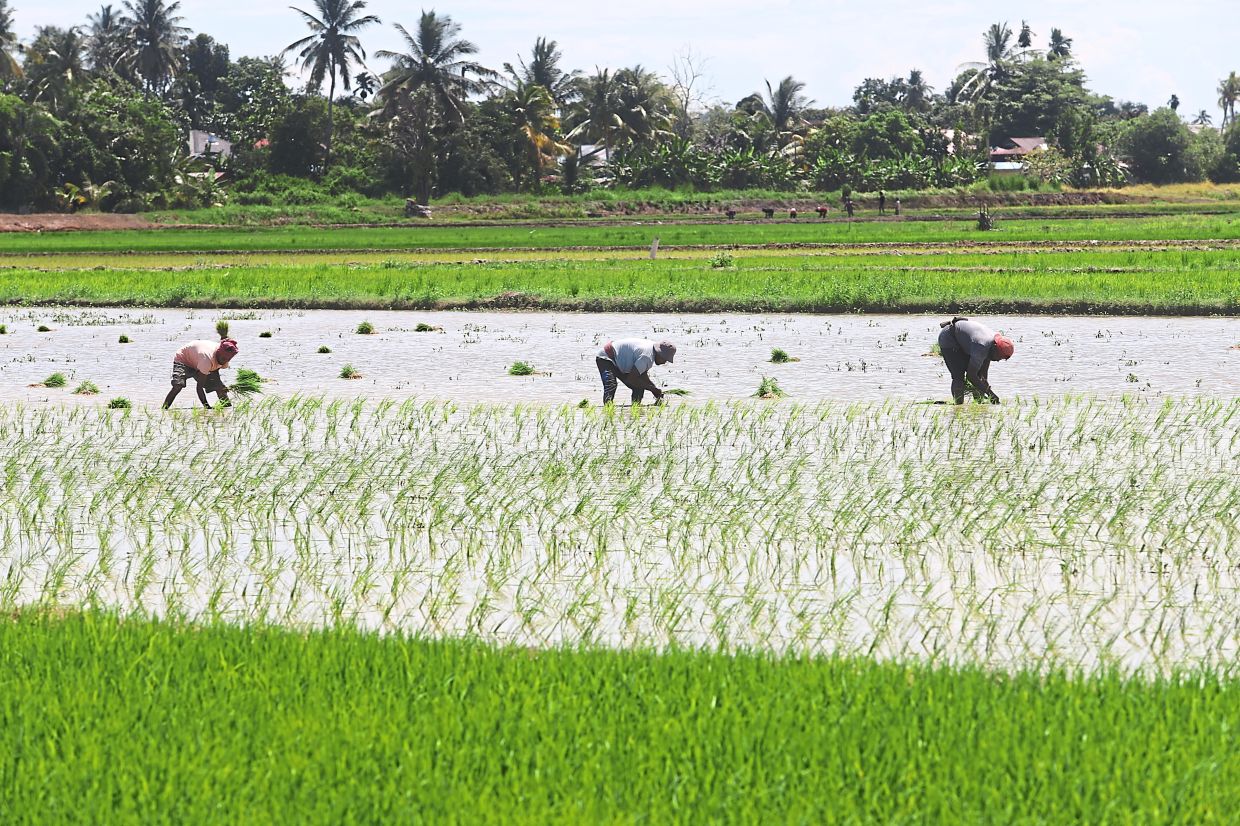
The government's response combined immediate relief with structural support for farmers facing mounting operational costs. In April, the Ministry of Finance announced a dramatic expansion of Budi Agri-Komoditi, the diesel subsidy scheme for agricultural machinery, hiking it from RM300 to RM400 per month—a 33 percent jump in monthly support. Equally significant, the government restructured the ploughing incentive scheme (Insentif Pembajakan kepada Pesawah, or IPKP), nearly doubling it from RM160 to RM300 per hectare for the 2026 planting season. Farmers in Peninsular Malaysia received an additional advance of RM200 per hectare before the growing season, allowing them to finance land preparation without incurring debt or delaying plantings.
These interventions directly addressed the transmission mechanism through which global shocks reach local producers. Rising fuel costs ripple through every stage of farming, from mechanised land preparation through fertiliser transport to final delivery to markets. By shoring up diesel subsidies and offering ploughing incentives, the government prevented a cascade where farmers would either absorb losses or pass them forward as higher food prices. Agricultural economist Prof Datuk Dr Nasir Shamsudin of Putra Business School explained that the RM400 monthly diesel assistance cushions transportation and fuel expenses, while the doubled ploughing incentive improves farmers' working capital flow at a critical moment—before seeds go into the ground and harvests materialise.
The data validates this approach. Malaysia's food inflation remained subdued at 1.4 percent year-on-year in May 2026, barely above April's 1.2 percent, a remarkably flat trajectory during a period of global commodity volatility and shipping uncertainty. This stability reflects cost savings transmitted through the supply chain, though Prof Nasir cautioned that long-term price stability depends on how effectively these savings flow to consumers rather than lodging elsewhere in the distribution network. Prime Minister Datuk Seri Anwar Ibrahim framed the extended support not as temporary emergency relief but as recognition of structural pressures facing smallholders and rural entrepreneurs, describing them as the backbone of Malaysia's economy.
The government's commitment extends far beyond single-year measures. Budget 2026 allocated RM2.62 billion specifically for agricultural subsidies and assistance programmes spanning paddy prices, crop cultivation, fertiliser provision, seed supply, and production incentives. The fishing sector received RM160 million for living allowances of up to RM300 monthly and catch bonuses, while RM55 million supported local fruit producers through incentives and infrastructure improvements for pineapples, soursop, water apples and pomelo. These appropriations signal that agricultural support is not ad-hoc crisis management but an ongoing policy pillar.
Beyond subsidy programmes, the government has built strategic food reserves to buffer against supply disruptions. Official assurances confirm sufficient stocks of chicken, eggs, fish, milk and fresh fruits to sustain at least a month's consumption despite ongoing global logistics turbulence. Rice reserves, including the national buffer, can sustain consumption for five to six months, providing a crucial cushion for Malaysia's staple grain. The fertiliser stockpile extends nine months forward, reducing immediate vulnerability to import price spikes or shipping delays. These reserves represent deliberate state investment in food security infrastructure rather than market hope.
Longer-term sustainability, however, demands moving beyond subsidies toward productivity gains and supply chain modernisation. Prof Nasir emphasised that continuous government support cannot indefinitely substitute for structural improvements in agricultural output and efficiency. He advocated for investments in mechanisation, precision agriculture and climate-resilient technologies that permanently reduce unit production costs. High-yield seed varieties, efficient irrigation systems, advanced post-harvest facilities and integrated logistics networks can establish a sustainable foundation for affordable food. A RM5.5 million project under the 13th Malaysia Plan specifically targets conversion of agri-food waste into compost and organic fertilisers, simultaneously reducing chemical input dependence and fostering a circular economy.
The shift toward organic and biofertilisers carries strategic significance beyond environmental benefits. Chemical fertiliser prices fluctuate with global energy markets and geopolitical disruptions, inherently volatile. By promoting organic alternatives and Effective Microorganisms products, Malaysia reduces its exposure to these external shocks. The Agriculture and Food Security Ministry's emphasis on this transition represents a deliberate effort to insulate domestic agriculture from global price volatility, addressing a vulnerability exposed by the Middle East tensions.
Yet Malaysia confronts a fundamental structural vulnerability that subsidies and reserves cannot fully resolve: the nation's substantial dependence on food imports. As a net food importer, Malaysia remains exposed to global logistics disruptions regardless of domestic policy ingenuity. The country's agri-food trade deficit reached RM39.34 billion in 2024, reflecting reliance on imported rice, wheat, dairy products and meat—the staples of Malaysian diets. Even in sectors appearing domestically self-sufficient, agricultural producers depend heavily on imported inputs, creating hidden vulnerabilities throughout the supply chain.
This import dependence means that while current subsidies and reserve stocks have successfully insulated Malaysia from the immediate fallout of Middle East tensions, they represent tactical rather than strategic solutions. The disruptions that threatened Malaysia's food security in February remain latent threats. Future geopolitical crises, whether in the Middle East, South China Sea or elsewhere, could recreate the same supply pressures. Without expanding domestic agricultural production capacity and reducing reliance on imported inputs, Malaysia remains structurally vulnerable to external shocks, regardless of how generous subsidy schemes become.
The government's approach therefore reflects a pragmatic recognition of competing imperatives: immediate price stability for consumers and producers must coexist with long-term strategies to build genuine food system resilience. Subsidies provide breathing room while investments in productivity and self-sufficiency mature over years. Organic fertilisers and waste-to-compost initiatives promise eventual cost reductions while reducing import exposure. Strategic reserves buy time against supply shocks. Yet until Malaysia substantially increases domestic production of staple grains, proteins and agricultural inputs, the nation will continue navigating between the dual objectives of keeping food affordable today while building the capacity to feed itself tomorrow, a balancing act rendered more precarious by a world of widening geopolitical fault lines.

