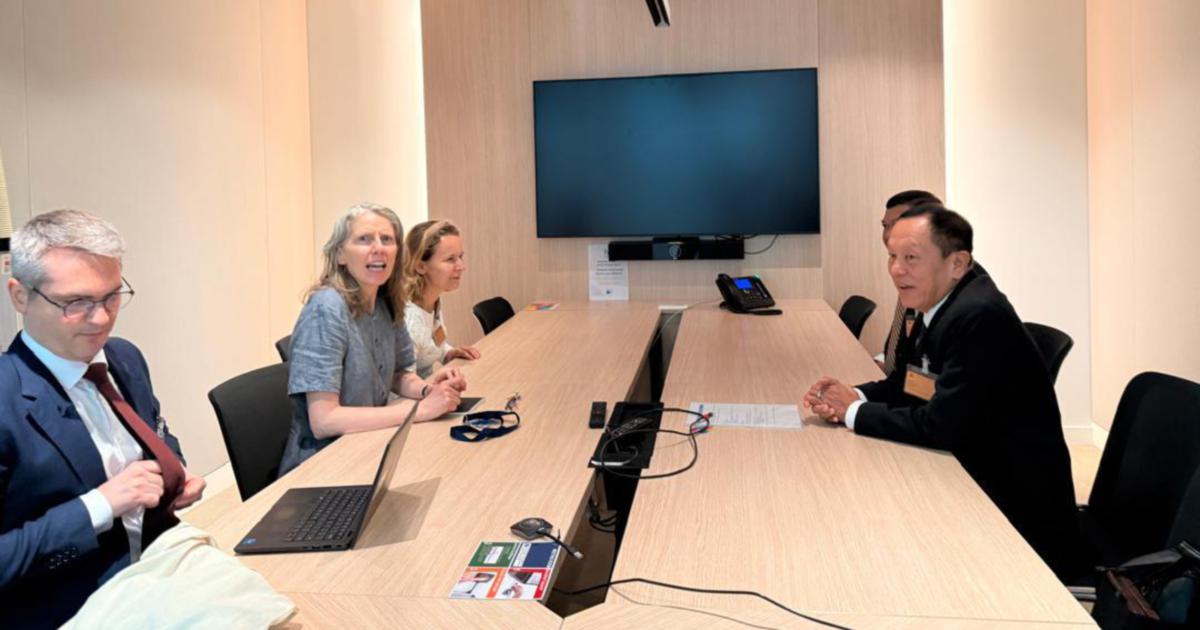
Malaysia has brought its hard-won expertise in recovering assets entangled with the 1Malaysia Development Bhd scandal to an international anti-corruption gathering in Paris, underscoring the nation's growing role in combating cross-border financial misconduct. The Malaysian Anti-Corruption Commission (MACC) shared its experience at an Organisation for Economic Co-operation and Development forum focused on addressing bribery and corrupt practices across member economies.
The 1MDB affair stands as one of the largest financial scandals in recent history, involving billions of dollars allegedly misappropriated through a state investment fund. What began as a domestic investigation has evolved into a complex international undertaking, requiring Malaysia to navigate multiple jurisdictions, recover scattered assets, and coordinate with law enforcement agencies worldwide. By participating in the OECD gathering, Malaysia positions itself as a jurisdiction with genuine experience in tackling grand corruption at the systemic level, rather than merely as a victim of it.
The decision to showcase Malaysia's asset recovery operations at this platform reflects the country's transformation in its approach to financial crime. Historically, Malaysia faced international scrutiny over corruption concerns and institutional capacity. However, the 1MDB investigation and subsequent recovery efforts have provided the MACC and other enforcement bodies with invaluable lessons in cross-border cooperation, asset tracing, and international legal coordination. These capabilities now hold relevance for other nations grappling with comparable challenges.
Asset recovery from transnational corruption presents formidable obstacles. Corrupt officials and their associates often stash proceeds across multiple countries, employ complex corporate structures to obscure ownership, and exploit jurisdictional gaps to evade accountability. Malaysia's journey in unwinding these schemes offers practical insights. The country has secured cooperation from authorities in diverse locations, navigated conflicting legal frameworks, and pursued both civil and criminal remedies to retrieve misappropriated funds. Such experience proves invaluable for OECD members seeking to strengthen their own capabilities.
The OECD's Working Group on Bribery serves as a coordinating body for member states implementing the Convention on Combating Bribery of Foreign Public Officials in International Business Transactions. This forum allows nations to exchange best practices, discuss enforcement challenges, and harmonise approaches to tackling foreign bribery and related corruption. Malaysia's presentation adds a developing-country perspective to discussions typically dominated by advanced economies, enriching the collective understanding of how corruption manifests and can be addressed across different economic contexts.
From a Southeast Asian standpoint, Malaysia's participation demonstrates the region's increasing sophistication in combating financial crime. As regional economies grow and integrate more deeply into global financial systems, the risk of cross-border money laundering and corruption rises correspondingly. By engaging at OECD forums, Malaysia influences international standards and methodologies that ultimately shape how the entire region approaches asset recovery and financial investigation. This participation contributes to elevating compliance standards across Southeast Asia.
The recovery of 1MDB-linked assets has proven protracted and geographically dispersed. Funds traced to multiple countries have required painstaking coordination with foreign counterparts, from the United States to Singapore to Switzerland. Each jurisdiction operates under distinct legal frameworks, judicial processes, and political considerations. Malaysia's success in orchestrating recoveries despite these complications provides a case study in persistence and diplomatic finesse. The lessons learned extend beyond the specific scandal to inform strategies for future cases involving complex international entanglement.
Domestically, the 1MDB investigation has driven institutional reforms within Malaysia's enforcement ecosystem. The MACC, the Financial Intelligence and Enforcement Department, and other agencies have bolstered their capabilities in financial forensics, international cooperation protocols, and investigative techniques. By presenting these developments to OECD peers, Malaysia signals its commitment to sustained improvements rather than treating the scandal as an isolated incident. This positioning carries implications for how international investors and business partners perceive Malaysia's governance trajectory.
The participation also serves a broader diplomatic purpose. Engaging constructively at international anti-corruption forums helps rehabilitate Malaysia's global reputation following years of negative international media coverage. By demonstrating institutional capacity, commitment to accountability, and willingness to share expertise, Malaysia counters narratives of endemic corruption. This soft power dimension matters significantly for a country seeking to attract foreign direct investment and maintain robust trade relationships in an increasingly competitive regional environment.
Looking forward, Malaysia's continued engagement in OECD forums and similar international mechanisms will likely intensify. As other emerging economies face their own large-scale corruption challenges, demand for proven methodologies and experienced guidance grows. Malaysia possesses both the experience and institutional knowledge to contribute meaningfully. The country's willingness to translate the painful episode of 1MDB into constructive international collaboration reflects a maturing approach to financial governance and regional responsibility.

