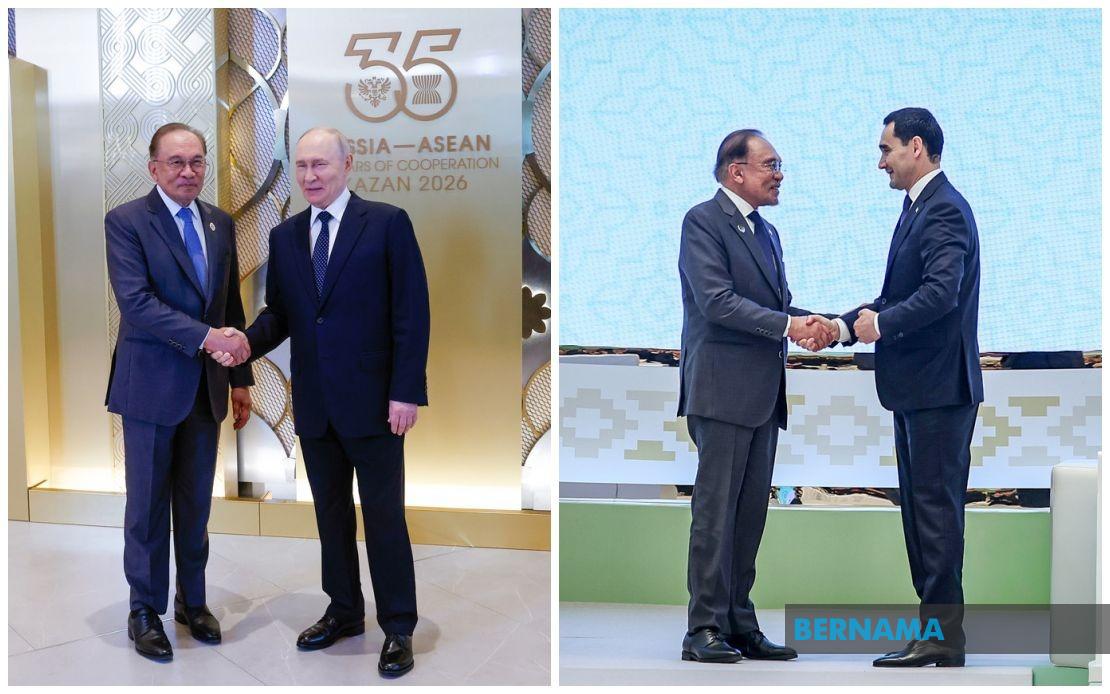
Prime Minister Datuk Seri Anwar Ibrahim's recent diplomatic missions to Russia and Turkmenistan have been framed by senior government ministers as a transformative step in advancing Malaysia's strategic positioning on the global stage. Rather than viewing these visits as routine foreign affairs engagements, cabinet members have emphasized the tangible economic outcomes that are expected to reshape the country's energy landscape and strengthen its international standing in critical sectors.
The most immediately impactful achievement centres on Russia's agreement to supply Malaysia with oil over a two-decade timeframe. This arrangement represents a departure from the traditional model of shorter-term or seasonal procurement agreements, instead establishing predictable, long-term supply contracts that provide Malaysia with enhanced certainty regarding energy availability. Housing and Local Government Minister Nga Kor Ming underscored how this commitment directly supports the government's broader energy diversification strategy, which aims to reduce reliance on any single supplier while maintaining the stability needed to sustain domestic fuel assistance programmes.
The continuation of the BUDI MADANI RON95 initiative depends fundamentally on securing reliable fuel sources at predictable costs. Maintaining the subsidised petrol price at RM1.99 per litre creates budgetary pressures that can only be managed sustainably if Malaysia negotiates favourable long-term supply agreements rather than paying volatile spot market prices. By anchoring supplies to Russia through extended contracts, the government has created the fiscal space necessary to maintain this populist policy without exhausting reserves, thereby distributing the benefits of energy security across all Malaysian households.
Paralleling the energy security gains, the appointment of Petronas as operator of a major Turkmenistan gas field represents a significant endorsement of Malaysian corporate capability. Nga Kor Ming highlighted the strategic implications for Petronas, a Fortune Global 500 entity currently ranked 139th globally. Securing operational responsibility for one of the world's largest gas reserves could potentially propel the company further up global rankings if successfully executed, enhancing not only shareholder value but also Malaysia's reputation as a source of world-class energy expertise and management capability.
The Turkmenistan development carries particular significance for demonstrating Malaysian competence in the international energy sector. Human Resources Minister Datuk Seri R. Ramanan characterized the arrangement as validation of Malaysian companies' competitive abilities and their capacity to lead major projects in the global marketplace. This perception matters considerably, as it influences foreign investment decisions, attracts international partnerships, and positions Malaysia as a reliable partner for infrastructure and energy development across multiple jurisdictions. The confidence placed in Petronas by Turkmenistan's government effectively opens doors for other Malaysian firms seeking to expand regionally.
Beyond the immediate energy implications, both ministers identified broader economic dimensions that extend into workforce development and technology transfer. The Turkmenistan project is expected to generate employment opportunities and create platforms for knowledge exchange in technical disciplines, advanced skills training, and high-calibre personnel development. These spillover effects represent investments in human capital that strengthen Malaysia's competitive position across the energy sector and allied industries, creating pathways for Malaysian professionals to gain international experience while building institutional knowledge that benefits the broader economy.
Anwar's two-day visit to Kazan, the capital of Russia's Republic of Tatarstan, functioned as a diplomatic recalibration of Malaysia-Russia relations. The working visit yielded mutual commitments spanning energy security, bilateral trade, foreign investment flows, tourism development, and technological cooperation. By elevating discussions beyond transactional energy procurement to encompass multiple partnership dimensions, both governments signalled their intention to develop a more comprehensive strategic relationship that extends across economic, cultural, and technical domains.
The timing of these visits reflects Malaysia's broader foreign policy pivot toward energy-secure partnerships. Southeast Asian nations remain vulnerable to supply disruptions and price volatility in global energy markets, making long-term supply agreements with major producing nations strategically essential. By securing Russian commitments while simultaneously expanding Petronas' operational footprint in Central Asia, Malaysia has simultaneously diversified its supply sources and enhanced its leverage in global energy negotiations. This two-pronged approach insulates the domestic economy from overdependence on Middle Eastern suppliers while building Malaysian expertise in energy operations across geographically diverse regions.
The geopolitical dimension of these engagements merits consideration for Malaysian audiences. Malaysia's willingness to engage Russia directly, despite the country's international isolation following the Ukraine conflict, signals pragmatic foreign policy prioritizing national economic interests over pressure to align with Western positions. This independent stance reflects Malaysia's longstanding commitment to non-alignment and its cultivation of relationships across multiple geopolitical blocs. For a nation heavily dependent on energy imports and lacking significant indigenous oil reserves, such balanced diplomacy enhances negotiating power while preserving access to critical resources regardless of prevailing international tensions.
Petronas' expanded international presence through the Turkmenistan opportunity carries implications for Malaysia's position within the Association of Southeast Asian Nations and its ability to anchor regional energy cooperation initiatives. As ASEAN members grapple with energy security challenges and seek to reduce dependence on external suppliers, a strengthened Petronas operating major facilities in Central Asia enhances the company's capacity to facilitate intra-regional knowledge sharing and potentially structure collaborative procurement arrangements that benefit multiple Southeast Asian economies.
The ministerial statements also emphasize how these diplomatic successes serve domestic political objectives by demonstrating the government's competence in delivering tangible economic benefits to the Malaysian population. The combination of maintained fuel subsidies, enhanced energy security, and corporate expansion achievements offers multiple constituencies—consumers benefiting from price controls, workers in the energy sector, and shareholders in Petronas—clear evidence of government effectiveness in advancing national interests through strategic diplomacy.
Looking forward, the success of these energy arrangements will ultimately be measured by implementation rather than diplomatic rhetoric. Malaysia's ability to extract maximum value from the Russian supply agreements and Petronas' effective management of the Turkmenistan operations will determine whether these visits represent transformational shifts or merely incremental diplomatic achievements. Nevertheless, the negotiation of these arrangements itself demonstrates that Malaysia remains a serious player in global energy markets, capable of attracting major project opportunities and securing favourable terms from major producing nations.