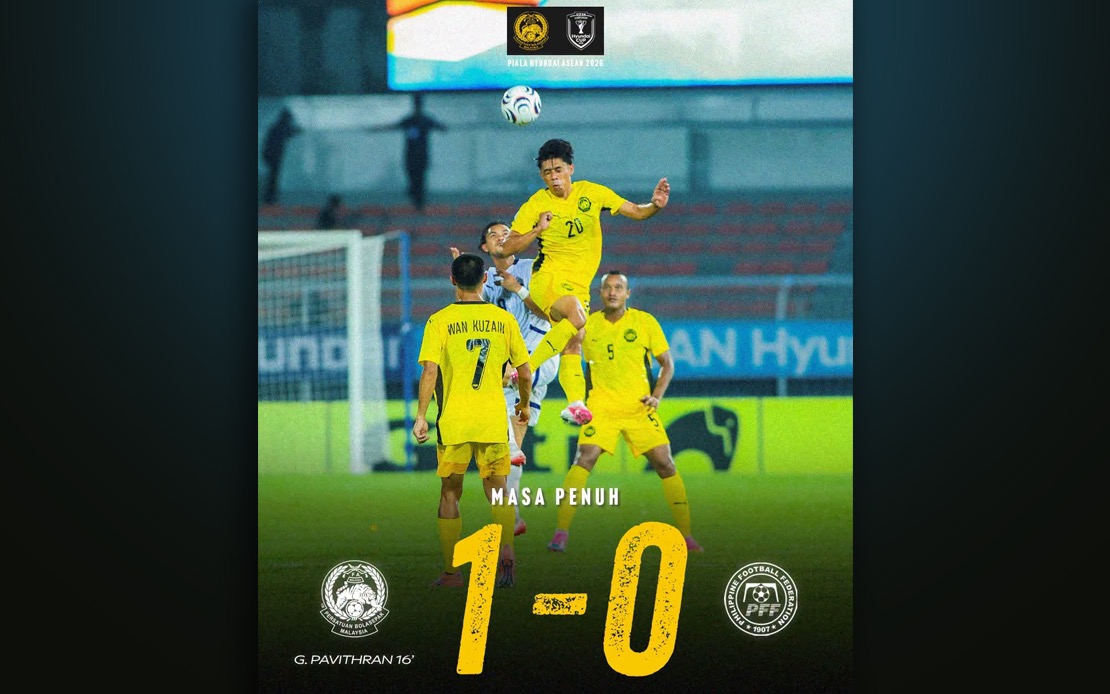
Malaysia's national football team has booked their place in the semi-finals of the 2026 ASEAN Cup after a commanding 1-0 victory over the Philippines at the Kuala Lumpur Football Stadium in Cheras on August 8. The result capped an impressive group stage campaign that saw Tan Cheng Hoe's interim-led squad finish second in Group B with nine points, securing automatic progression to the knockout phase of the tournament.
The match itself unfolded with Malaysian supporters creating a vibrant atmosphere at the 18,000-capacity stadium, their backing evident throughout as the home side pressed for the decisive result needed to confirm their advancement. The Harimau Malaya approached the encounter with a singular focus—to claim all three points regardless of the opposition's strength—and their execution reflected the urgency of the situation.
The breakthrough came early in the contest when midfielder Wan Kuzain Wan Ahmad Kamal delivered a pinpoint cross into the Philippines penalty area during the 16th minute. Striker G. Pavithran rose above the Philippine defence to head the ball cleanly past the goalkeeper, igniting jubilation among the home crowd and establishing what would prove to be the match-winning margin.
Following their opening goal, Malaysia established firm control over the tempo and rhythm of play. The team's midfield effectively shielded possession while the defence remained organised and disciplined. Carles Cuadrat's Philippine side responded by elevating their intensity in search of an equaliser, launching several attacking forays into Malaysian territory. However, the combination of resolute defending and some wayward finishing from the visitors meant that no clear-cut opportunities materialised before the interval.
The second half saw the Philippines emerge with heightened aggression and a more direct approach, recognising that any slip-up would eliminate them from contention. Yet the Malaysian rearguard, anchored by captain Paulo Josue's commanding presence, stood firm against sustained pressure. Pavithran came closest to doubling Malaysia's advantage in the 85th minute when he found himself in a promising position following a low cross from a teammate, but Philippines defender Jaime Rosquillo's last-ditch intervention prevented him from converting what would have been a crucial insurance goal.
Malaysia's nine-point tally demonstrated consistency across their group matches, though their progression was secured alongside group champions Thailand, who accumulated 12 points following their 2-0 demolition of Myanmar on the same evening. The War Elephants' superior goal difference and points total ensured they topped the standings, while Malaysia's second-place finish still guaranteed automatic passage to the semi-finals.
The composition of the knockout stage presents a formidable challenge for the Malaysian contingent. The Harimau Malaya will now confront the defending ASEAN Cup champions Vietnam, who dominated Group A to finish as the tournament's highest-ranked team by points and goal difference. This semi-final matchup carries significant weight, as Vietnam enters as clear favourites given their recent continental success and consistent form throughout Southeast Asian football competitions.
The semi-final fixture is structured as a two-legged affair, with Malaysia scheduled to play the first leg on August 16 and the return match four days later on August 19. This format requires Malaysia to balance the pursuit of an away result in the opener with home advantage in the second encounter. The compressed timeframe between matches means there is minimal recovery time for either squad, placing a premium on squad depth and player conditioning.
From a Malaysian football perspective, this represents a significant achievement for a programme that has undergone considerable transition in recent months. The interim status of head coach Tan Cheng Hoe suggests potential continuity challenges, yet the team's ability to navigate the group stage without dropping points in multiple matches indicates some operational stability. The semi-final represents both an opportunity to demonstrate progress against an elite opponent and a reality check against one of Southeast Asia's football powerhouses.
The Vietnam matchup will provide valuable insight into the current competitive standing of Malaysian football within the regional hierarchy. While defending champions naturally command respect, the home advantage in the second leg offers Malaysia a tangible pathway to create difficulties for their opponents. The Kuala Lumpur crowd proved instrumental in galvanising the team against the Philippines, and similar atmospheres in the latter stages could prove decisive in a tight encounter.
For Malaysian supporters and stakeholders monitoring the team's trajectory, the journey beyond the group phase validates the investment in recent preparation and tactical work. Whether Tan Cheng Hoe's tenure continues or whether institutional changes follow, this semi-final appearance establishes a baseline standard for the national programme moving forward. The fixture against Vietnam will define the success or otherwise of Malaysia's 2026 ASEAN Cup campaign.

