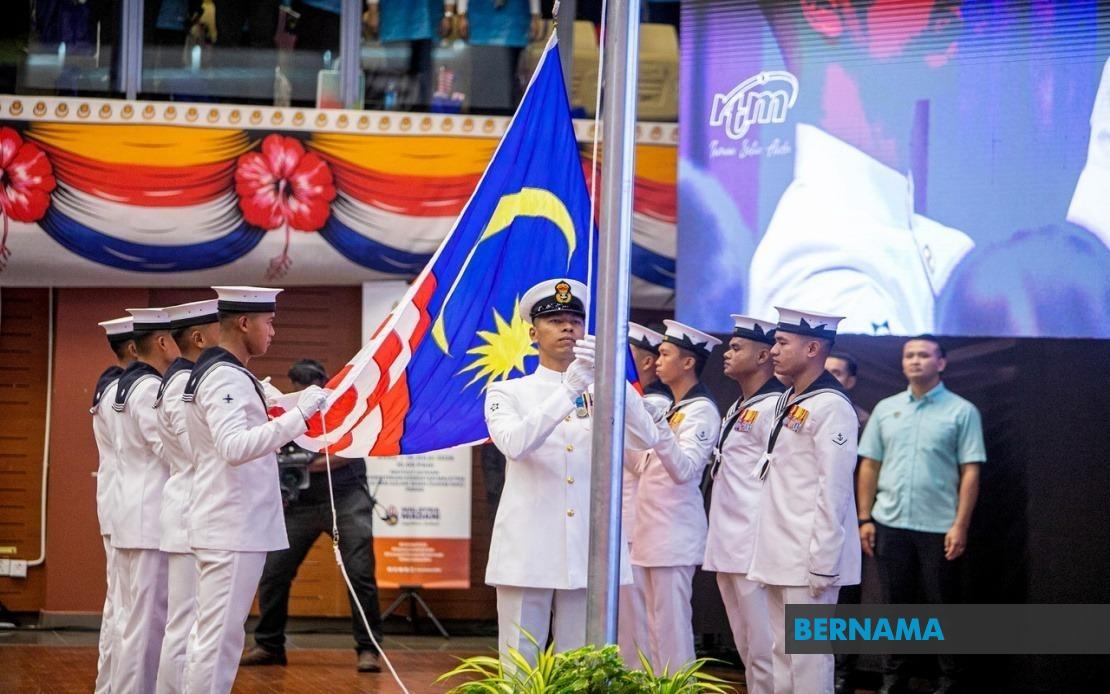
The Jalur Gemilang raising ceremony made its return on Friday at the Sultan Azlan Shah Ministry of Health Training Institute in Tanjung Rambutan, Ipoh, signalling the official commencement of Malaysia's 2026 National Month and Fly the Jalur Gemilang campaign. Prime Minister Datuk Seri Anwar Ibrahim presided over the event, breathing new life into a patriotic ritual that had been absent for two years, underscoring the government's renewed emphasis on national unity and collective pride.
The restoration of this ceremonial practice reflects a deliberate policy shift toward reinvigorating public expressions of patriotism at a time when Malaysia navigates complex domestic and regional challenges. By reintroducing the Jalur Gemilang ceremony—a practice deeply embedded in the nation's cultural and civic identity—the government sends a clear message about the importance of maintaining symbolic traditions that bind Malaysians together across diverse communities and backgrounds.
During the formal proceedings, Anwar launched the campaign before ceremonially transferring the national flag to a nine-member contingent from the Royal Malaysian Navy's Lumut Base. Led by Chief Petty Officer Mohamad Razif Aliff Md Yusof, the naval team subsequently hoisted the specially prepared Jalur Gemilang, which measured 1.82 metres by 3.65 metres, whilst the national anthem Negaraku resonated through the venue. The symbolic handover from political leadership to the armed forces represented a deliberate theatrical choice, emphasizing the military's custodial role in protecting national sovereignty and the state's commitment to national defence.
Following the flag-raising, ILKKM SAS trainee Muhammad Ammar Mohd Asri recited the Rukun Negara pledge, further layering the ceremony with constitutional and ideological significance. Attendees maintained respectful silence and sang the national anthem in unison, creating a moment designed to evoke collective national consciousness. These ritualistic elements serve not merely ceremonial purposes but function as social cohesion mechanisms, particularly important in a multicultural democracy where shared civic practices can transcend ethnic and religious boundaries.
The Fly the Jalur Gemilang campaign itself constitutes an annual tradition encouraging ordinary Malaysians to display the national flag prominently throughout the month. The initiative transforms private domestic spaces into public declarations of patriotism, multiplying the visual presence of national symbols across neighbourhoods and communities. For many Malaysians, this grassroots participation in flag-flying represents one of the few direct ways citizens can publicly demonstrate their connection to the nation-state, democratizing patriotic expression beyond government-orchestrated events.
Singer-songwriter Faizal Tahir unveiled "Aku Berjanji" as the official theme song for Malaysia's 2026 National Day and Malaysia Day (HKHM 2026) celebrations. Composed and performed by Tahir himself, the track became available for public download via the Merdeka360 portal from 12:30 pm on the day of the ceremony. The choice of a contemporary artist-produced anthem reflects an attempt to make national celebrations resonate with younger demographics, potentially expanding the appeal of patriotic narratives beyond traditional audiences.
The ceremonial launch in Ipoh carried particular regional significance for Perak and the wider northern corridor. By hosting the national month inauguration in the state capital rather than the federal capital, the government demonstrated commitment to decentralizing major national events and ensuring that celebrations permeate beyond Kuala Lumpur's immediate sphere. This geographical choice also reinforces a message of inclusivity, suggesting that the project of nation-building encompasses all Malaysian states equally.
The 2026 National Month celebrations will escalate progressively toward two pivotal dates: National Day on August 31 and Malaysia Day on September 16. Throughout this two-week period, various government agencies, private sector organizations, educational institutions, and community groups typically organize patriotic programmes and cultural activities designed to educate Malaysians about their national heritage and foster civic engagement. These cascading events create a prolonged period during which national identity becomes the central organizing principle of public discourse and community activity.
The two-year hiatus from the Jalur Gemilang raising ceremony likely reflected pandemic-related disruptions to public gatherings and ceremonial functions. The decision to revive the practice now suggests that authorities consider the epidemiological situation sufficiently stable to resume large public events and that the symbolic value of restoring pre-pandemic traditions outweighs residual health precautions. This ceremonial restoration carries psychological weight for many Malaysians, marking a definitive return to normalcy in public life.
For Malaysia's ethnically and religiously diverse population, these national month celebrations present opportunities to articulate shared civic identity transcending communal boundaries. The Jalur Gemilang, as the nation's constitutional symbol, represents the compact binding all Malaysians—regardless of ethnicity, religion, or regional origin—into a single political community. By encouraging widespread flag-flying and organizing patriotic ceremonies, the government attempts to reinforce this constitutional nationalism as a unifying force capable of bridging potential divisions.
The campaign carries particular relevance for Southeast Asian observers tracking Malaysia's internal cohesion and democratic stability. National identity formation remains an ongoing project in the region, with many countries navigating questions about how to maintain unity whilst respecting cultural pluralism. Malaysia's deliberate revival of patriotic ceremonies and its investment in multimedia campaigns suggest a sophisticated understanding of how symbolic practices and cultural production can strengthen national solidarity.
Looking forward, the 2026 National Month celebrations will serve as a barometer for public sentiment regarding national unity and patriotic identification. The extent of voluntary participation in flag-flying, attendance at organized events, and public engagement with patriotic messaging will provide insights into how effectively the government's nation-building initiatives resonate with ordinary Malaysians. As the country approaches these celebrations, the restored Jalur Gemilang ceremony stands as a reaffirmation of national priorities and a recommitment to the symbols and practices that define Malaysian collective identity.

