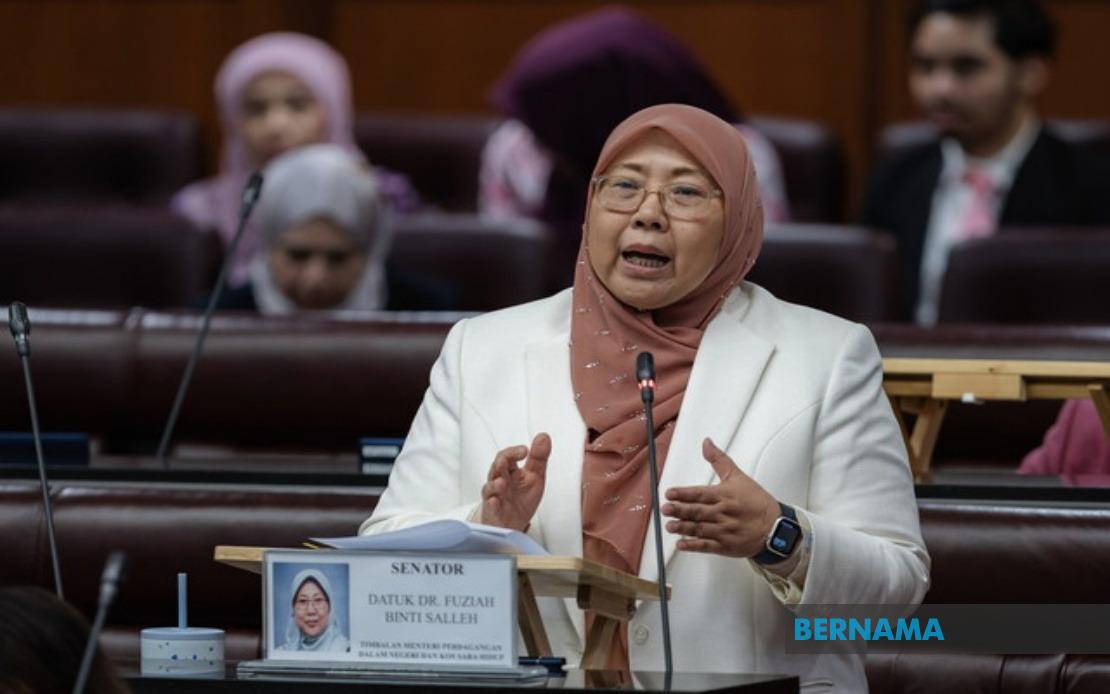
The Malaysian government has firmly established that artificial intelligence developers cannot freely use copyrighted material for model training without first securing permission from copyright holders. Deputy Domestic Trade and Cost of Living Minister Datuk Dr Fuziah Salleh made this declaration during parliamentary proceedings, emphasising that the Copyright Act 1987 applies equally to AI applications as it does to any other commercial or creative use of protected works. This clarification addresses growing uncertainty in the technology sector about the legal boundaries surrounding AI model development in Southeast Asia's largest economy.
The requirement for copyright owner consent extends across all forms of creative content, from literary works and musical compositions to artistic designs and software code. Under Section 27 of the Copyright Act 1987, the terms governing compensation for copyright holders are not statutorily fixed but instead determined through bilateral negotiations between the copyright owner and the entity seeking to use their work. This flexible approach allows parties to establish licensing agreements tailored to specific circumstances, whether involving direct licensing arrangements, transfer of intellectual property rights, or involvement of Collective Management Organisations that aggregate the interests of multiple creators.
Collective Management Organisations represent a particularly important mechanism for Malaysian creators seeking to protect their interests in the AI era. These CMOs function as intermediaries that license copyrighted works on behalf of their members and distribute compensation received from users. For individual artists, musicians, authors, and other creative professionals operating independently, CMO membership offers a practical pathway to ensure their works are properly licensed and they receive appropriate compensation when their creations are incorporated into AI training datasets. The government's acknowledgment of CMOs suggests a regulatory framework that recognises both the efficiency of collective licensing and the reality that individual enforcement would be impractical for many creators.
Despite establishing this clear legal principle, Malaysia has not yet faced court cases specifically involving copyright infringement through AI model training. This gap between regulation and jurisprudence reflects the nascent stage of AI commercialisation in Malaysia compared to more advanced technology markets. The absence of test cases means the courts have not yet clarified how existing copyright provisions apply to novel circumstances such as transformative use of training data, the eligibility of AI-generated outputs for copyright protection, or the degree of originality required to distinguish infringing from licensed usage. Future litigation will likely establish important precedents shaping how the sector develops.
A fundamental distinction in Malaysian copyright law concerns the source of creative effort. The Copyright Act 1987 currently protects only works that demonstrate genuine originality arising from human intellectual contribution, creative skill, and deliberate effort. Conversely, works generated entirely through artificial intelligence algorithms without substantial human intervention or direction do not qualify for copyright protection under existing law. This threshold creates an interesting asymmetry: humans cannot use copyrighted material to train AI systems without permission, yet the AI-generated outputs themselves receive no automatic copyright protection. The practical implications of this distinction remain unclear as courts and policymakers worldwide grapple with how to balance innovation incentives with creator protection.
The government has notably refrained from conducting a dedicated impact assessment examining how AI adoption affects employment and earning potential within Malaysia's creative industries. Datuk Dr Fuziah acknowledged this analytical gap while fielding parliamentary questions about the economic consequences for local creative professionals. The absence of such research represents a significant policy blind spot given that creative industries constitute an important economic sector and that AI tools are already disrupting traditional creative workflows globally. Understanding whether Malaysia's creative workforce faces displacement risks, wage pressure, or instead benefits from new tools and market opportunities would inform more sophisticated policy responses.
Instead of rushing to conduct isolated studies, the government has adopted a consultation-based approach involving ongoing engagement with diverse stakeholders including technology companies, creative industry representatives, intellectual property experts, and academic institutions. This deliberative process also incorporates comparative analysis of policy approaches adopted by other nations grappling with similar questions. Countries ranging from the United States to the European Union to China are developing distinct regulatory responses, from strict copyright enforcement to fair use exceptions to specific AI-relevant frameworks. Malaysia's willingness to study these approaches rather than legislating hastily reflects awareness that the technology is evolving rapidly and that premature regulatory choices might become obsolete or counterproductive.
The government's cautious stance also reflects genuine uncertainty about the trajectory of AI development and commercial deployment. Artificial intelligence capabilities are advancing faster than policy frameworks can accommodate, creating a temporal mismatch between technological possibility and regulatory clarity. What constitutes reasonable compensation for training data usage, whether datasets should be licensed dataset-by-dataset or through broader agreements, and how to verify compliance across global supply chains remain unsolved practical problems. These challenges are not unique to Malaysia but are particularly acute for smaller economies with limited capacity to conduct independent research and standard-setting.
For Malaysia's creative sector, the government's current position offers both protection and uncertainty. The formal protection is clear: copyright owners maintain exclusive control over whether and how their works are used in AI training, and commercial use without permission violates the Copyright Act. However, practical enforcement remains challenging given the technical barriers to detecting unauthorised training on distributed systems, the cross-border nature of AI development, and the resource constraints of Malaysia's enforcement agencies. Individual creators seeking to protect their interests must actively monitor usage, assert rights, and potentially engage in costly enforcement actions rather than relying on automatic government policing of compliance.
The distinction between human-created and AI-generated copyright protection also creates strategic considerations for Malaysian creators and technologists. Creators might increasingly view AI tools as assistants that enhance human productivity while remaining under human direction and bearing human creative responsibility. Technology companies, conversely, have incentives to minimise the apparent role of human judgment in AI systems to strengthen arguments about the transformed nature of training data. These contested interpretations will likely become focal points in future litigation and policy discussion.
Sector observers note that Malaysia's reliance on voluntary industry compliance and stakeholder engagement carries risks. Without proactive enforcement mechanisms or clear litigation establishing precedents, some technology companies might proceed assuming AI training constitutes fair use or that the enforcement barrier is sufficiently high to justify risk. Regional competitors might adopt stricter frameworks, potentially disadvantaging Malaysian AI companies if they must comply with higher standards in export markets. Conversely, lax enforcement could undermine creator confidence in intellectual property protection, potentially dampening the development of domestically created content that future AI systems might wish to license.
Moving forward, several policy questions demand attention beyond the current consultation phase. The government should consider whether Malaysia's Copyright Act requires amendment to explicitly address AI-specific scenarios, whether incentive structures should encourage responsible AI development practices, and how enforcement capacity should be enhanced. Policymakers should also examine whether Malaysia's position on AI copyright issues affects its competitiveness in attracting AI investment and talent, particularly as neighbouring countries develop their own frameworks. The window for shaping Malaysia's approach to AI and intellectual property protection is gradually closing as technological and commercial practices crystallise.

