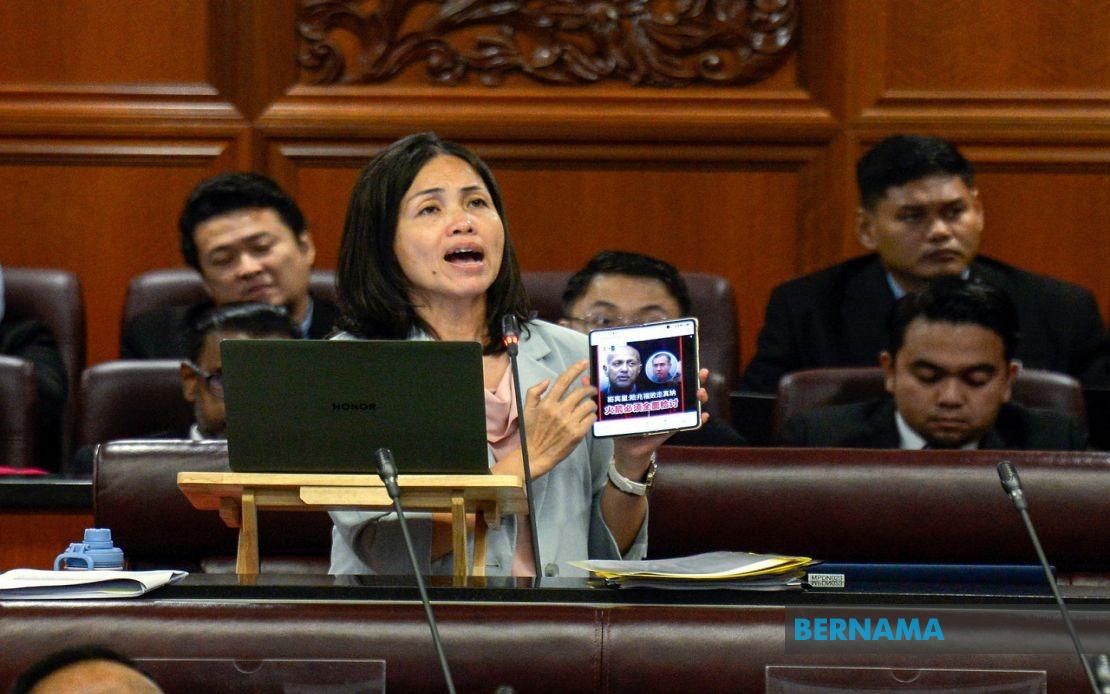
Malaysia's digital safety authorities have taken down nearly 100,000 pieces of scam-related content from social media platforms in just the first seven months of 2026, a significant escalation that already surpasses the complete tally from the previous year. Speaking during parliamentary proceedings, Deputy Communications Minister Teo Nie Ching disclosed that 99,693 fraudulent content items had been removed by July 31, compared to 98,503 throughout 2025. The dramatic increase underscores the growing challenge of online deception in the country's digital ecosystem and reflects an unprecedented commitment to combating internet-based fraud schemes that prey on Malaysian consumers.
The trajectory of content removals reveals an alarming acceleration in scam activity over recent years. The figures show a remarkable progression from just 242 items removed in 2022 to 6,297 in 2023, then jumping to 63,652 in 2024 before climbing further to last year's total. This exponential growth demonstrates how rapidly cybercriminals have adapted to exploit social media platforms, while simultaneously showcasing the Malaysian Communications and Multimedia Commission's (MCMC) expanding capacity to identify and neutralise fraudulent content. For Malaysian internet users, these numbers reflect both the intensifying threat landscape and the government's determination to create a safer online environment.
The revelations came amid parliamentary consideration of the Communications and Multimedia (Amendment) Bill 2026, which passed the Dewan Negara by majority voice vote following debate from 15 senators. This legislative framework represents a critical response to evolving digital threats, introducing institutional mechanisms designed to strengthen Malaysia's defences against online fraud and other cybercrimes. The amendments address not merely the symptoms of digital lawlessness but aim to establish clearer legal authority for regulatory action, ensuring that agencies tasked with protecting citizens possess adequate legislative backing.
Central to the Bill's provisions is the establishment of a National Universal Service Provision (NUSP) initiative, a programme explicitly designed to safeguard national security through digital infrastructure governance. Teo explained that the amendments grant the Communications Minister authority to direct the MCMC to support initiatives related to network services and applications in furtherance of this national security agenda. By consolidating regulatory power while establishing transparent oversight mechanisms, the framework attempts to balance the imperative for swift action against online threats with protections against potential governmental overreach.
Recognising concerns about regulatory accountability, Teo emphasised that affected parties retain meaningful recourse against MCMC decisions. The Communications and Multimedia Act 1998 establishes an Appeals Tribunal, presided over by a High Court judge, to which individuals or organisations dissatisfied with regulatory directives may petition. Furthermore, those unconvinced by the tribunal's judgment may pursue judicial review through the court system, creating a multi-layered appeal structure designed to ensure that enforcement actions remain subject to judicial scrutiny and constitutional safeguards.
Senator Datuk Seri Prof Dr Noor Inayah Ya'akub raised pertinent concerns during parliamentary debate, emphasising that national security determinations must rest upon transparent criteria and measurable parameters. Her intervention highlights the tension inherent in digital regulation—the necessity for decisive governmental action must coexist with democratic accountability and legal clarity. Without clearly defined thresholds and published guidelines, regulatory agencies risk operating within ambiguity, potentially creating chilling effects on legitimate online expression while failing to establish predictable standards for compliance.
Senator Sheikh 'Umar Bagharib Ali contextualised communications infrastructure as a strategic national asset foundational to Malaysia's digital economy and public welfare. His contribution positioned online safety not as a peripheral concern but as integral to the country's competitive positioning in Southeast Asia's digital marketplace. Nations that cultivate robust digital confidence attract investment, foster innovation, and develop sophisticated digital economies. Conversely, jurisdictions plagued by rampant online fraud erode consumer trust and damage international perceptions of institutional competence.
Sheikh 'Umar further observed that public confidence in governmental authority depends upon citizens' perception that power is wielded equitably, transparently, and in accordance with established law. This observation carries profound implications for Malaysia's digital governance strategy. Should enforcement actions appear arbitrary or disproportionate, public cooperation with authorities diminishes, ultimately undermining effectiveness. Citizens become partners in digital security only when they perceive that regulatory decisions reflect consistent principles rather than political convenience.
The Bill itself modifies Section 202 of the Communications and Multimedia Act 1998 to provide enhanced legal grounding for MCMC operations supporting the NUSP initiative. Having already secured passage through the Dewan Rakyat on July 15, the legislation now becomes law, reshaping the institutional landscape for digital regulation. The amendments represent Malaysia's legislative response to the recognition that social media platforms, in their current configuration, inadequately police fraudulent content without government coordination and legal authority backing enforcement efforts.
For Malaysian consumers and businesses, these developments carry immediate practical significance. The removal of nearly 100,000 fraudulent content items suggests that enforcement capacity is finally matching the scale of the problem, though the exponential growth in annual removals indicates cybercriminals continue innovating faster than authorities can respond. Individuals transacting online should remain vigilant, as the sheer volume of scam content indicates that some fraudulent material inevitably evades detection and removal. Businesses face both opportunities and obligations in this new regulatory environment—compliance with NUSP requirements represents a precondition for operating within Malaysia's digital economy.
The regional dimension of Malaysia's online safety initiative warrants consideration. As Southeast Asian nations grapple with similar digital challenges, Malaysia's legislative and enforcement approaches may establish benchmarks for regional digital governance. The emphasis on transparent appeals mechanisms and judicial oversight distinguishes this approach from purely administrative enforcement models, potentially offering a model that balances security imperatives with democratic accountability. Neighbouring countries facing comparable scam epidemics may observe Malaysia's experience to inform their own policy frameworks.
Looking forward, the effectiveness of these amendments will ultimately depend upon implementation. Legislative authority matters only insofar as regulatory agencies possess adequate resources, technological capability, and institutional incentives to deploy that authority effectively. The MCMC's success in removing nearly 100,000 content items suggests organisational capacity exists, yet the continued exponential growth in fraud suggests that supply-side prevention through content removal will never fully address demand-side vulnerability. Complementary initiatives addressing digital literacy, consumer awareness, and rapid fraud reporting mechanisms may prove equally important as content removal in reducing Malaysians' exposure to online scams.

