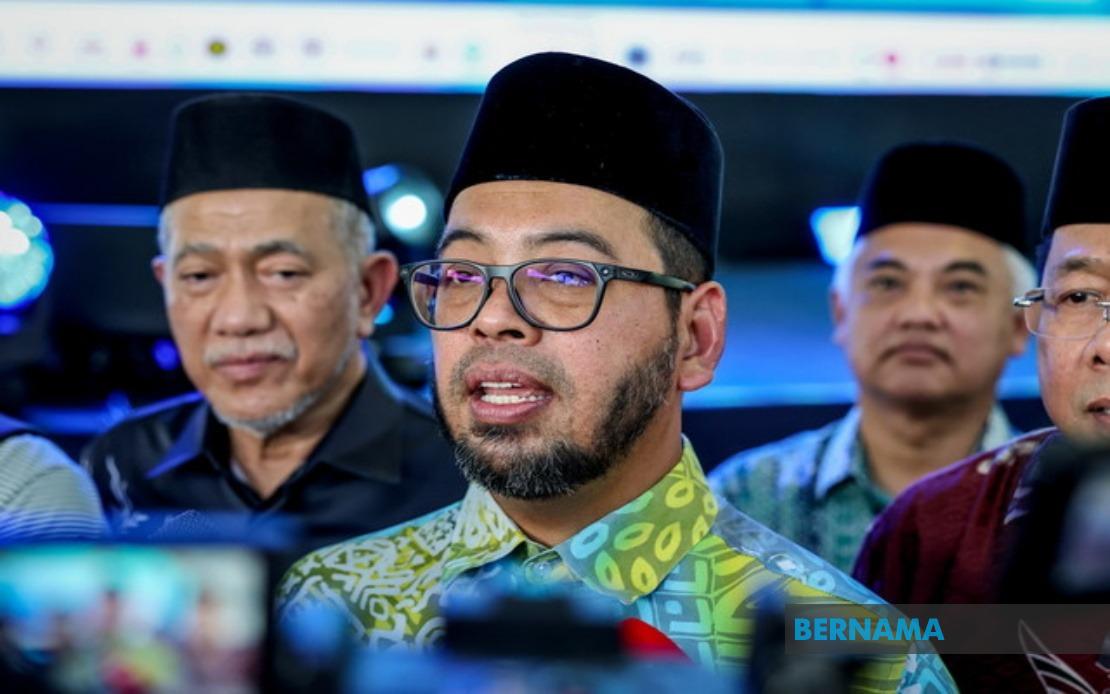
Malaysia continues to strengthen its position as a global leader in Islamic affairs management, with international observers and scholars consistently acknowledging the nation's institutional frameworks and policy achievements in this domain. Speaking at the opening of the Northern Zone MADANI Ulama and Umara Multaqa at Masjid Timah in Permatang Pauh on July 5, Minister in the Prime Minister's Department (Religious Affairs) Dr Zulkifli Hasan underscored that this standing rests on concrete evidence, empirical data, and testimony from the international community rather than perception alone.
The minister's remarks come amid ongoing discussions about the place of Islam in Malaysia's multicultural society. He emphasised that Malaysia's global reputation directly contradicts narratives suggesting Islam is under threat or marginalised domestically. Instead, Dr Zulkifli Hasan pointed out that international perception paints Malaysia as a significant player actively advancing religious affairs management on the world stage. During his international engagements, he noted, Malaysia's approach to Islamic administration is frequently studied and commended by other nations seeking to enhance their own systems.
One of Malaysia's most celebrated contributions to global Islamic standards is its halal certification system, administered through the Department of Islamic Development Malaysia (JAKIM). The system has earned recognition as among the world's most rigorous and credible, setting benchmarks that other Muslim-majority and Muslim-minority nations aspire to replicate. This achievement carries substantial economic implications, as the global halal market expands and Malaysia positions itself as a trusted certifier and thought leader in ensuring compliance with Islamic principles in commerce and food production.
The nation's Islamic finance sector represents another flagship success story. Malaysia has maintained its position as the world's leading Islamic finance hub for 11 consecutive years, a distinction that reflects both regulatory sophistication and competitive market dynamics. This leadership encompasses Islamic banking, takaful insurance, sukuk issuance, and fintech innovation within an Islamic framework. The sector's sustained dominance demonstrates that Malaysia's institutional capacity extends beyond ceremonial or educational domains into the sophisticated financial infrastructure that underpins modern economies.
Managing the annual haj pilgrimage to Mecca through Lembaga Tabung Haji has similarly earned Malaysia international accolades. The organisation's coordination of logistics, spiritual preparation, and welfare for hundreds of thousands of Malaysian pilgrims annually has set standards that regional peers acknowledge. This achievement reflects not merely administrative competence but also the integration of faith-based objectives with modern organisational management, a balance that international Islamic bodies frequently praise.
Malaysia's approach to Islamic education also demonstrates comprehensive institutional thinking. The government is advancing the Kelas Al-Quran dan Fardu Ain (KAFA) curriculum through the KAFA 2.0 initiative, which shifts emphasis toward practical application of Islamic knowledge rather than rote memorisation. This pedagogical evolution reflects contemporary educational philosophy while maintaining doctrinal integrity, an approach increasingly relevant as Islamic education systems globally grapple with preparing students for modern professional environments.
The tahfiz ecosystem—encompassing Quranic memorisation schools—has been systematised through a National Tahfiz Council, comprehensive policy framework, standardised curriculum, and the Malaysia Tahfiz Certificate. This structural approach enables tahfiz graduates to transition into professional, technical, and tertiary education pathways, addressing a historical perception that tahfiz education represented a terminal qualification. By creating bridges into broader educational and professional trajectories, Malaysia has innovated a model that other Muslim-majority nations are examining.
Dr Zulkifli Hasan stressed the government's commitment to producing huffaz—Quranic memorisers—equipped with professional competencies capable of contributing meaningfully to national development. This framing shifts the narrative from treating Islamic religious education as separate from economic participation to integrating it within human capital development strategies. For Southeast Asia, where Islamic education systems operate across diverse regulatory environments, Malaysia's approach offers practical models for institutional integration.
Concrete financial commitments underscored the government's backing for these initiatives. Yayasan Takwa, a religious foundation, contributed RM280,000 distributed among 28 mosques in Penang, with each institution receiving RM10,000. Selected religious schools also received equivalent funding to strengthen Islamic education infrastructure at the state level. These allocations, while modest individually, represent sustained investment in grassroots institutional capacity that underpins the broader achievements the minister highlighted.
The minister's emphasis on data-driven recognition carries significance for Malaysia's positioning within regional and global Islamic affairs discussions. Rather than relying on religious credentials alone, the appeal to empirical metrics—rankings, certifications, international acknowledgments—places Malaysia's Islamic leadership within a framework comprehensible to secular governance paradigms and international institutions. This approach proves particularly valuable in Southeast Asia, where religious affairs intersect with pluralistic governance structures and diverse stakeholder interests.
For Malaysian policymakers, the articulation of these achievements serves multiple functions: it reinforces domestic confidence in institutional management of religious affairs, demonstrates to the international community that Islam and modernity are compatible, and positions Malaysia as a potential consultant for other nations developing Islamic institutional frameworks. Within Southeast Asia specifically, where several nations grapple with balancing Islamic governance with pluralistic societies, Malaysia's model offers concrete examples of institutional design and implementation.
Looking forward, the challenge for Malaysia lies in sustaining these achievements amid evolving global circumstances. The Islamic finance sector faces increasing regulatory scrutiny and competition from developed markets entering Islamic banking. Halal certification systems require constant updating as supply chains globalise and food production methodologies evolve. Educational systems must adapt to technological disruption and changing labour market demands. The international recognition Dr Zulkifli Hasan highlighted reflects Malaysia's current standing, but maintaining that position demands continuous innovation, institutional responsiveness, and integration of emerging best practices across all domains of Islamic affairs management.

