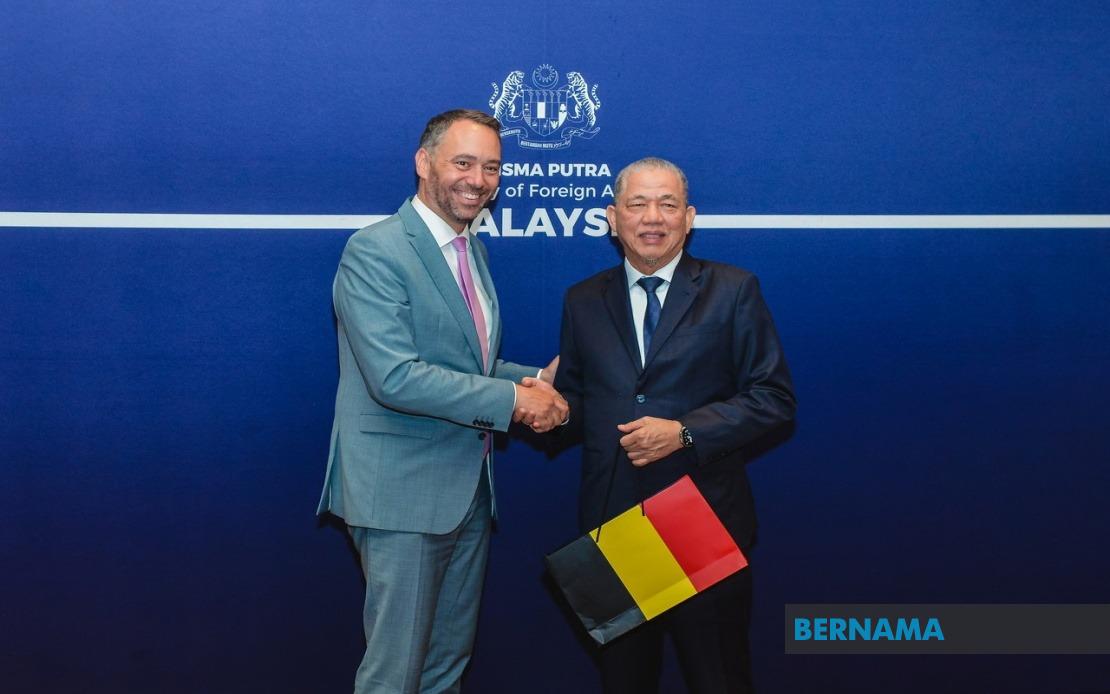
Malaysia has moved to reassure Belgium that maritime routes through the South China Sea will remain accessible and secure, with Deputy Prime Minister Datuk Seri Fadillah Yusof personally conveying this message during high-level talks in Kuala Lumpur. The assurance comes against a backdrop of escalating international concerns about potential disruptions to global shipping and reflects growing attention from major European powers to developments in one of the world's most strategically vital waterways. Fadillah's pledge underscores Malaysia's role as a key regional voice in mediating international anxieties about Southeast Asian maritime security.
During his meeting with Belgium's Deputy Prime Minister and Minister of Foreign Affairs, European Affairs, and Development Cooperation Maxime Prévot, Fadillah articulated ASEAN's foundational commitment to maintaining unimpeded passage through the region's waters. The Malaysian official stressed that member states of the regional bloc remain united in their dedication to preserving open access and preventing any form of blockade, positioning Southeast Asia as a guarantor of stability in contrast to other maritime flashpoints that have experienced disruptions. This statement carries particular weight given Malaysia's geographic position astride critical sea lanes and its influence within ASEAN's decision-making structures.
Prévot's visit—the first since assuming office in February 2025—was marked by his specific request for Malaysia's assessment of the regional security landscape, including the South China Sea's strategic environment and the possibility of shipping disruptions comparable to those that have periodically affected the Strait of Hormuz. This inquiry reflects Belgium's broader European perspective on maintaining global commercial stability and the continent's dependence on uninterrupted Asian trade routes. The Belgian delegation's interest in detailed security briefings demonstrates how developments in Southeast Asia now command the attention of major European capitals concerned with supply chain resilience and geopolitical risk management.
Beyond maritime assurances, the two delegations explored expanding the bilateral relationship across multiple dimensions. Malaysia and Belgium identified opportunities to strengthen government-to-government relations while simultaneously pursuing business-to-business partnerships and enhanced people-to-people connectivity. These layered engagement frameworks reflect contemporary diplomatic practice, where official state relations are increasingly complemented by commercial and cultural dimensions designed to build resilience into bilateral ties.
Trade expansion emerged as a priority area, with Prévot articulating Belgium's commitment to deepening commercial linkages with Malaysia. Notably, the Belgian foreign minister signaled his intention to revisit Belgium's travel advisory for Sabah, indicating a potential upgrade that could facilitate increased tourism and business travel between the two nations. Such advisory reviews, though seemingly technical matters, carry symbolic weight in demonstrating confidence in regional stability and have tangible economic consequences for tourism-dependent sectors.
A particularly significant development involved Belgium's interest in Malaysia's halal ecosystem standards. The Belgian delegation proposed that Malaysia's established halal certification frameworks and standards could potentially serve as a blueprint for adoption across the European Union, positioning Malaysia as an exporter of regulatory expertise. This represents a recognition of Malaysia's leadership in developing comprehensive halal infrastructure and suggests growing European interest in accommodating Muslim consumer preferences and bridging cultural-commercial divides through standardized approaches.
Energy transition and technological cooperation formed another pillar of the discussions, with both sides identifying synergies in pursuing sustainable development goals. Belgium, possessing significant expertise in advanced materials and emerging clean energy technologies, was encouraged to consider deepening its commercial footprint in Malaysia through increased investment. Malaysia, meanwhile, positioned itself as an attractive destination for European green technology ventures, particularly through Fadillah's portfolio overseeing energy transition initiatives. This alignment reflects the convergence of European climate commitments with Southeast Asia's need to balance development with environmental sustainability.
Fadillah, who simultaneously serves as Minister of Energy Transition and Water Transformation, brought particular relevance to discussions around resource management and technological innovation. His dual responsibility for energy policy and infrastructure modernization enabled substantive discussions about partnering with Belgian firms in deploying new technologies and advanced materials, positioning Malaysia as actively engaged in the global energy transition rather than merely a recipient of technology transfers.
The presence of Foreign Ministry Secretary-General Tan Sri Amran Mohamed Zin and Belgium's Ambassador to Malaysia Peter Van Acker at the official luncheon underscored the diplomatic formality and institutional significance accorded the engagement. This attendance reflected the high-level nature of the bilateral discussions and demonstrated Malaysia's institutional commitment to cultivating relations with European partners during a period of shifting geopolitical alignments.
PreVot's two-day working visit, though relatively brief, carried strategic importance as an early engagement by a senior Belgian minister with the Malaysian government. Coming shortly after his assumption of office, the visit signaled Belgium's prioritization of Southeast Asian partnerships and Malaysia's continued centrality in regional diplomacy. For Malaysia, such engagements provide platforms to shape international perceptions of regional stability while simultaneously advancing specific commercial and technological interests that support the country's development agenda.
The emphasis on maritime access and shipping security reflected broader geopolitical preoccupations extending far beyond bilateral concerns. As major shipping routes increasingly face scrutiny and disruption risks, reassurances from Southeast Asian powers take on heightened importance for global commerce. Malaysia's willingness to serve as a vocal guarantor of regional stability serves both its diplomatic interests and its economic welfare, given the country's dependence on maintaining open sea lanes for trade and energy security.

