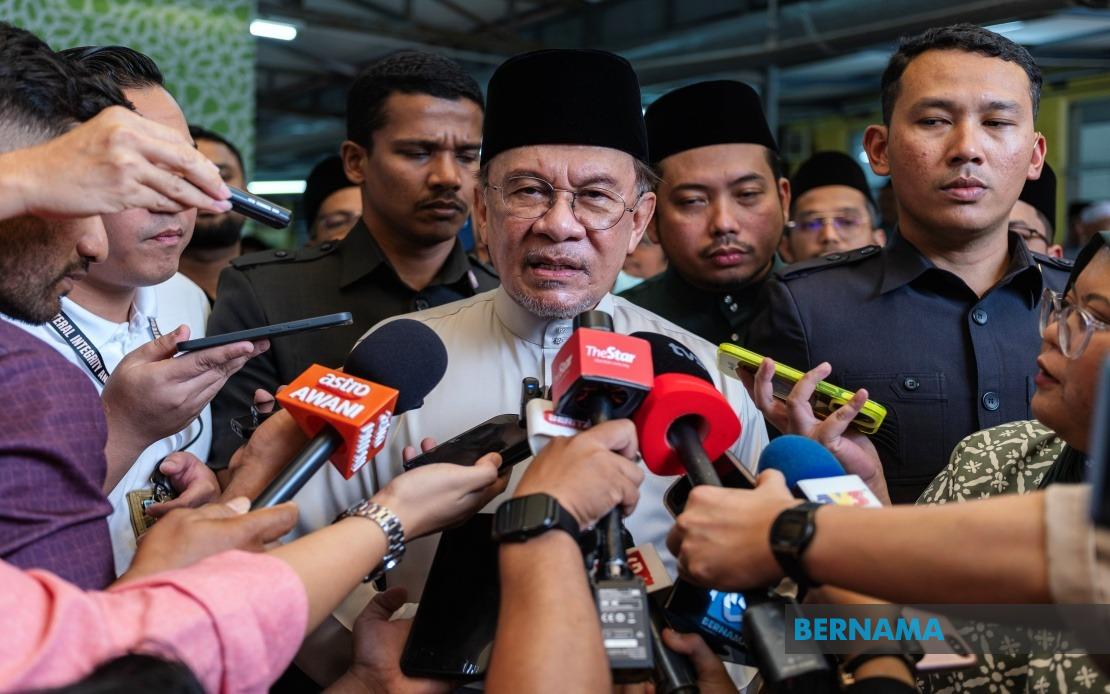
Malaysia will not deviate from its principled position on fugitive businessman Low Taek Jho, commonly known as Jho Low, regardless of any clemency decisions made by the United States, Prime Minister Datuk Seri Anwar Ibrahim declared on Friday. Speaking to journalists following noon prayers at Masjid As-Sodiqin in Taman Kobena, Anwar underscored that Kuala Lumpur's commitment to the rule of law transcends external political developments and will not be compromised by actions taken in Washington.
The Prime Minister's statement comes amid international media speculation that Jho Low is among approximately 250 individuals under consideration for a potential presidential pardon from Donald Trump in connection with America's Fourth of July celebrations marking the nation's 250th Independence Day. The fugitive financier, who remains at large and has been the subject of extensive legal proceedings across multiple jurisdictions, has long been sought by Malaysian authorities in connection with the 1Malaysia Development Berhad scandal.
Anwar articulated Malaysia's unwavering stance with particular clarity, emphasising that whatever determinations Washington reaches on matters within its sovereign jurisdiction will not influence or sway Kuala Lumpur's approach. His remarks reflect a broader principle that has guided Malaysian policy responses to the Jho Low case throughout successive administrations: namely, that Malaysia's commitment to pursuing justice and accountability through legal channels remains independent of international developments and diplomatic considerations. The Prime Minister's language deliberately distanced Malaysia from any suggestion of being swayed by external pressure or precedent.
The Jho Low case represents one of the most significant financial scandals of the modern era, involving allegations of massive fund misappropriation from 1MDB, a sovereign wealth fund established to drive Malaysia's economic development. The ramifications of this scandal extended far beyond Malaysia's borders, implicating financial institutions and individuals across multiple continents and prompting investigations by authorities in numerous countries including the United States, Singapore, and Switzerland. The case has become emblematic of concerns regarding transnational financial crime and the challenges posed by fugitives operating across multiple jurisdictions.
For Malaysian policymakers, maintaining a consistent and principled stance on the Jho Low case carries significant domestic and international implications. The 1MDB scandal eroded public confidence in governance and financial institutions, becoming a defining issue in Malaysian politics for nearly a decade. The government's ability to pursue accountability through legal mechanisms, regardless of external pressures or developments, remains central to public perception of institutional integrity and the rule of law. Any perception of wavering commitment could undermine confidence in Malaysia's judicial and regulatory systems.
The international dimensions of the Jho Low case have necessitated cooperation between Malaysian authorities and their counterparts abroad, including in the United States where significant investigative and prosecutorial work has been undertaken. Malaysia's insistence on maintaining its independent legal position, while respecting the sovereignty of other nations to make their own determinations, reflects a delicate balance in international legal cooperation. The country must pursue its own justice objectives while acknowledging the distinct legal frameworks and policy decisions of other sovereign states.
Parallel to the government's reaffirmation of its Jho Low position, Anwar indicated that Malaysia has received communication regarding a proposed contribution from the United States toward restoration of the Tugu Negara, the National Monument located in Kuala Lumpur. The projected donation of RM1 million forms part of bilateral cooperative efforts and has been scheduled for discussion at a forthcoming Cabinet meeting next week. This development, while distinct from the Jho Low matter, underscores the multifaceted nature of Malaysia-US relations and the range of issues spanning security, commerce, cultural preservation, and humanitarian concerns that characterise bilateral engagement.
The timing of Anwar's statement, released ahead of anticipated US Independence Day pardons, demonstrates the Malaysian government's proactive approach to preempting potential domestic criticism or misunderstanding regarding any clemency decisions Washington might announce. By publicly affirming Malaysia's independent stance before such announcements materialize, the government seeks to inoculate itself against allegations of complicity or acquiescence should a pardon materialise. This strategic communication reflects lessons learned from Malaysia's earlier experiences navigating complex international cases with significant domestic political dimensions.
For Malaysian citizens and regional observers, the government's stance provides reassurance that commitment to accountability in high-profile financial crimes will not be abandoned based on developments beyond national jurisdiction. The 1MDB scandal fundamentally altered Malaysian public discourse around governance and financial integrity, making it essential that successive administrations demonstrate consistent dedication to pursuing justice through legal mechanisms. Anwar's remarks reinforce a message that Malaysia views its legal obligations and moral imperatives as transcending diplomatic considerations or the decisions of other nations.
The broader context of Jho Low's continued evasion of justice, despite being among the world's most wanted financial fugitives, continues to preoccupy regional and international authorities. Malaysia's maintenance of a firm position contributes to ongoing international pressure on the fugitive and signals to other potential actors in financial crimes that flight from jurisdiction does not guarantee ultimate impunity. The case has assumed significance beyond Malaysia as a test case for international cooperation in pursuing white-collar criminals and asset recovery across borders.

