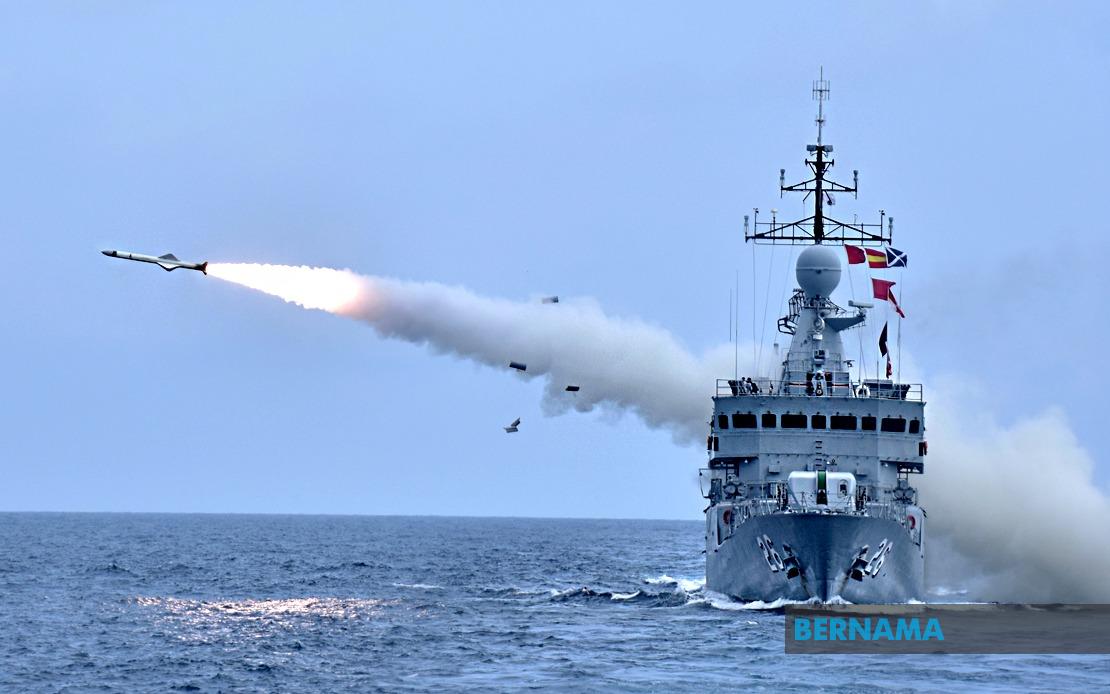
Malaysia's government has committed to substantially raising defence spending, driven by a confluence of emerging threats that extend well beyond traditional regional power dynamics. Defence Minister Datuk Seri Mohamed Khaled Nordin outlined the rationale for increased military budgets, emphasizing that cyber warfare, electromagnetic attacks, and coordinated misinformation campaigns now represent frontline security challenges that demand dedicated resources and strategic responses. This represents a significant expansion in how Malaysian policymakers conceptualize national security threats, moving away from conventional military concerns toward hybrid warfare tactics that blur the line between military and civilian domains.
The Defence Ministry's assessment reflects a hardening realization that the contemporary security environment has fundamentally transformed. Rather than viewing military buildups as responses to specific nation-states, Mohamed Khaled framed Malaysia's defence modernization as a necessary adaptation to increasingly complex geopolitical competition among major powers. This distinction carries strategic importance for regional diplomacy, as it allows Malaysia to justify heightened military spending without explicitly identifying any particular adversary, thereby preserving the nation's cherished policy of non-alignment and maintaining balanced relationships with both Western and Eastern powers.
Geopolitical competition between major powers has intensified military presence and activity across Southeast Asia in ways that create cascading security dilemmas. When strategic competitors increase their military footprint or capabilities in contested regions, neighboring countries face pressure to enhance their own defensive posture, even without direct threat perception. Mohamed Khaled articulated this dynamic with notable clarity, acknowledging that Malaysia's response to a thickening military environment should not be misinterpreted as alignment with any particular great power. This calibrated messaging suggests the government is acutely aware of the sensitivities surrounding defence partnerships and military modernization in a region where historical grievances and strategic ambitions remain ever-present.
Prime Minister Datuk Seri Anwar Ibrahim, acting in his capacity as Finance Minister, signalled that Malaysia may require defence investments potentially reaching hundreds of millions to billions of ringgit to adequately address the evolving security landscape. The scale of these expenditures underscores how seriously the government now views the threats emanating from cyber domains, space-based operations, and information warfare. These expenditures would support the government's longstanding objective to gradually increase defence spending toward 1.5 per cent of Gross Domestic Product by 2030, a target that remains modest compared to defence spending ratios in some regional neighbours but reflects fiscal constraints and competing budgetary priorities.
The risk of miscalculation and unintended escalation has grown as the density of military assets in relatively confined geographic spaces increases. The concentration of naval vessels, aircraft, and surveillance systems across Southeast Asia's sea lanes and disputed territories creates multiple friction points where accidents or misunderstandings could rapidly spiral into serious incidents. Malaysia's geographic position, straddling major international waterways and bordering multiple countries with their own security concerns, places it at heightened risk from such escalatory dynamics. Consequently, maintaining robust capabilities becomes less about projecting power and more about ensuring Malaysia possesses adequate situational awareness and defensive capacity to manage crises that may originate from neighbouring disputes.
Developments in the southern Philippines, particularly areas proximate to Sabah, illustrate how regional security incidents can generate spillover effects affecting countries not directly involved. Mohamed Khaled demonstrated diplomatic sophistication by acknowledging the Philippines' sovereign right to determine its own defence partnerships while simultaneously noting that escalation in the area carries implications extending to Malaysian security and broader South China Sea stability. This balanced acknowledgment reflects Malaysia's delicate position as a nation with vital interests in maritime security yet reliant on maintaining constructive relations with all neighbours. The Defence Ministry's refusal to frame regional developments through a lens of choosing geopolitical sides represents an attempt to preserve strategic flexibility while building defence capacity.
Malaysia's defence modernization programme includes strengthening capabilities around strategically significant locations such as Pulau Layang-Layang. Mohamed Khaled emphasized that such developments should be understood as integral to national defence planning rather than provocative responses to specific countries. This framing becomes particularly important given Malaysia's territorial claims and maritime interests in the South China Sea. The modernization effort aims to ensure that Malaysia can effectively exercise sovereignty over its claimed areas and maintain sufficient presence to deter encroachment or challenge to its maritime rights. However, the Defence Ministry recognizes that such preparations require careful diplomatic messaging to avoid triggering security dilemmas or arms race dynamics with neighbouring claimants.
The government's two-track approach combines military capability development with diplomatic advocacy for regional stability and restraint. By simultaneously strengthening armed forces while championing dialogue mechanisms and peaceful dispute resolution, Malaysia positions itself as a country committed to security through strength tempered by commitment to stability. This strategy reflects lessons learned from regional history and recognition that military buildups absent diplomatic channels can produce destabilizing outcomes. The emphasis on maintaining open communication lines with the Philippines exemplifies this approach, recognizing that even when nations pursue independent security policies, dialogue remains essential for managing misunderstandings and preventing escalation spirals.
The Code of Conduct negotiations in the South China Sea assume heightened importance within Malaysia's defence policy framework. A binding Code of Conduct would create predictable rules of engagement and dispute resolution mechanisms that reduce the likelihood of accidental escalation or miscalculation. Malaysia's continued support for ASEAN centrality in regional security matters reflects the assessment that small-to-medium powers possess greatest security when regional mechanisms emphasize dialogue and consensus-building rather than military confrontation. By advancing diplomatic solutions, Malaysia can pursue its security interests while contributing to an environment where military modernization serves deterrence rather than triggering competitive buildups.
For Malaysian defence planners, the challenge extends beyond acquiring modern equipment and weapons systems. Building cyber-defence capabilities, establishing information warfare countermeasures, and developing electromagnetic protection require substantial human capital investment, specialized training programmes, and institutional reform. These modernization imperatives demand budgetary resources that might otherwise support social spending or infrastructure development, reflecting the genuine trade-offs that defence increases entail. Malaysian policymakers must justify these expenditures to a public concerned with economic growth and social services while maintaining the military preparedness necessary for contemporary security challenges.
Regional implications of Malaysia's defence spending decisions ripple across Southeast Asia in complex ways. Other ASEAN nations monitor Malaysian military modernization as a potential signal regarding threat assessments and geopolitical positioning. Malaysia's explicit refusal to frame increased spending as directed against specific countries provides some reassurance to regional neighbours, yet the sheer scale of proposed investments may nonetheless trigger cautious reactions. The success of Malaysia's defence strategy ultimately depends on executing modernization while maintaining the diplomatic relationships and ASEAN unity that have historically provided smaller Southeast Asian nations with disproportionate influence in regional security matters.

