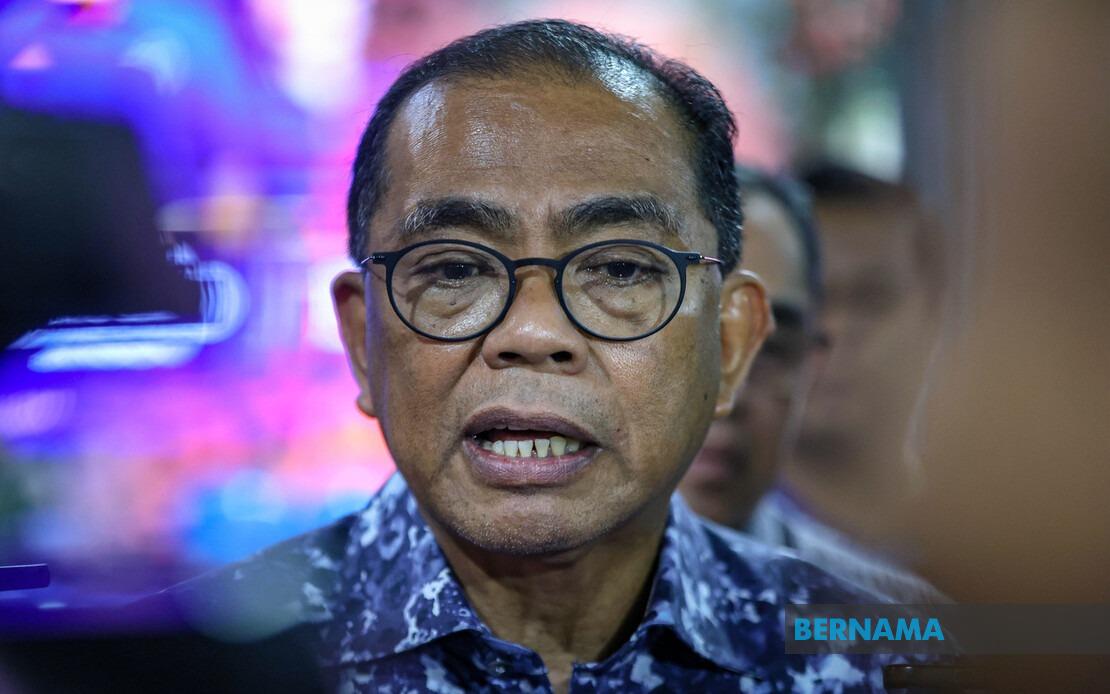
The Malaysian Defence Ministry is pursuing a comprehensive overhaul of personnel management systems within the Malaysian Armed Forces, recognising that the current structure creates career bottlenecks despite strong officer performance. Defence Minister Datuk Seri Mohamed Khaled Nordin announced that detailed reform proposals covering organisational restructuring, career advancement mechanisms, and compensation adjustments have been formally submitted to the government and the Public Service Department (JPA) for deliberation, signalling a serious push to modernise military human resources practices.
The core issue driving these reforms reflects a common challenge in hierarchical organisations: capable officers reaching competency and performance benchmarks but facing stalled careers due to insufficient promotion vacancies. Mohamed Khaled articulated the ministry's vision during remarks at the Pasir Gudang Barisan Nasional thanksgiving event, emphasising the need to achieve better alignment between an officer's rank, grade, responsibility level, and the strategic functions they execute within the defence establishment. This mismatch not only affects individual career satisfaction but potentially impacts operational effectiveness and institutional knowledge retention across the military services.
Since the Defence White Paper launch in 2022, MINDEF has maintained steady advocacy for talent management improvements as a strategic priority. The specific proposals submitted to JPA in March of last year focused on overhauling the Public Service Remuneration System (SSPA) with an eye toward recognising the distinctive demands of military service. Mohamed Khaled highlighted that servicemembers often undertake intensive professional development courses spanning nine months to two years, requirements that significantly disrupt personal and family planning compared to civilian counterparts in the public service. Consequently, the ministry has pushed for dedicated allowances that reflect these unique professional obligations and investment in continuous training.
Critically, the proposed reforms maintain a commitment to merit-based advancement rather than adopting automatic promotion schemes that could undermine discipline and performance standards. Any expedited promotion criteria will remain anchored to rigorous evaluation of performance, competency, integrity, and alignment with organisational needs, processed through established assessment channels. This nuanced approach attempts to balance addressing real career frustration with preserving the meritocratic principles essential to military effectiveness and officer morale. The distinction matters considerably; poorly designed promotion acceleration could breed resentment among personnel who perceive fairness breaches, potentially eroding cohesion.
These ministry-level initiatives dovetail directly with Prime Minister Datuk Seri Anwar Ibrahim's announcement regarding in-principle government approval to simplify and expedite promotion processes for both Malaysian Armed Forces and Royal Malaysia Police personnel. The intention is to bring security sector promotion timelines and mechanisms into closer alignment with broader public service advancement schemes, eliminating perceived disparities that may contribute to recruitment and retention challenges. The synchronised approach across security agencies suggests Cabinet-level recognition that attracting and retaining talent in high-stress, high-responsibility roles demands structural competitiveness.
The government has signalled further commitment by pledging to expand MINDEF's budget allocation under the 2027 fiscal framework, dedicating additional resources toward bolstering Malaysian Armed Forces operational capabilities while simultaneously prioritising the welfare of security personnel. Budget increases that address both capability modernisation and personnel welfare reflect a holistic understanding that military effectiveness depends equally on equipment sophistication and human capital management. This dual commitment aligns defence spending with strategic objectives while acknowledging that personnel retention directly impacts institutional knowledge and operational readiness.
Official details regarding the new promotion mechanism framework are scheduled for announcement during Malaysia's Merdeka Day celebration at Stadium Merdeka in Kuala Lumpur on August 30, providing a ceremonial platform for what amounts to significant policy reform. Timing the revelation during this national occasion amplifies the announcement's symbolic weight and signals that military modernisation constitutes a priority within broader national renewal efforts. For serving personnel, the August 30 announcement represents a concrete milestone in reform implementation following months of bureaucratic negotiation and technical design.
For Malaysia's security establishment, these reforms carry strategic implications extending beyond individual career satisfaction. Armed forces experiencing structural career frustrations risk talent outflow toward private sector opportunities or early retirement, particularly among educated officers equipped for alternative professional pathways. Countries across the region face similar recruitment pressures as defence sectors compete with technology companies and multinational corporations offering superior compensation and clearer advancement trajectories. By proactively addressing career architecture and compensation, Malaysia positions itself to retain experienced officers and attract quality recruits into an increasingly technical defence environment.
The broader Southeast Asian context amplifies relevance of these Malaysian reforms. Regional defence establishments confront common challenges: ageing military infrastructure requiring replacement, emerging operational domains including cyber and maritime security, and generational workforce transitions as Cold War-era officers retire. Personnel policy innovations in one established military institution often cascade across regional defence communities through professional networks, defence attaché exchanges, and multilateral training programmes. Malaysia's approach to merit-based promotion acceleration coupled with structural compensation reviews offers a model for regional peers struggling with similar retention and capability modernisation tensions.
Implementing these reforms will require sustained coordination between MINDEF, JPA, and military service commands to redesign promotion pathways, recalibrate allowance schedules, and reorganise structural positions. The technical complexity should not be underestimated; reclassifying positions, adjusting grade distributions, and establishing new evaluation criteria demand careful actuarial analysis and phased implementation to avoid unintended consequences. Simultaneous reform across three interconnected systems—structure, progression, and compensation—creates interdependencies where adjustments in one domain ripple through others, demanding sophisticated change management.
Success measures will extend beyond announcement rhetoric. Personnel surveys tracking satisfaction and retention rates among junior and mid-career officers offer quantifiable indicators of reform efficacy. Recruitment numbers and quality metrics for new officer candidates entering service academies and recruitment channels will reveal whether expanded career prospects attract stronger talent pools. Operational readiness assessments and unit cohesion metrics will indicate whether personnel management reforms translate into enhanced military effectiveness or merely address compensation grievances without touching underlying capability deficits.

