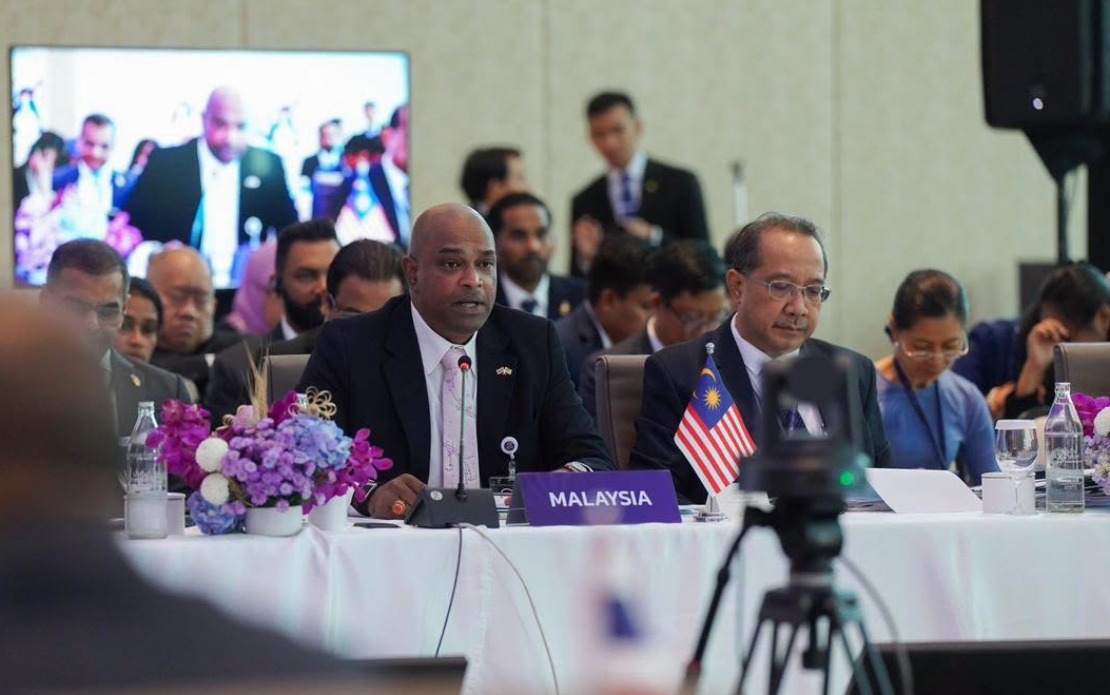
Malaysia has pressed fellow ASEAN member states to establish more robust frameworks for recognising and certifying workforce competencies, arguing that stronger cross-border credential standards are essential for regional workers to seize international opportunities and secure competitive advantage in global markets. Human Resources Minister Datuk Seri R. Ramanan articulated this position during the 14th ASEAN Plus Three Labour Ministers' Meeting held in Bangkok, Thailand, where representatives from the ten ASEAN nations convened alongside counterparts from China, Japan and South Korea to discuss labour policy priorities.
The Malaysian delegation emphasised three core pillars for advancing the regional workforce agenda. First among these is the imperative to strengthen joint certification mechanisms and achieve harmonisation across Technical and Vocational Education and Training programmes, ensuring that credentials earned in one ASEAN state carry equivalent weight and recognition throughout the bloc and beyond. Second, Malaysia identified the acceleration of technology transfer initiatives coupled with comprehensive upskilling programmes for educators as fundamental to raising standards. Third, the country advocated for developing cutting-edge training infrastructure in emerging sectors including artificial intelligence, next-generation electric and autonomous vehicles, and advanced robotics—fields that will dominate employment landscapes over the coming decades.
The underlying rationale for Malaysia's intervention reflects a sophisticated understanding of the challenges facing ASEAN's labour markets. Currently, workers trained and certified within the region often encounter barriers when seeking employment or advancing careers across borders, with qualifications that lack mutual recognition despite being comparable in quality and rigour. This fragmentation creates inefficiencies, prevents optimal talent allocation, and undermines ASEAN's collective bargaining power in attracting multinational investment. By contrast, unified standards would enable employers to source skilled personnel seamlessly from across the region, while workers would gain expanded horizons for career progression without the friction of navigating disparate certification systems.
Minister Ramanan emphasised that this initiative transcends mere bureaucratic procedural alignment, instead representing a foundational investment in the bloc's future economic resilience and competitiveness. The ambition extends beyond securing recognition within ASEAN borders; rather, the objective is positioning Southeast Asian workers as among the globally most sought-after skilled professionals, capable of commanding premium opportunities in the world's most dynamic economies. This framing reorients the discussion from a regional integration issue into a broader competitive strategy positioning ASEAN as a source of elite talent.
The inclusion of China, Japan and South Korea in these deliberations underscores Malaysia's recognition that peer learning from advanced economies is indispensable for achieving this transformation. These three nations possess mature, well-established systems for skills certification and recognition, accumulated expertise in vocational training delivery, and demonstrated success in bridging education outcomes with industry requirements. Tapping this knowledge base accelerates ASEAN's learning curve while avoiding reinvention of systems already proven effective in comparable regional contexts.
The technology transfer dimension proves particularly significant for countries like Malaysia, which aspires to position itself as a hub for high-value manufacturing and digital economy activities. Without a pipeline of workers trained to international standards in emerging technologies, the nation risks losing competitive positioning to other regional centres. Coordinated TVET harmonisation across ASEAN creates economies of scale in curriculum development, instructor training, and equipment procurement, distributing costs and enabling even smaller economies to access quality programming in advanced fields.
Teacher upskilling represents another critical but often underestimated component of this strategy. Vocational educators must themselves possess current, practical expertise in rapidly evolving technical domains—a requirement that demands continuous professional development and exposure to cutting-edge practices. By establishing regional networks and facilitating knowledge exchange among TVET instructors, ASEAN can build a cadre of educators genuinely equipped to prepare students for contemporary industry demands rather than perpetuating outdated curricula.
For Malaysia specifically, this push aligns with domestic priorities articulated in recent economic blueprints emphasising transition toward high-skilled, high-value economic activities. The nation faces particular urgency in this regard given its upper-middle-income status and saturation of lower-skill manufacturing segments. Strengthening TVET systems and ensuring global recognition of qualifications directly supports Malaysia's aspirations to move up the value chain while securing human capital advantages over competitors in lower-wage jurisdictions.
The broader Southeast Asian context makes this initiative timely. The region confronts demographic transitions in some countries accompanied by labour shortages in critical sectors, while others experience youth unemployment and skills mismatches. Harmonised, world-class certification systems help redistribute talent more efficiently, enabling workers from nations with surplus skilled labour to access opportunities in high-demand markets, while creating pathways for upskilling in sectors facing shortages. This rebalancing benefits individual workers while strengthening overall regional economic dynamism.
Moreover, the emphasis on AI, next-generation vehicles and robotics responds to genuine market evolution. Manufacturing across ASEAN is rapidly automating and digitalising, with employers increasingly demanding workers conversant in programming, systems integration, and data analytics. Countries that produce graduates meeting these specifications will capture disproportionate shares of high-value foreign direct investment in these sectors. Conversely, regions failing to develop such talent pipelines risk economic marginalisation as investment flows toward more capable ecosystems.
Malaysia's proactive positioning at the labour ministers' meeting reflects its broader diplomatic strategy within ASEAN of championing integration initiatives that yield mutual benefit while advancing Malaysian economic interests. By framing skills harmonisation as serving the collective ASEAN good—creating a globally competitive regional labour market—while addressing Malaysian domestic requirements, the nation positions itself as a constructive stakeholder driving the bloc's development agenda.
The commitment to ongoing engagement with ASEAN counterparts, alongside China, Japan and South Korea, signals Malaysia's intention to sustain momentum beyond this single meeting. Achieving meaningful harmonisation of TVET systems across ten nations with varying development levels and institutional capacities presents substantial practical challenges requiring sustained coordination, resource commitment, and willingness to modify established practices. Malaysia's explicit pledge to maintain active involvement suggests genuine institutional commitment rather than rhetorical posturing.

