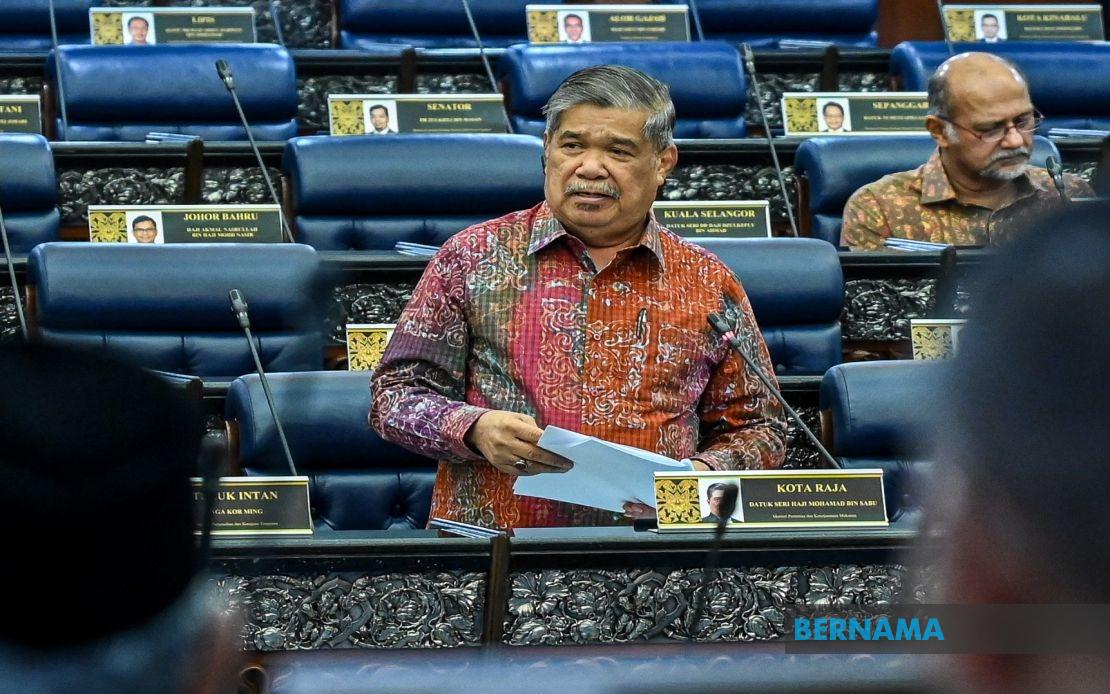
The Malaysian government is extending a formal pathway for fishermen operating without proper licensing to regularise their status, with the Agriculture and Food Security Ministry confirming the initiative during parliamentary proceedings in Kuala Lumpur. The regularisation programme, which operates on a periodic basis, addresses gaps created when existing fishing licences are cancelled or relinquished, creating opportunities for qualified individuals to enter the formal fishing economy.
Datuk Seri Mohamad Sabu, the minister overseeing the agriculture portfolio, explained that coastal fishermen can now lodge applications for special boat licences through their respective District Fisheries Offices, provided they satisfy a comprehensive set of conditions established by the Fisheries Department. This framework represents a deliberate policy choice to balance regulatory oversight with practical access to the fishing trade, particularly benefiting traditional operators who may have previously operated in a grey zone between formal and informal sectors.
The regularisation approach carries strategic significance beyond mere administrative convenience. By formalising unlicensed fishermen, the government enables these operators to access a range of support mechanisms, subsidies, and development programmes exclusively available to licensed practitioners. More critically, the transition to legal status strengthens overall compliance with fisheries management regulations, a cornerstone of resource sustainability in Malaysian waters where overfishing and ecosystem degradation pose mounting challenges.
Recent approval figures underscore the programme's scale. During the preceding year, the Fisheries Department approved 800 new licences nationwide, with 915 approvals recorded in the year prior. These volumes indicate substantial regularisation activity, though they also suggest unmet demand within fishing communities, particularly among traditional operators struggling with formal licensing requirements.
The eligibility framework contains several rigorous stipulations designed to direct licences toward individuals genuinely dependent on fishing livelihoods. Applicants must be at least 18 years old and maintain good health to operate boats at sea. A critical requirement mandates 10-year residency confirmation from the head of the fishing village, establishing deep community roots and reducing the risk of licence capture by external investors or speculators. Prospective operators must also demonstrate active engagement with fishing by spending a minimum of 120 days annually at sea, effectively disqualifying part-time practitioners or those using licences as passive investments.
Financial circumstances form another qualifying pillar. The regulations stipulate that if an applicant receives a pension, that income cannot exceed RM2,200 monthly, ensuring licences flow to those for whom fishing represents the primary economic necessity rather than supplementary income. This income ceiling reflects deliberate targeting toward vulnerable and lower-income communities where fishing provides essential subsistence and livelihoods for families across coastal Malaysia.
State-level institutional support represents an additional gateway. Applicants must obtain backing from the State Fisheries Office, embedding the licensing process within state administration and creating accountability mechanisms at the subnational level. This requirement facilitates coordination between federal policy and local implementation, acknowledging that fishing communities vary considerably across Malaysia's different coastal regions and states.
When pressed on transparency concerns during parliamentary questioning, Mohamad undertook to periodically review licensing criteria to ensure they genuinely serve eligible applicants and prevent abuse. The minister acknowledged that criteria adjustment remains necessary as circumstances evolve, signalling openness to refinement rather than rigid adherence to established rules. He invited the public to lodge formal complaints if evidence emerges that non-fishermen have obtained licences, positioning the department as receptive to scrutiny and remedial action.
This regularisation pathway carries particular resonance for Southeast Asian maritime economies. Throughout the region, fishing sectors grapple with the challenge of formalising informal operators while maintaining resource sustainability and preventing unlicensed exploitation. Malaysia's approach, anchored in residency, active participation, and income thresholds, offers a model balancing inclusion with conservation imperatives.
For fishing communities, the programme represents a significant development. Historically, unlicensed operators have faced enforcement vulnerability and exclusion from government assistance. Regularisation converts this precarious status into formal legitimacy, providing security for investment in boats and equipment while enabling access to fisheries subsidies, credit facilities, and welfare programmes. The ten-year residency requirement particularly benefits long-established fishing families who have deep community ties but may lack formal documentation.
However, the stringent criteria also potentially disadvantage certain groups. Younger fishermen without a decade of local residency, those with prior health conditions, or households where pension income marginally exceeds the RM2,200 ceiling may find regularisation inaccessible despite genuine economic dependence on fishing. The 120-day annual sea time requirement may also prove challenging for those engaged in supplementary fishing activities alongside agriculture or other livelihoods, particularly in regions where seasonal patterns or weather conditions limit fishing days.
Implementation effectiveness will determine whether the programme achieves its dual objectives of expanding legal fishing access and strengthening resource management. District Fisheries Offices must possess sufficient capacity to process applications expeditiously while maintaining rigorous verification of residency, health status, and financial circumstances. Transparency in decision-making becomes essential to prevent local political influence or corruption in license allocation.
The regularisation initiative ultimately reflects broader governance challenges across Southeast Asia's fishing sectors, where the tension between formalising informal livelihoods and preventing resource depletion requires careful calibration. Malaysia's structured approach, grounded in verifiable criteria and periodic review mechanisms, provides a tested framework for jurisdictions throughout the region confronting similar pressures to balance fishermen's economic security with long-term marine ecosystem health.

