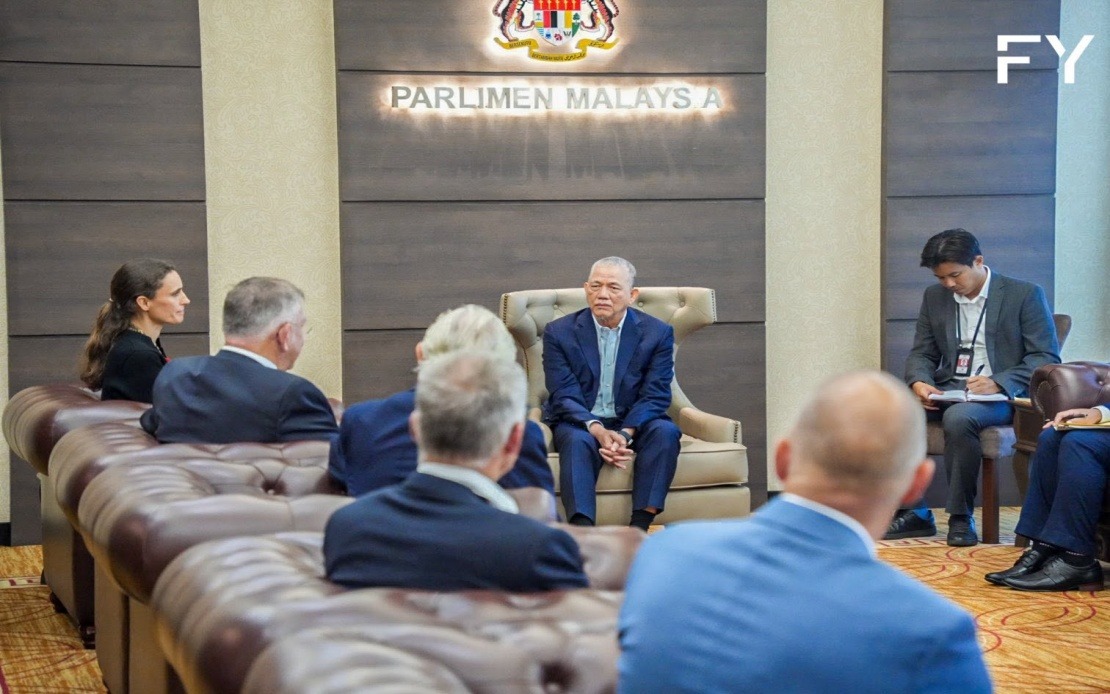
Malaysia is strengthening its economic partnership with Germany by actively encouraging small and medium-sized enterprises from the European nation to channel investment into strategic sectors aligned with the country's sustainability goals. Deputy Prime Minister Datuk Seri Fadillah Yusof made this overture during a formal engagement with German Ambassador to Malaysia Silke Riecken-Daerr and representatives from the German SME Business Association at Parliament House on June 24, signalling Kuala Lumpur's commitment to attracting quality industrial partnerships that support its green transformation agenda.
The Malaysian government is particularly interested in channelling German entrepreneurial expertise into three priority domains: green technology innovation, renewable energy infrastructure, and water management and treatment systems. Fadillah stressed that these investment areas directly complement Malaysia's broader national sustainable development strategy, indicating that the government views such collaborations as integral to achieving its environmental and economic objectives. This targeted approach reflects a shift toward quality-driven foreign direct investment rather than volume-based capital inflows, positioning Malaysia as a destination for technology-intensive ventures rather than low-cost manufacturing alone.
Germany's established presence in Malaysia underscores the depth of existing commercial relations between the two nations. With more than 800 German companies currently maintaining operations across various Malaysian industries, the bilateral economic foundation proves particularly robust. Fadillah highlighted this statistic to demonstrate that Germany remains one of Malaysia's most significant trading partners, particularly in mechanical engineering and advanced manufacturing technologies where German industrial excellence is globally recognised. This existing ecosystem of German businesses creates a ready-made support network and supply chain infrastructure that new entrants can leverage, reducing barriers to market entry and operational establishment.
The mechanical engineering and manufacturing technology sectors have historically anchored German-Malaysian trade, reflecting the complementary nature of German industrial capabilities and Malaysia's position as a regional manufacturing hub. However, the renewed focus on green technology and renewable energy represents a strategic evolution in bilateral cooperation, moving beyond traditional heavy industry toward emerging sectors that will define economic competitiveness in the coming decades. For Malaysian policymakers, attracting German SMEs in these fields offers the dual benefit of accessing cutting-edge environmental technologies while building local expertise and creating employment in high-value sectors.
Beyond direct investment opportunities, the bilateral discussion expanded into human capital development through Technical and Vocational Education and Training collaboration. Germany's world-renowned TVET system has consistently produced highly skilled workforces that drive the nation's manufacturing excellence and technological innovation. Malaysian authorities recognize that transferring knowledge and methodologies from Germany's apprenticeship and vocational training frameworks could significantly upgrade the quality and relevance of local skills development. Such cooperation could help Malaysian workers acquire technical competencies aligned with industry 4.0 standards, enhancing national competitiveness as Southeast Asian economies intensify competition for advanced manufacturing and innovation-led activities.
The German TVET model differs substantially from traditional Malaysian educational pathways, emphasising practical, work-integrated learning that creates direct bridges between classroom instruction and employment. By adopting elements of this approach, Malaysia could address persistent skills gaps in sectors ranging from green technology maintenance to precision engineering. The potential knowledge transfer extends beyond curriculum design to encompassing apprenticeship coordination, employer engagement, and qualification frameworks that have proven effective in maintaining Germany's position as a global innovation leader.
Fadillah's expression of confidence in strengthening Malaysia-Germany relations reflects broader diplomatic momentum and governmental commitment to deepening economic ties. This optimism is grounded in concrete factors: existing German corporate presence provides relationship continuity, complementary economic structures create natural trade opportunities, and shared interest in sustainability aligns long-term strategic objectives. The ceremonial nature of the Parliament House meeting, combined with the direct engagement of the Deputy Prime Minister, signals the Malaysian government's seriousness about attracting quality German investment rather than treating the initiative as routine diplomatic protocol.
For German SMEs considering Southeast Asian expansion, Malaysia presents an increasingly attractive proposition. The nation offers political stability, established legal frameworks favouring foreign investment, skilled English-speaking workforces, and strategic location within ASEAN. The government's explicit invitation to invest in green technology and renewable energy sectors also provides clarity on priority areas, allowing prospective investors to align expansion strategies with national policy objectives. Furthermore, Malaysia's commitment to carbon neutrality by 2050 and renewable energy targets creates sustained demand for innovative environmental solutions, ensuring long-term market viability for green technology ventures.
The renewable energy sector particularly stands to benefit from enhanced German-Malaysian cooperation. Malaysia has set ambitious targets for renewable energy capacity expansion, yet domestic expertise in solar and wind technologies remains limited compared to European peers. German companies, with decades of experience implementing large-scale renewable projects across diverse geographies and regulatory environments, bring implementation expertise that could accelerate Malaysia's energy transition. Water management and treatment technology cooperation similarly addresses critical infrastructure needs, as Malaysia's rapidly urbanising regions require sophisticated solutions for sustainable resource management and pollution control.
Regionally, this bilateral initiative carries implications extending beyond bilateral trade volumes. As Southeast Asia collectively pursues green transition and sustainable development pathways, Malaysia's success in attracting German green technology investment could establish models for regional peers. Other ASEAN nations grappling with similar sustainability challenges may benchmark Malaysia's approach and outcomes, potentially encouraging comparative investment flows across the region. This positions Malaysia as a potential regional hub for European green technology deployment and adaptation across Southeast Asia, generating additional downstream benefits through supply chain development and knowledge spillovers.
The emphasis on TVET cooperation also addresses workforce development challenges affecting the entire Southeast Asian region. Many ASEAN nations struggle with skills-industry mismatches as economies evolve toward higher-value activities. By pioneering German-style vocational training partnerships, Malaysia could establish regional standards and best practices that neighbouring countries adopt, fostering a more skilled, competitive ASEAN workforce overall. This collaborative approach strengthens the region's collective bargaining position in global competition for advanced manufacturing and technology-driven industries.
Moving forward, the success of this investment initiative will depend on translating governmental support and diplomatic engagement into concrete business opportunities and regulatory facilitation. The Malaysian government's clear articulation of priority investment sectors, combined with ambassador-level engagement, suggests the political will exists to remove administrative barriers and support German SME establishment. However, translating macroeconomic policy signals into microeconomic business confidence requires sustained followthrough, consistent messaging to prospective investors, and tangible demonstration of competitive advantages beyond rhetoric.
Longer-term, deepening German-Malaysian partnership in green technology and TVET could catalyse structural economic transformation. Investment in renewable energy infrastructure and environmental solutions addresses immediate sustainability imperatives while building intellectual capital and technological capabilities for future economic resilience. Simultaneously, TVET cooperation strengthens human capital, the ultimate foundation for sustained competitiveness. Together, these dimensions suggest the government envisions Malaysia's future economic identity increasingly centred on quality, sustainability, and technological capability—a significant evolution from earlier development strategies emphasising cost competitiveness and mass manufacturing.