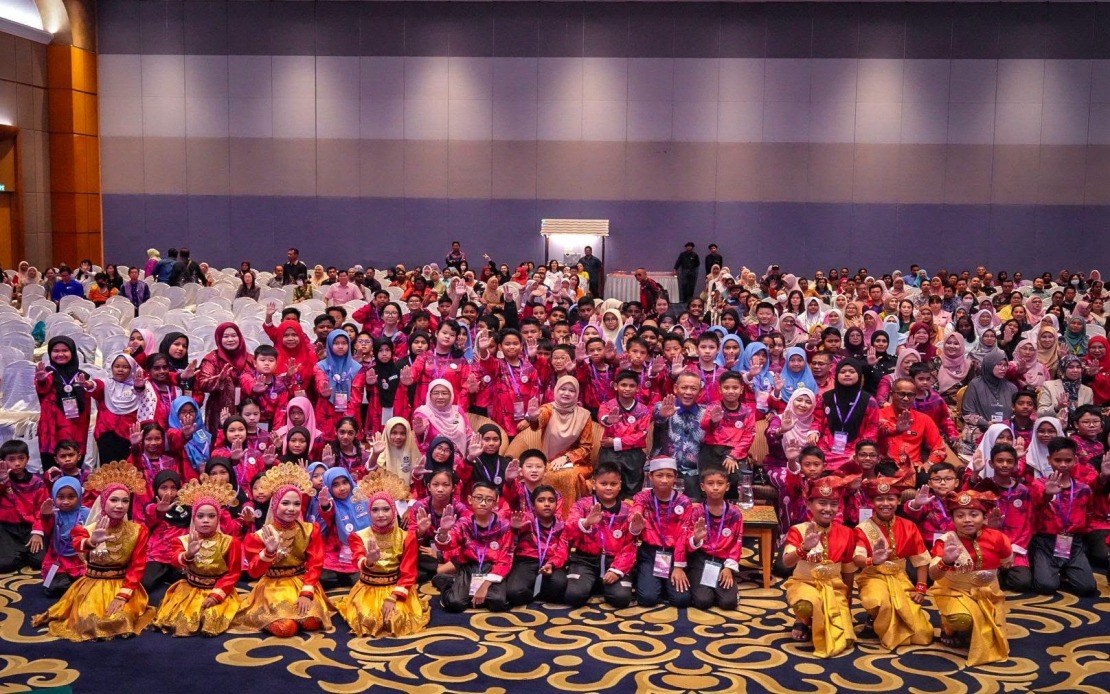
Malaysia's Education Minister Fadhlina Sidek has emphasized that building a genuinely safe school environment demands more than isolated policies—it requires sustained coordination among educators, parents, government bodies, and community leaders working toward a common objective. Speaking at the Mutiara Diri Programme, Fadhlina outlined her vision of an education system where every child can learn without fear, framing school safety as a foundational responsibility that no institution can sidestep.
The complexity of contemporary school safety challenges extends beyond physical security measures. Fadhlina recognized that threats to student wellbeing now encompass psychological dimensions, bullying dynamics, and social pressures that traditional facility-based protections cannot fully address. Her statement underscores a growing recognition within Malaysia's education policy circles that comprehensive safety encompasses both tangible and intangible factors affecting children's ability to flourish academically and socially. This holistic perspective marks a shift from older models that viewed school security primarily through gates and guards.
Regarding implementation, the minister made clear that existing safety guidelines and child protection frameworks established by the Ministry of Education must serve as binding standards across all schools operating under the ministry's purview. Rather than permitting flexibility that could lead to inconsistent protections, Fadhlina insisted on uniform compliance that guarantees no student receives diminished safeguards based on their school's location or resources. This centralized approach aims to eliminate disparities that might otherwise leave vulnerable populations in under-resourced institutions exposed to preventable risks.
Fadhlina's commitment to zero tolerance on matters threatening children's safety signals an attempt to reset expectations around institutional accountability. By stating explicitly that no compromise is acceptable when student welfare is at stake, she positioned the ministry against complacency and bureaucratic inertia that sometimes allows dangerous situations to persist. This rhetorical stance carries particular weight given periodic incidents in Malaysian schools that have raised public concern about whether administrators prioritize reputation management over genuine protection.
The inclusion of Negeri Sembilan Menteri Besar Datuk Seri Aminuddin Harun at the programme reflected an understanding that school safety transcends federal education bureaucracy and requires state-level political engagement. Such multi-level participation suggests efforts to create institutional networks where different government tiers reinforce each other's commitment rather than work in isolation. For Malaysian parents evaluating their children's schools, this kind of visible alignment between state and federal education leadership provides some assurance that safety concerns will not fall through jurisdictional gaps.
Mental health dimensions received specific attention in Fadhlina's remarks, acknowledging that psychological distress among students represents as significant a threat to educational wellbeing as physical danger. This recognition aligns with emerging research on adolescent mental health crises and the role schools play in early intervention. Integrating mental health support into school safety frameworks addresses a historically neglected area where Malaysian institutions have sometimes lagged behind international best practices, particularly in rural and low-income communities.
The characterization of the Mutiara Diri Programme as advocacy rather than routine administration suggests the ministry views cultural shifts in how schools, families, and communities approach student protection as essential to meaningful change. Advocacy efforts typically aim to reshape collective attitudes and behaviors rather than simply enforce compliance through top-down directives. This strategy implicitly acknowledges that sustainable safety improvements require buy-in from grassroots stakeholders who implement policies daily rather than simply receiving orders from central offices.
Parental engagement stands as a critical component in Fadhlina's vision, reflecting an understanding that teachers and administrators alone cannot monitor or protect children comprehensively. By explicitly calling on parents to enhance synergy with educators, the minister framed household and school as interdependent institutions where gaps in one setting cannot be compensated by excellence in another. For Malaysian families grappling with concerns about their children's safety, this inclusive approach offers an opportunity to participate actively rather than merely hope institutions function adequately.
The broader implications extend beyond individual schools to fundamental questions about Malaysia's social contract regarding childhood protection. Fadhlina's assertion that children possess rights to dignified, secure educational environments positions such safety as a baseline entitlement rather than a luxury or privilege. This framing carries weight in a country where resource constraints sometimes create systems where only wealthy families can purchase genuinely safe private school education while public school children face compromised conditions.
For stakeholders across Malaysia's educational ecosystem, from rural schools serving remote communities to urban institutions enrolling thousands, the minister's statements establish benchmarks against which institutional performance can be measured. The refusal to accept compromises on safety principles means schools cannot justify substandard protections based on budget limitations or operational challenges. This position potentially pressures the government itself to allocate resources necessary for implementation, lest policies become hollow rhetorical exercises.
Moving forward, monitoring whether this emphasis translates into concrete resource allocation, training programs, and structural reforms will indicate whether the ministry's commitments represent genuine institutional change or aspirational messaging. Malaysian parents, educators, and policymakers now possess explicit statements of ministerial commitment that can anchor accountability discussions and drive follow-through on these ambitious aims for safer, more protective school environments across the nation.

