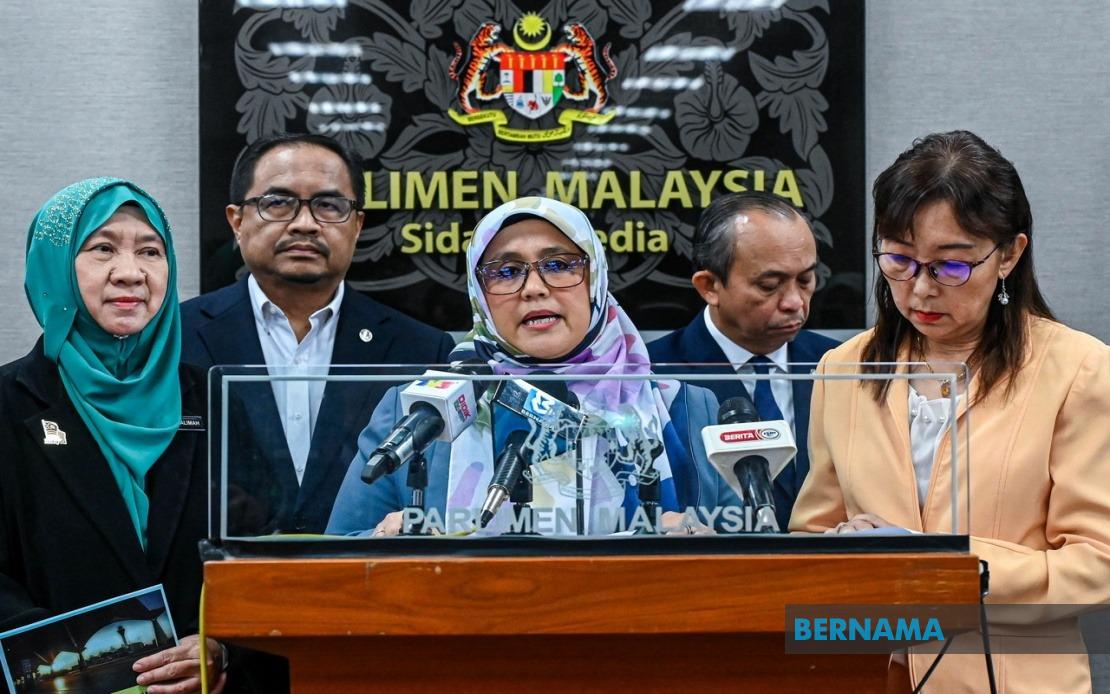
Parliament's Public Accounts Committee has drawn a line in the sand regarding Malaysia's control of its critical aviation infrastructure, recommending that domestic shareholders retain no less than 70 per cent ownership of Malaysia Airports Holdings Bhd (MAHB) to shield the strategic asset from slipping out of national hands. The recommendation from PAC chairman Datuk Mas Ermieyati Samsudin underscores growing parliamentary concern about maintaining governance safeguards as the airport operator reshapes its ownership base, reflecting a broader tension in Malaysia between attracting foreign capital and preserving control of strategically vital enterprises.
The specific threshold of 70 per cent combined shareholding by Khazanah Nasional Bhd and the Employees Provident Fund addresses concerns that have surfaced following recent corporate restructuring at MAHB. For Malaysian policymakers, the recommendation signals that parliamentary oversight bodies see the airport operator not merely as a commercial enterprise but as essential national infrastructure whose stewardship carries geopolitical weight. The framing of the issue around "sovereignty" and "strategic interests" reveals how significantly airport control is viewed within Malaysia's broader framework of economic resilience and independence.
Beyond the headline ownership threshold, the PAC has articulated a more sophisticated governance model for MAHB going forward. The committee recommends subjecting any future adjustments to the company's equity structure or disposal of major assets to formal Cabinet approval via transparent procedures. This multi-layered approval mechanism reflects international best practice in managing state-linked enterprises while responding to domestic sensitivities about losing control of infrastructure that shapes Malaysia's connectivity to global markets and influences the competitiveness of local airlines and logistics operators.
The PAC's recommendations also prescribe deeper institutional integration between MAHB and federal ministries across multiple portfolios. Enhanced coordination with the Ministry of Finance, Ministry of Transport, Ministry of Tourism Arts and Culture, Ministry of Investment Trade and Industry, the National Security Council, and the Ministry of Communications would theoretically align airport expansion and modernisation efforts with broader national development objectives. For Malaysian readers, this emphasis on cross-ministerial collaboration suggests recognition that airport infrastructure serves overlapping economic, security, and tourism agendas that require coordinated policymaking rather than siloed decision-making.
A significant strand of the PAC's guidance focuses on operational transparency and accountability mechanisms even after potential delisting from the stock exchange. The committee urges MAHB to continue disclosing periodic operational performance reports and key performance indicators to the public, preventing the company from retreating behind closed doors once it is no longer a listed entity. This recommendation implicitly addresses fears that a delisted MAHB might reduce disclosure standards, limiting parliamentary and public scrutiny—a concern particularly acute in Malaysia where listed-company governance rules provide baseline accountability standards that private entities can legally circumvent.
The committee has paid particular attention to three capital-intensive projects that will define MAHB's infrastructure trajectory: replacement of the Aerotrain system, overhaul of the Baggage Handling System, and broader airport expansion initiatives. Regular progress reporting to both the Finance Ministry and Transport Ministry, with results tabled in the Dewan Rakyat and submitted to the relevant parliamentary committee, would institutionalise ongoing monitoring of expenditure and timelines. For passengers and the Malaysian aviation industry, this oversight mechanism theoretically improves the probability that these expensive projects deliver genuine operational improvements rather than cost overruns and delays.
Procurement integrity emerges as another critical focus of the PAC guidance. The committee recommends tightening contractor screening and procurement procedures in collaboration with the Malaysian Anti-Corruption Commission and the Malaysia Competition Commission to prevent cartel practices and maintain infrastructure quality. This recommendation carries weight given Malaysia's ongoing efforts to improve governance standards and combat rent-seeking behaviour in major infrastructure contracts—issues that have attracted international scrutiny and affect Malaysia's investment climate perception.
The PAC further emphasizes meaningful consultation with the airline industry during infrastructure planning phases. Rather than MAHB unilaterally determining facility specifications and expansion priorities, the committee envisions regular structured engagement with major carriers to ensure that new terminals, taxiways, and cargo facilities align with actual operational needs. This consultative approach acknowledges that an airport's value ultimately depends on how effectively airlines can utilise its infrastructure, and that dialogue between the operator and its primary customers produces better design outcomes than top-down planning.
For Malaysian stakeholders, these recommendations carry implications extending beyond MAHB itself. They implicitly establish a governance template for other state-linked enterprises managing critical infrastructure, signalling that parliamentary bodies expect robust ownership safeguards, transparency mechanisms, and cross-ministerial coordination. The 70 per cent threshold recommendation may become a reference point for discussions about governance of other utilities and strategic assets, influencing how Malaysia calibrates openness to foreign investment against retention of domestic control.
The PAC's approach also reflects international norms around infrastructure governance in comparable nations, where maintaining domestic majority control of airports is standard practice despite varying degrees of operational privatisation or foreign partnership. Malaysia's recommendation aligns the country with peers like Singapore, Indonesia, and Thailand that similarly preserve domestic governance authority over aviation infrastructure while permitting foreign operators or investors to play defined roles.
Implementation of the PAC recommendations will likely require legislative clarification and formal policy directives from the Cabinet. The clarity of the 70 per cent benchmark and the specificity of accountability mechanisms provide a substantive roadmap for reform, though whether the government fully embraces all recommendations remains to be seen. The parliamentary guidance does, however, establish a public standard against which future MAHB governance decisions can be evaluated, constraining the scope for governance backsliding and maintaining parliamentary leverage over an increasingly important national asset.

