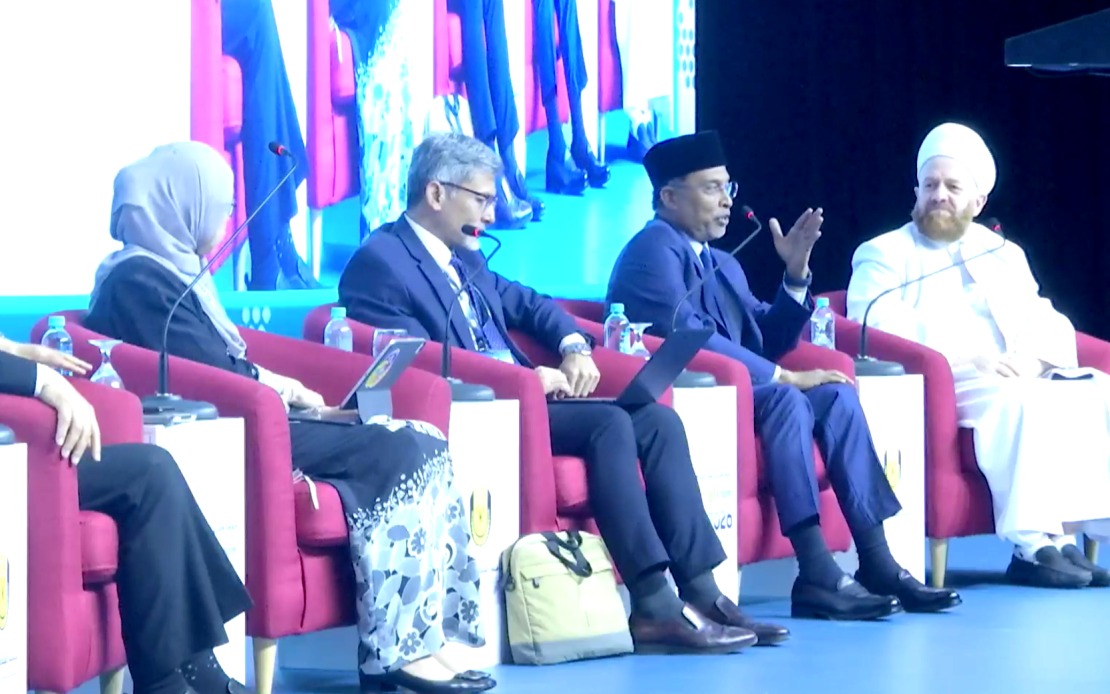
The transformation of Malaysia's higher education system must centre on weaving artificial intelligence and emerging technologies into academic programmes while safeguarding ethical foundations, according to Higher Education Minister Datuk Seri Dr Zambry Abd Kadir. Speaking at the 8th World Conference on Islamic Thought and Civilisation in Ipoh, Zambry articulated a vision where technological capability and human values advance in tandem rather than in isolation, reflecting growing concerns among policymakers that rapid digitisation risks divorcing intellectual development from character formation.
The Ministry of Higher Education has charted an ambitious trajectory through its 10-year blueprint spanning 2026 to 2035, designed to orchestrate simultaneous progress across three dimensions: technological sophistication, workforce capabilities, and moral grounding. This framework recognises that Malaysia faces a competitive imperative to prepare graduates for an increasingly AI-driven economy, yet simultaneously acknowledges that technical proficiency divorced from ethical reasoning poses societal risks. The blueprint represents a deliberate policy choice to resist the temptation of treating technology adoption as a neutral technical matter and instead anchors it within a broader civilisational context.
As disciplines such as artificial intelligence, quantum computing, and planetary health accelerate in complexity and application, Zambry contended that universities bear responsibility for embedding ethical reflection throughout the curriculum rather than confining moral instruction to peripheral electives. This approach challenges the conventional siloing of technical and humanities education, which has historically allowed engineers and computer scientists to specialise deeply in their domains without systematic engagement with the philosophical and ethical dimensions of their work. The minister emphasised that institutions must fundamentally reconceptualise how ethics is taught—not as a supplementary course but as a constant dialogue woven through technical instruction.
The shift from STEM to STEAM represents a tangible manifestation of this philosophical reorientation. By incorporating arts and liberal studies alongside conventional science, technology, engineering, and mathematics disciplines, Malaysian universities are attempting to cultivate graduates who possess both technical acumen and broader intellectual perspective. Zambry cited Universiti Teknologi Petronas as an exemplar, where engineering programmes deliberately require students to undertake coursework beyond their specialisation, deliberately disrupting narrow technical trajectories and exposing future engineers to humanities, social sciences, and philosophical inquiry.
The rationale underlying this pedagogical shift is not sentimental but pragmatic. As artificial intelligence systems become increasingly consequential in domains ranging from healthcare to criminal justice to resource allocation, the professionals who design, implement, and govern these systems require more than computational literacy. They must possess the interpretive skills to grapple with ambiguity, the philosophical training to recognise hidden assumptions embedded in algorithms, and the humanistic sensibility to anticipate unintended consequences. STEAM education attempts to produce practitioners capable of this multidimensional thinking.
Zambry's most provocative assertion was that artificial intelligence, despite its extraordinary capabilities in pattern recognition and computational speed, remains fundamentally incapable of cultivating character. While algorithms can deliver precise answers and execute solutions with remarkable efficiency, they cannot instil integrity, shape conscience, or develop the moral intuitions that anchor ethical decision-making. This observation points to an irreducible role for traditional education in transmitting values that cannot be algorithmically generated or extracted from data. The implication is that no amount of technological sophistication can substitute for the human-to-human transmission of wisdom and moral formation.
For Malaysian policymakers, this framing carries particular significance given the nation's aspirations to become a regional technology hub and knowledge economy. The ministry's blueprint implicitly rejects a false dichotomy between technological leadership and cultural preservation. Instead, it proposes that Malaysia can position itself as a model for how developing nations integrate cutting-edge technological capability with robust ethical frameworks and character formation, potentially offering an alternative to models that treat these dimensions as competitive rather than complementary.
The timing of Zambry's remarks at the World Conference on Islamic Thought and Civilisation signals an attempt to ground these policy directions within Malaysia's Islamic intellectual heritage. By framing AI integration through the lens of Islamic civilisational values—emphasising conscience, moral integrity, and the sacred responsibility of educators—the ministry seeks to anchor technological modernisation in spiritual and philosophical moorings rather than treating it as a purely secular-technical matter. This rhetorical strategy may prove significant in generating public confidence that technological transformation need not erode cultural or religious identity.
The practical challenges of implementing such an integrated vision should not be minimised. Universities must recruit and retain faculty capable of teaching across disciplinary boundaries and thinking holistically about technology and society. Curricular reform requires sustained coordination across departments historically insulated from one another. Assessment mechanisms must evolve to measure not merely technical competence but the development of critical thinking, ethical reasoning, and moral imagination. Students may initially resist curricula that demand engagement with subjects perceived as tangential to their professional trajectories, particularly in a competitive job market emphasising specialised technical skills.
Moreover, the relationship between formal institutional curricula and the actual formation of character remains complex and contested. Philosophy departments and ethics courses have long existed in universities worldwide without obviously producing more ethically sophisticated graduates or preventing ethical failures by technology professionals. The assumption that curricular integration will systematically generate more ethical practitioners may be optimistic unless accompanied by other institutional changes—different hiring practices, revised reward structures, and shifted professional cultures within technology industries themselves.
Nevertheless, Zambry's articulation of a comprehensive approach reflects an emerging international recognition that the artificial intelligence revolution demands not merely technical preparation but educational practices that cultivate wisdom. As Malaysia positions itself within global technological competition, the commitment to STEAM education and ethics-infused curricula potentially offers a distinctive competitive advantage—producing graduates who combine technical sophistication with the reflective capacity to consider consequences and implications of their work. Whether Malaysian institutions can realise this ambition will significantly influence the nation's capacity to navigate the algorithmic future while preserving the human dimensions that technology, however powerful, cannot replicate or replace.

